Basic information about the temple
| Moolavar: | Somanathar | Ambal / Thayar: | – |
| Deity: | Siva | Historical name: | Enathimangalam |
| Vriksham: | Teertham: | ||
| Agamam: | Age (years): | Timing: | – to – & – to – | Parikaram: |
| Temple group: | – | ||
| Sung by: | Temple set: | ||
| Navagraham: | Nakshatram: | ||
| City / town: | Poundarikapuram | District: | Thanjavur |
| Maps from (click): | Current location | Kumbakonam (9 km) | Mayiladuthurai (30 km) |
| Tiruvarur (35 km) | Thanjavur (50 km) |
Location
Sthala puranam and temple information
The village of Poundarikapuram, also known as Enathimangalam (possibly referring to Enathi Natha Nayanar, one of the 63 nayanmars in Saivism).
Poundarikapuram itself derives its name from the Naga Poundareekan, who is said to have worshipped Lord Siva here. It is said that devotees used to worship here to overcome their sarpa dosham and fear of snakes.
According to another sthala puranam, Yama is believed to have worshipped Lord Siva here.
This temple is an adjunct temple of the Kasi Viswanathar temple at Kumbakonam.
This temple’s story and history speaks to the love, affection and admiration that a young prince of the Chalukya clan had for the illustrious life and reign of his maternal grandfather. The prince would later become one of the last Chola emperors, with several temples attributed to his reign.
Kulothunga Chola I was the son of Ammanga Devi (the daughter of Rajendra Chola) and the Chalukya king Raja Narendra. However, the extraordinary legacy of his grandfather Rajendra Chola, and the time they both spent together, significantly influenced Kulothunga Chola I. In particular, he was influenced by the stories of Gangai Konda Cholapuram, and he attempted to emulate the architectural aspects of that temple, in the temples that he built during his own reign.
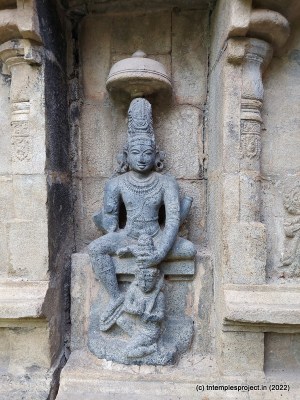
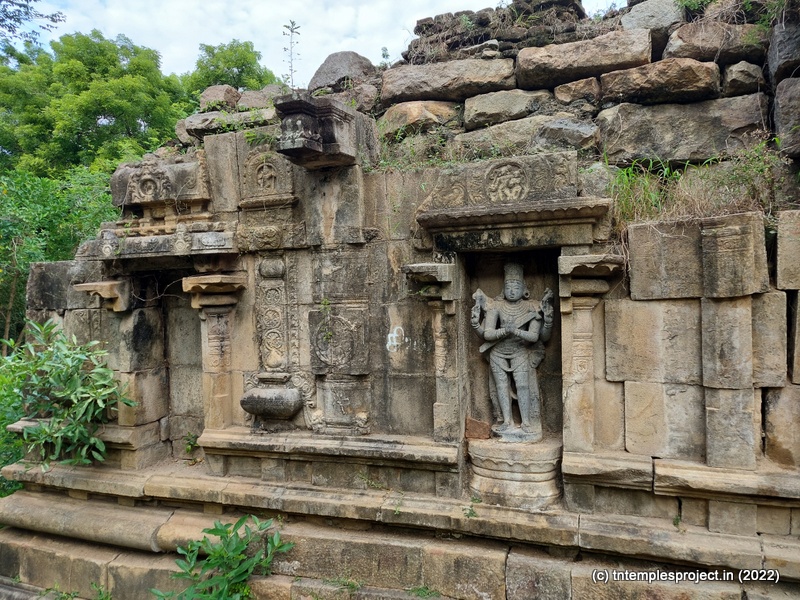
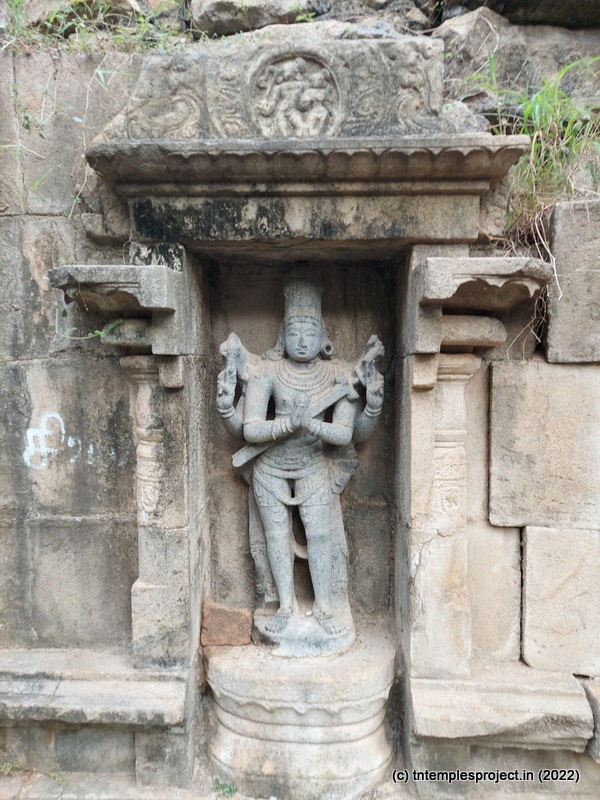
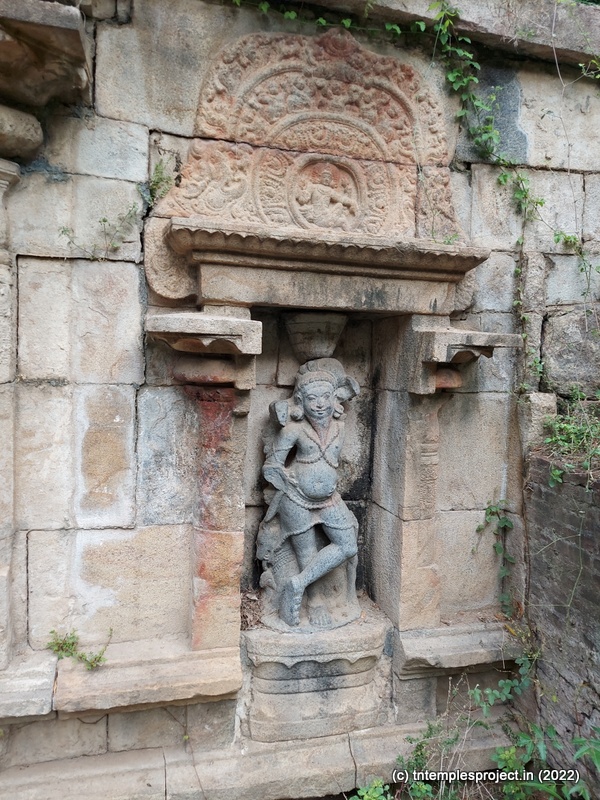
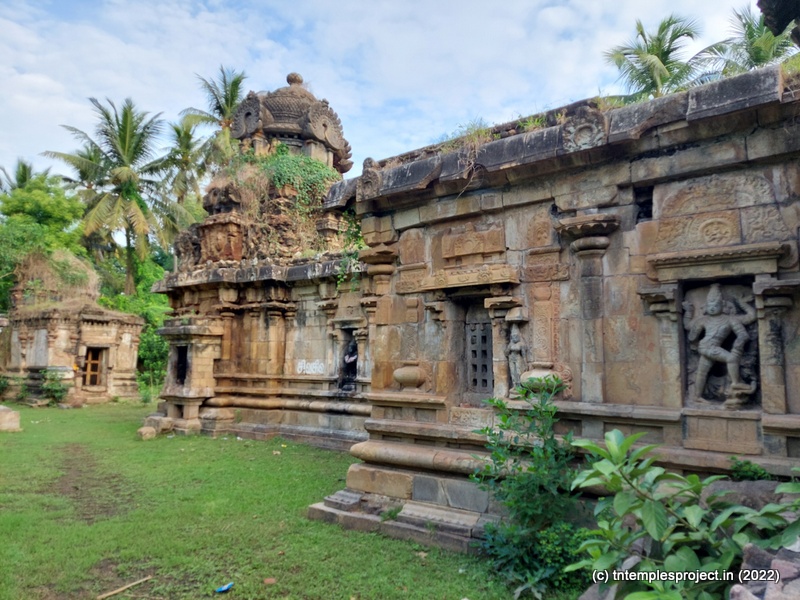
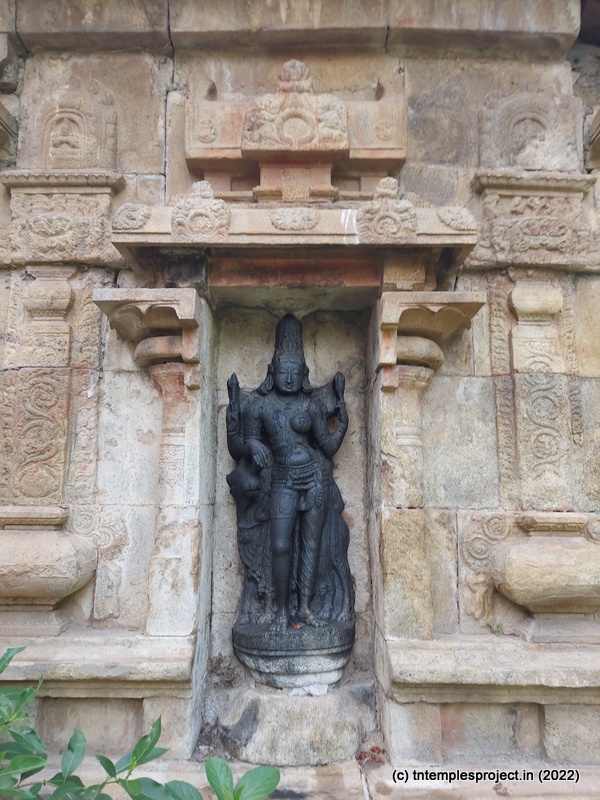
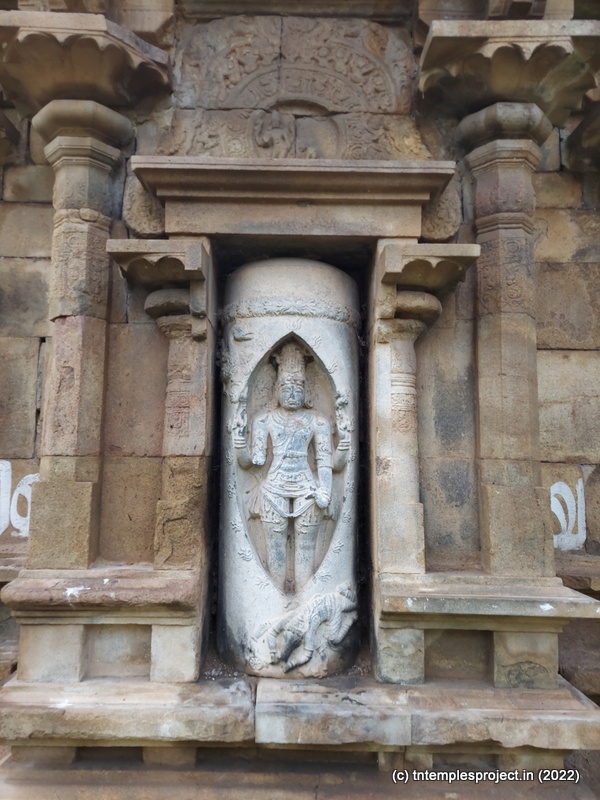
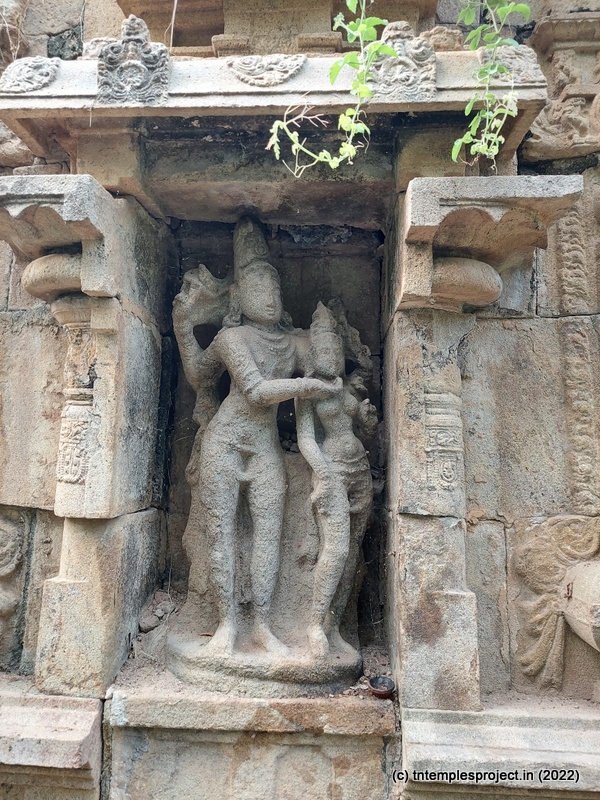
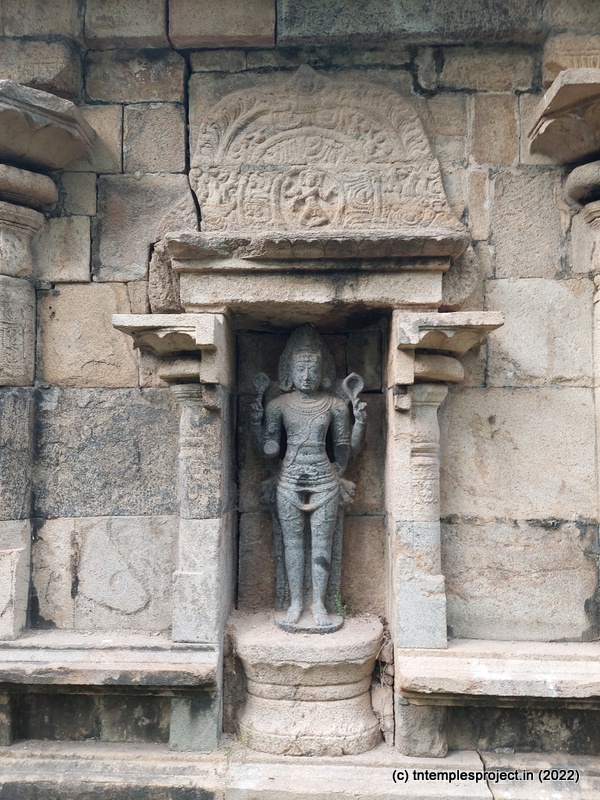
Three temples built by Kulothunga Chola I deserve specific mention, especially for the number of koshta murtis in the temple: the Vaidyanathar temple at Chintamani Nallur near Viluppuram, Bhairaveswarar temple at Cholapuram (11 koshta murtis) and this Somanathar temple at Poundarikapuram (16 koshta murtis). Amongst the various interesting koshta murtis here are Chandesa Anugraha murti, Uma Sahita murti, Bhikshatanar, Ardhanareeswarar, Chandala murti, Kirata murti, and Ganga Visarjana murti.
The temple dates back to the 12th century CE, in the reign of Kulothunga Chola I. However, it appears that this temple may have been built as an improvement over an Pallava period temple existing at the time – this is backed up by the Pallava style Chandikeswarar vigraham in this temple.
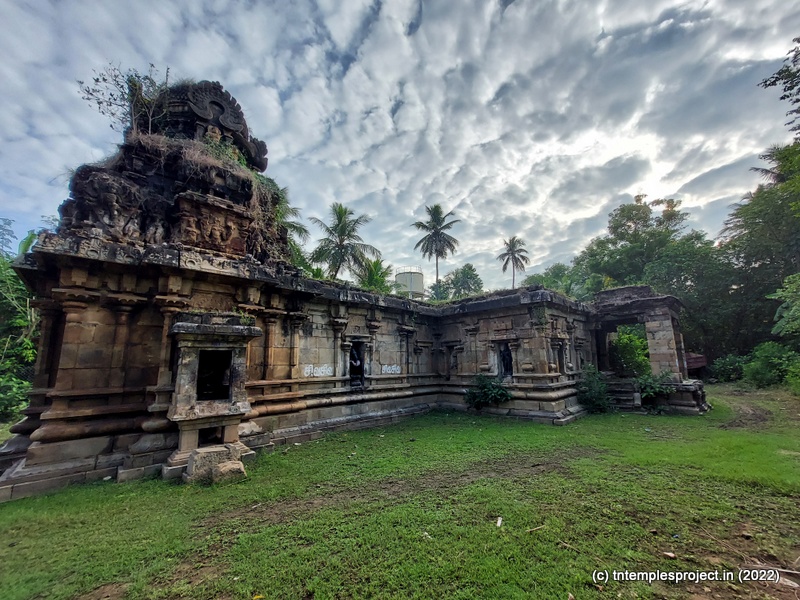
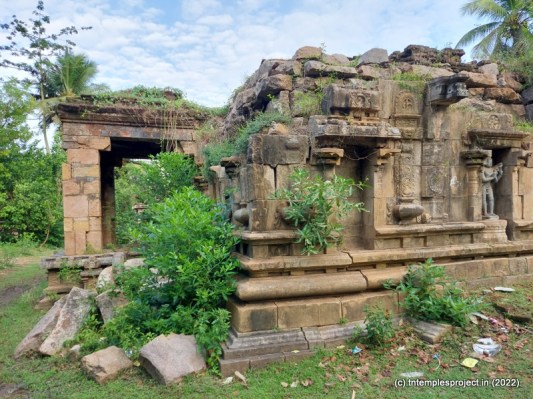
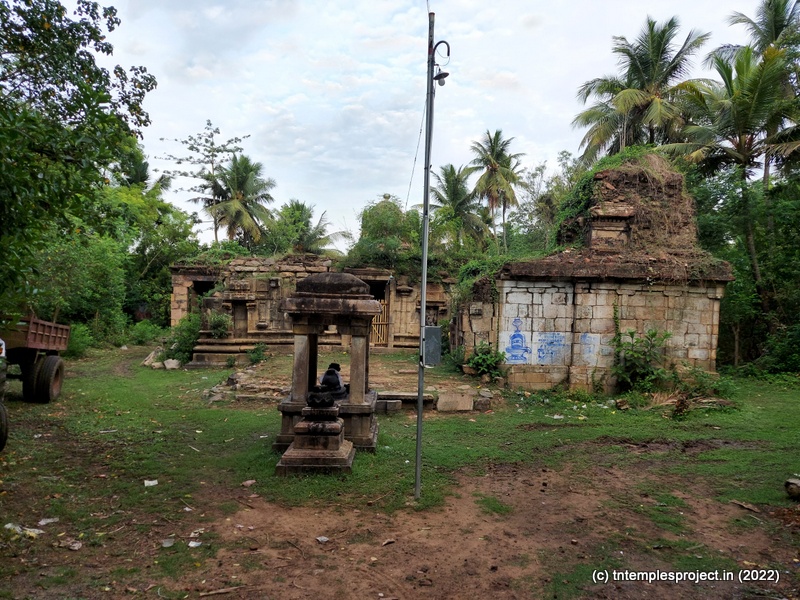
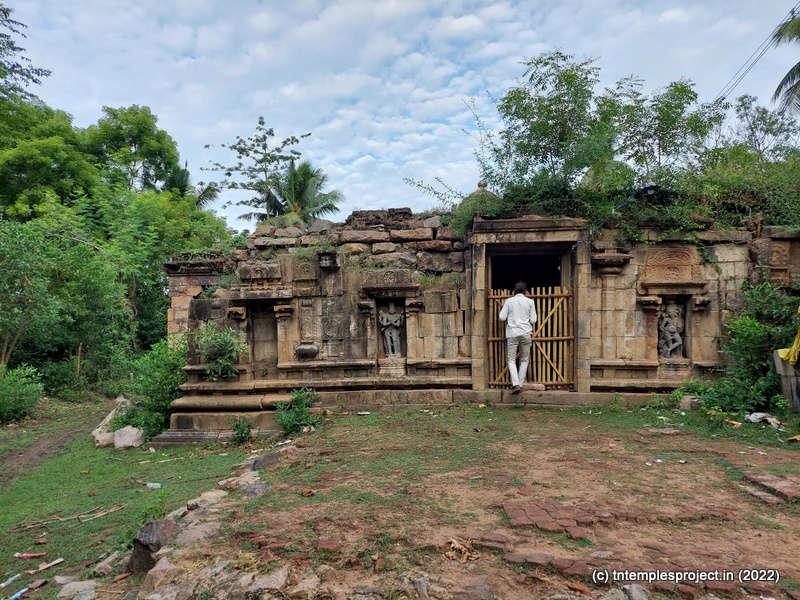
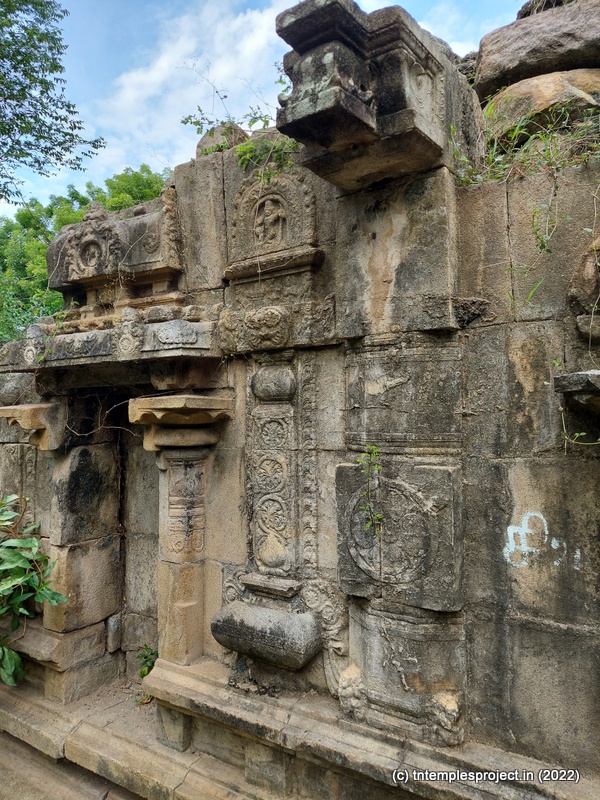
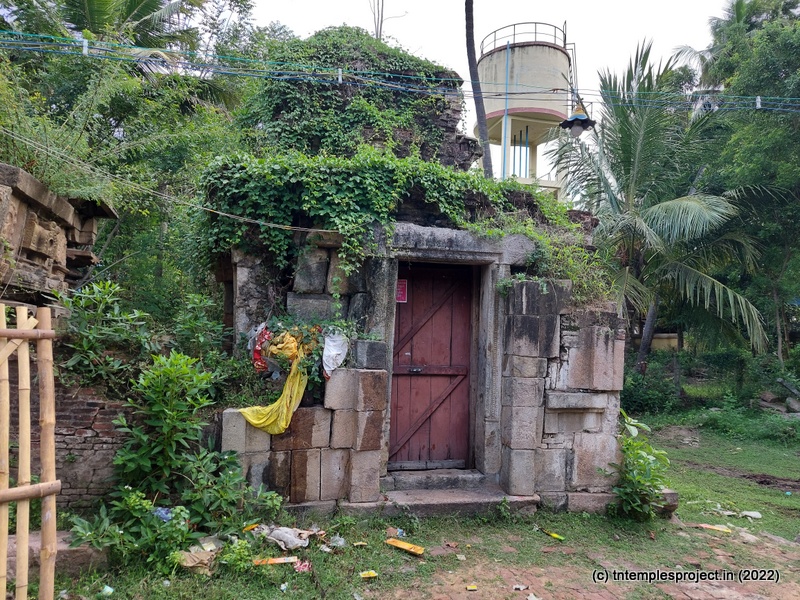
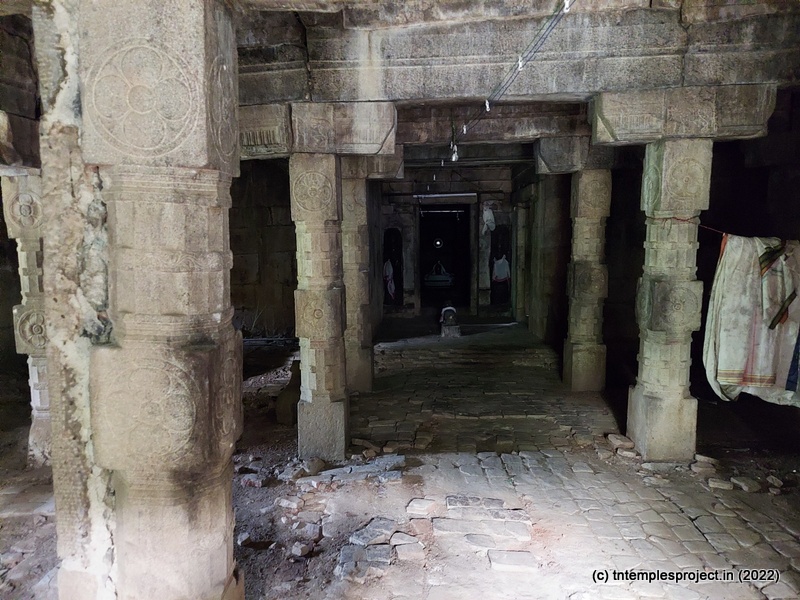
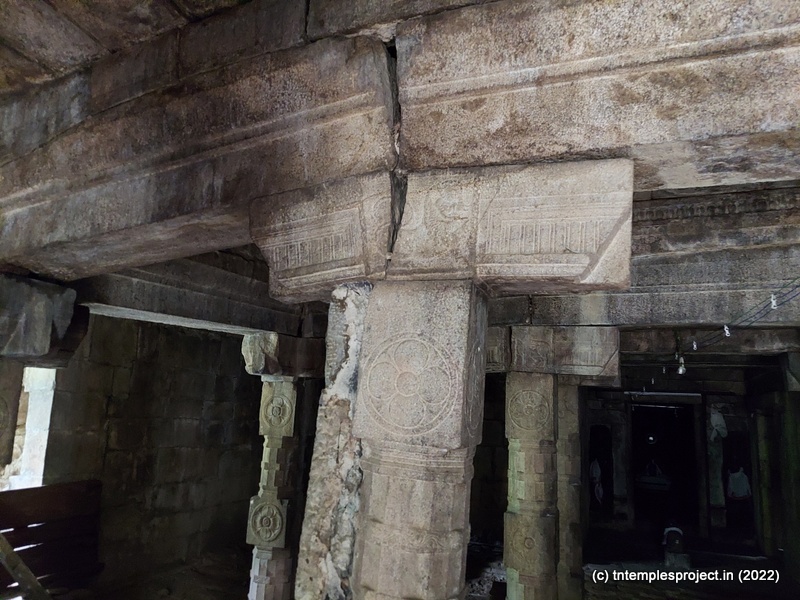
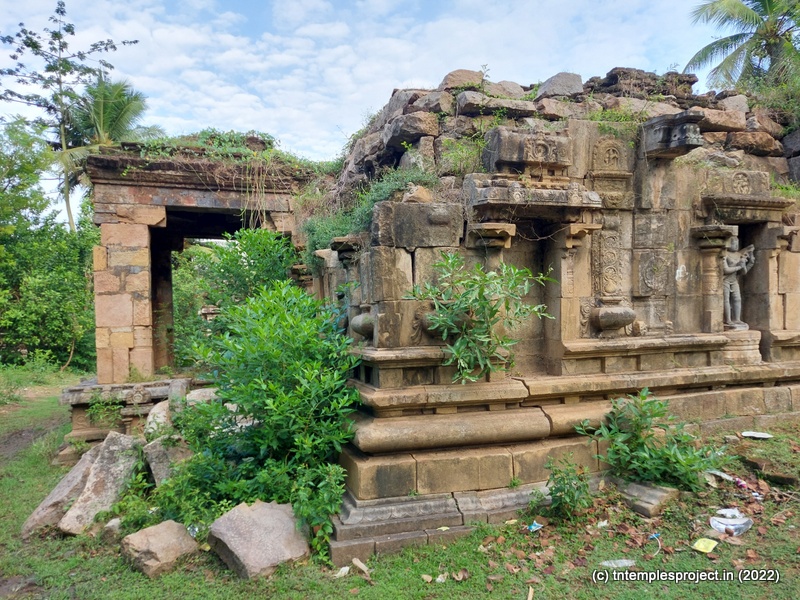
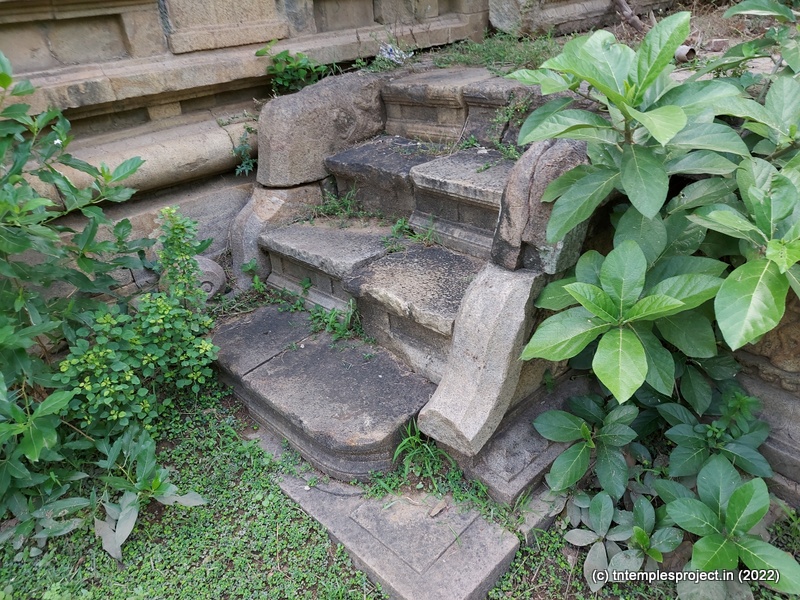
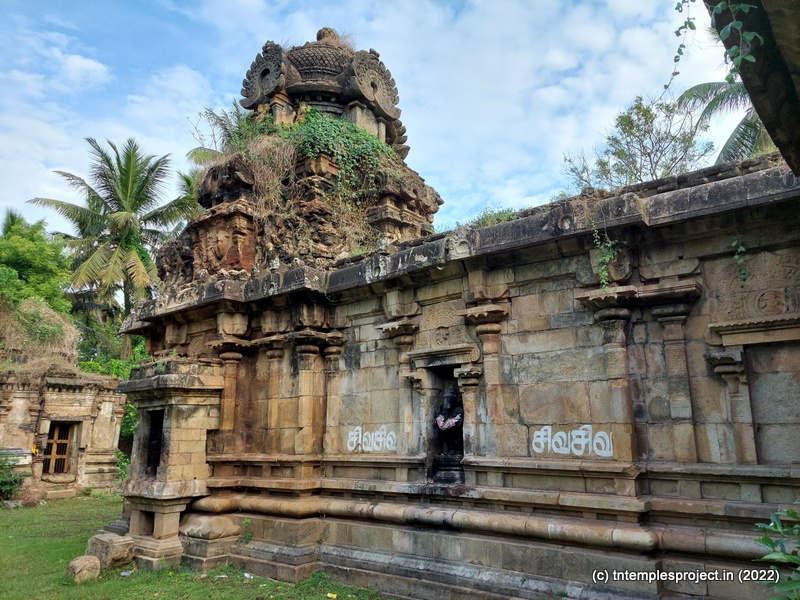
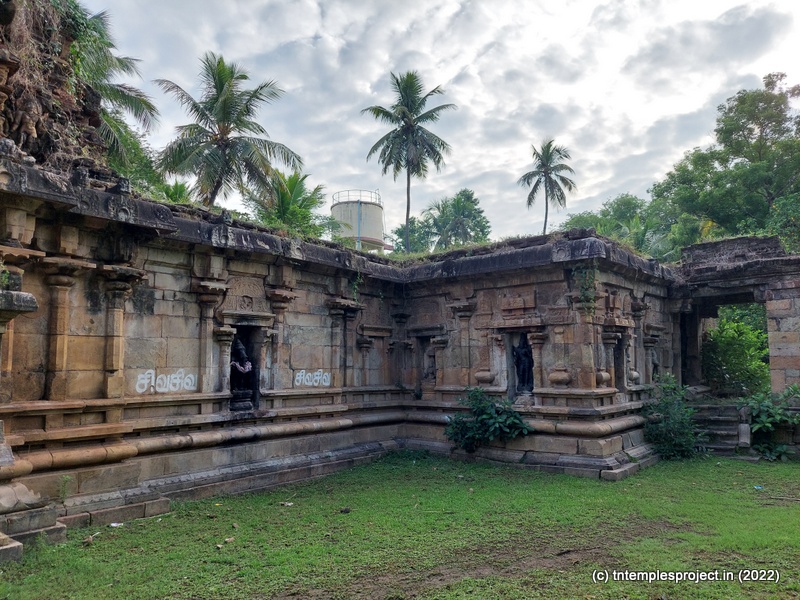
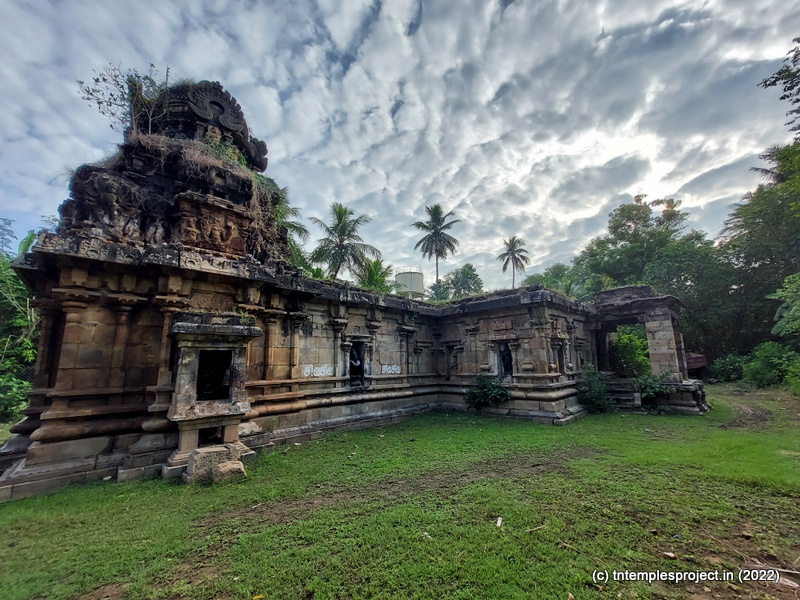
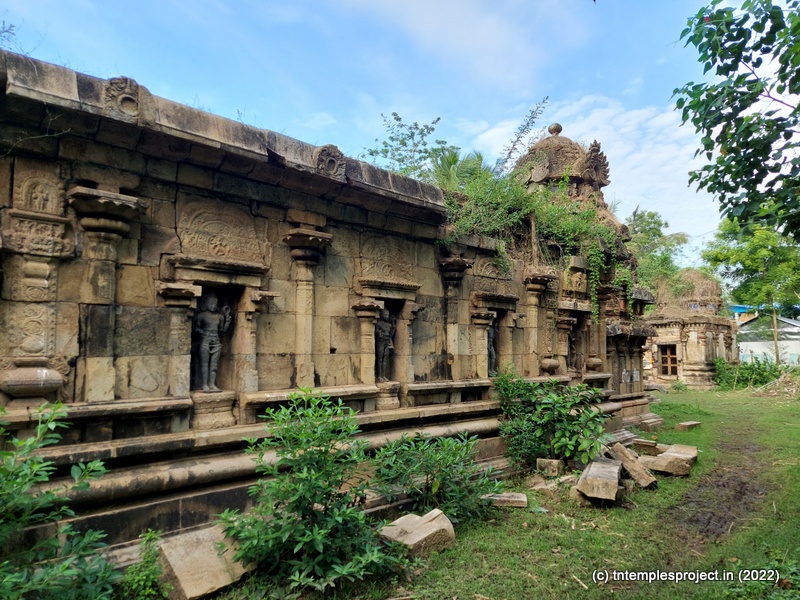
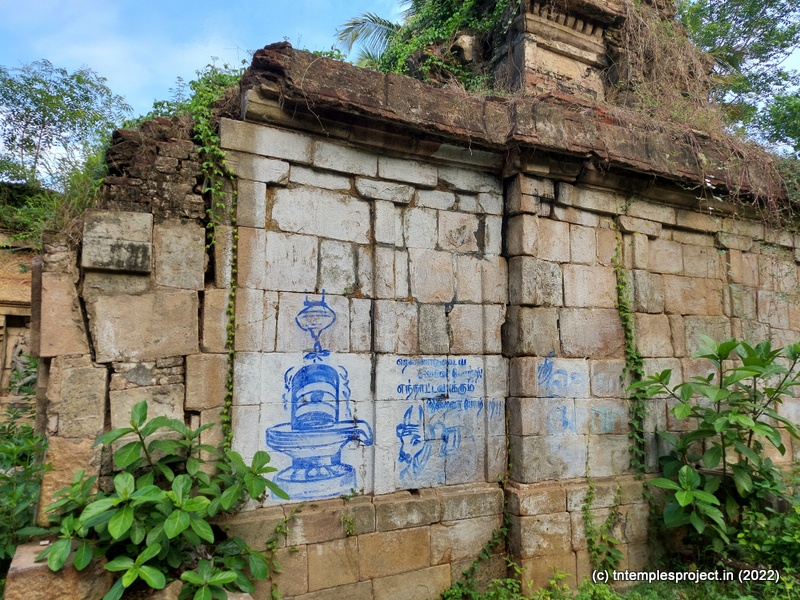
However, despite the rich and illustrious history of this temple, it lies in shambles today, on the verge of collapse. So much so, that outside the temple is a printed notice by the government authorities, asking visitors not to enter the temple structure. The pictures in the gallery below tell the sad story of the temple’s state today.
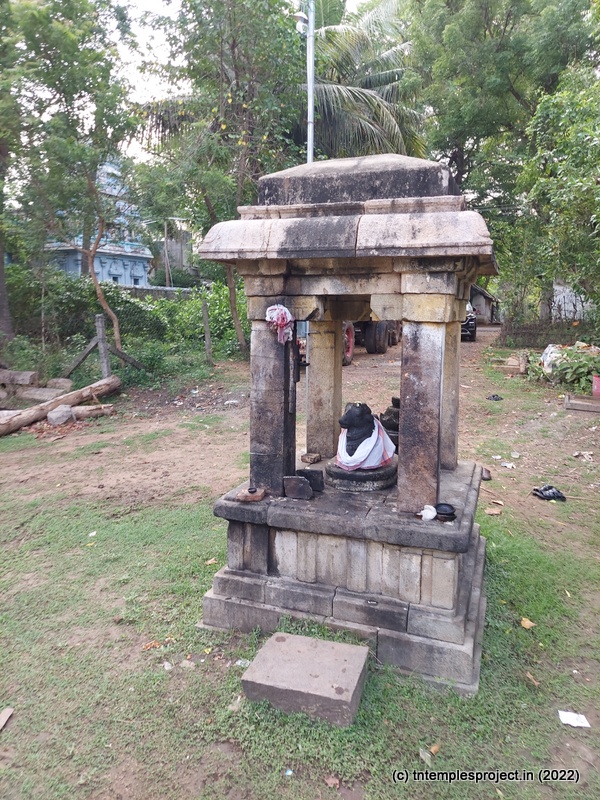
The temple has no walls to demarcate its precincts, and so as we enter, there is a bali peetham and Nandi mandapam. There is no dhwajasthambham here. Straight ahead is a vast maha mandapam which houses a long and wide ardha mandapam, followed by the garbhagriham. To the right is the Amman shrine. Amman’s name here is not known, and could be presumed as being Somasundari.
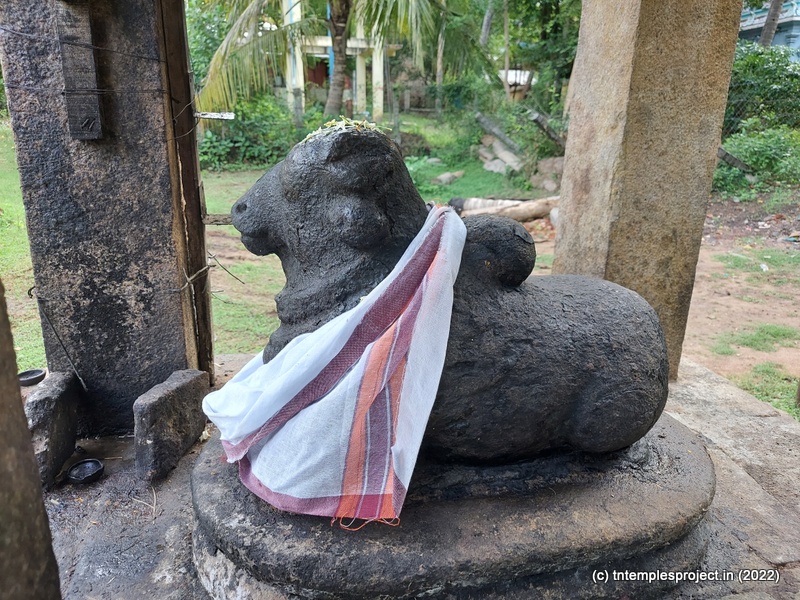
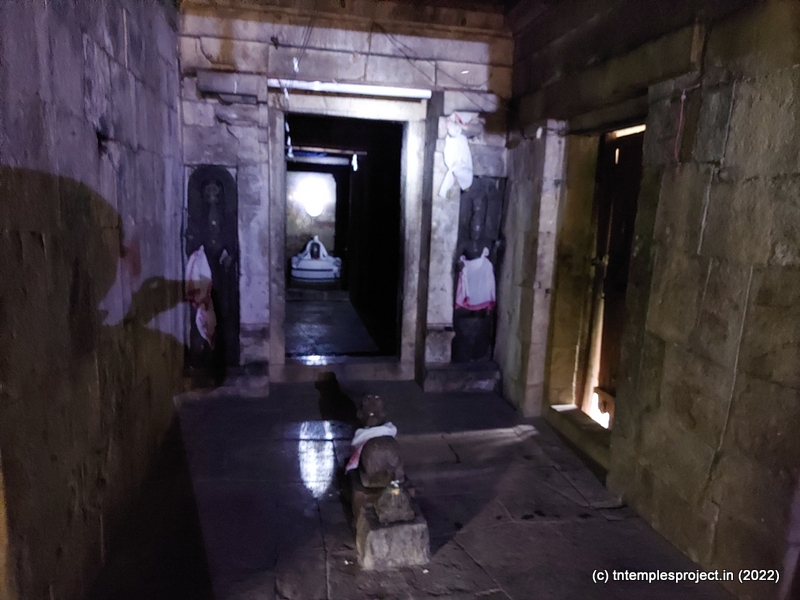
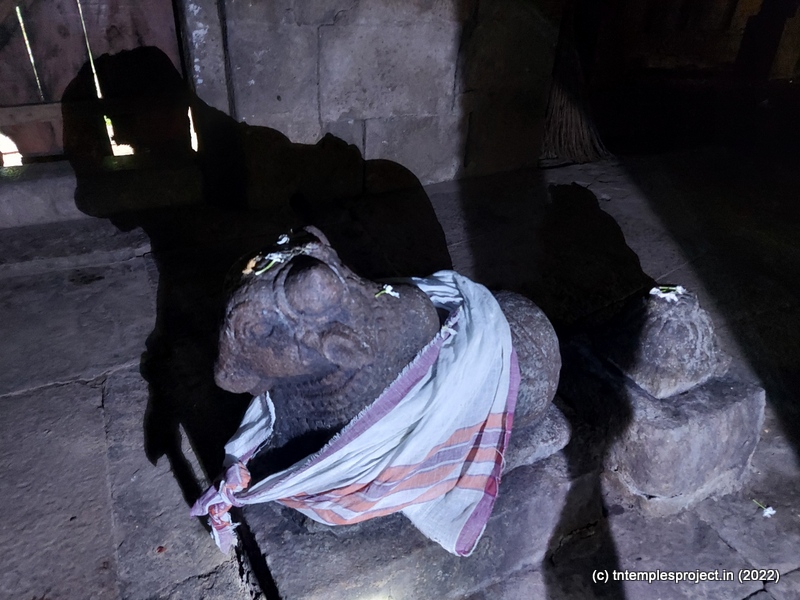
Straight ahead is a Nandi, followed by the garbhagriham whose entrance is flanked by two bas relief dwarapalakas of rather unique design (these appear to be later additions). The Chandikeswarar vigraham is also inside the mandapam itself. The Nandi in the Nandi mandapam is clearly ancient and continues to be the only vigraham in the temple in active use, on pradosham days.
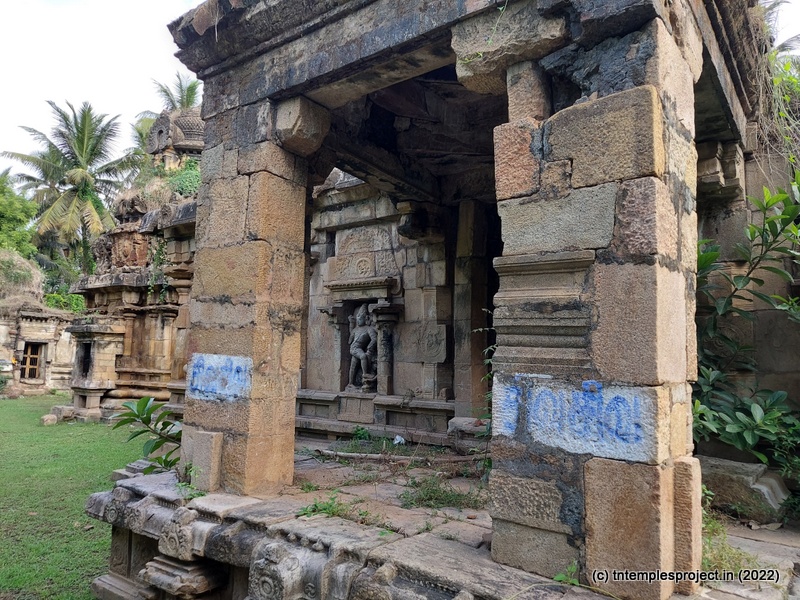
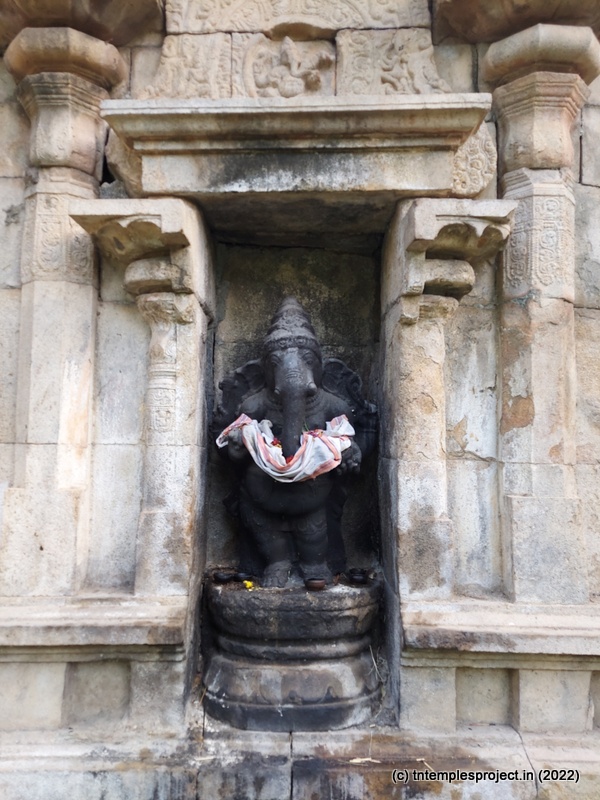
The entrance to the maha mandapam is flanked by two of the many koshtam deities here, all of which are of Lord Siva in various forms. Whether all of them are native and original to this temple, is not very clear.
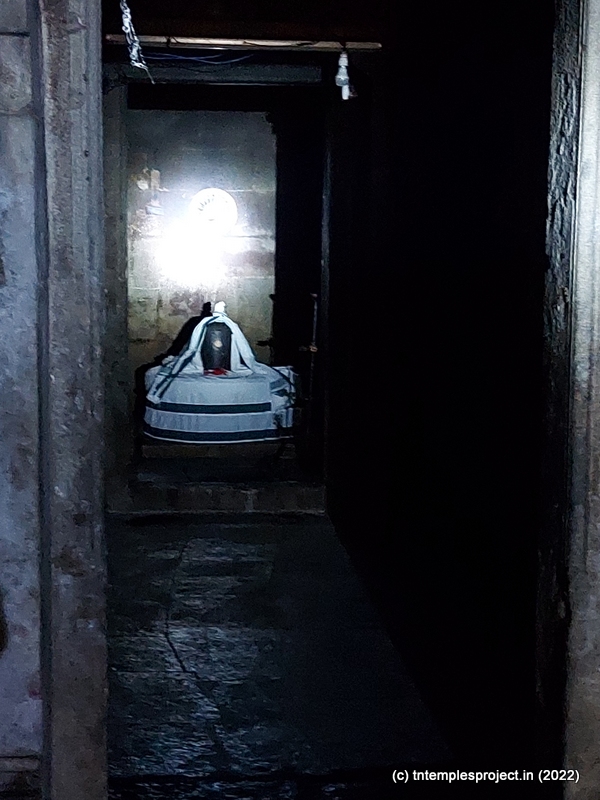
Contrary to the instructions outside the temple (because we had not read it before entering), we actually went inside the structure and up to the entrance of the garbhagriham.
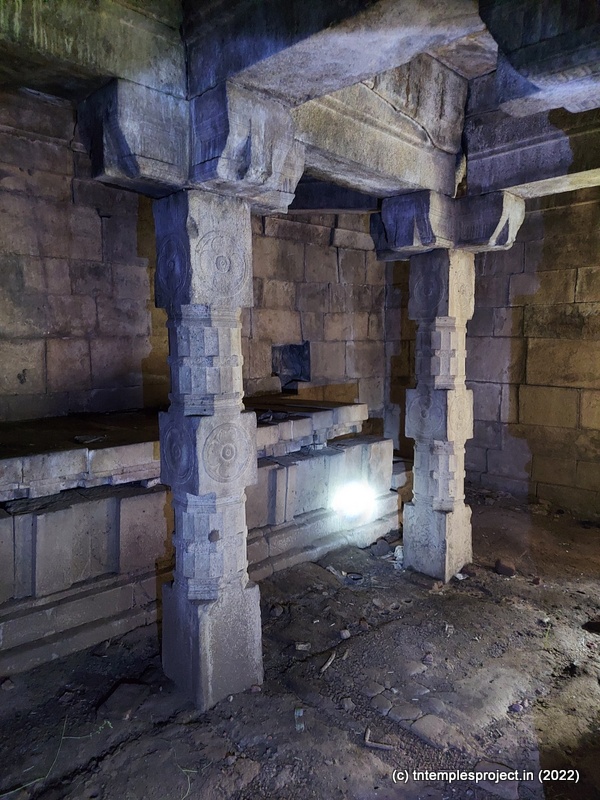
The many-pillared maha mandapam is in a state of total disrepair, and we were perhaps fortunate it did not collapse on us when we were inside. There is an exit from the maha mandapam on the southern side, as is generally common in many Chola period temples. On the northern side is a platform running the length of the mandapam.
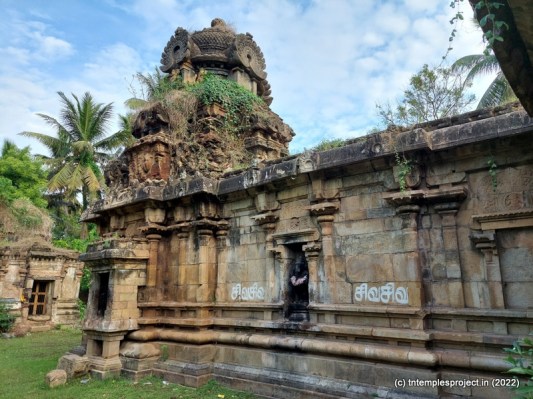
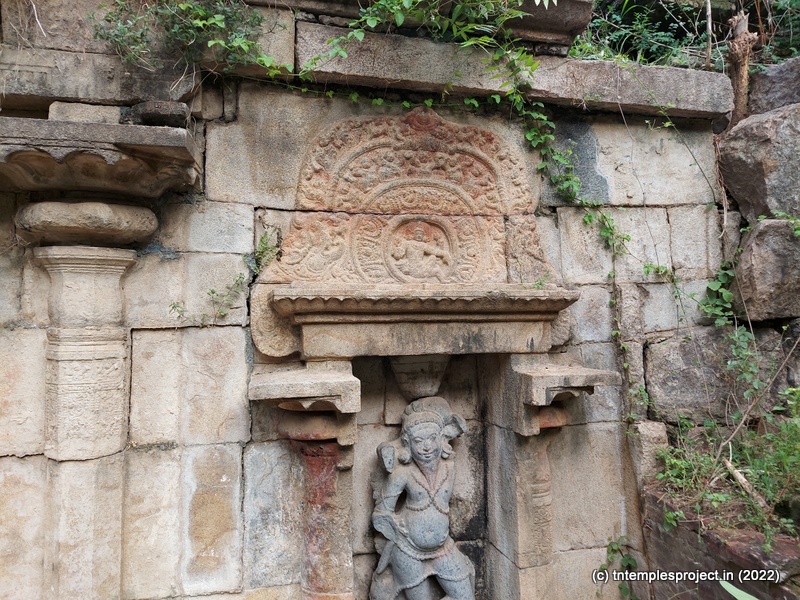
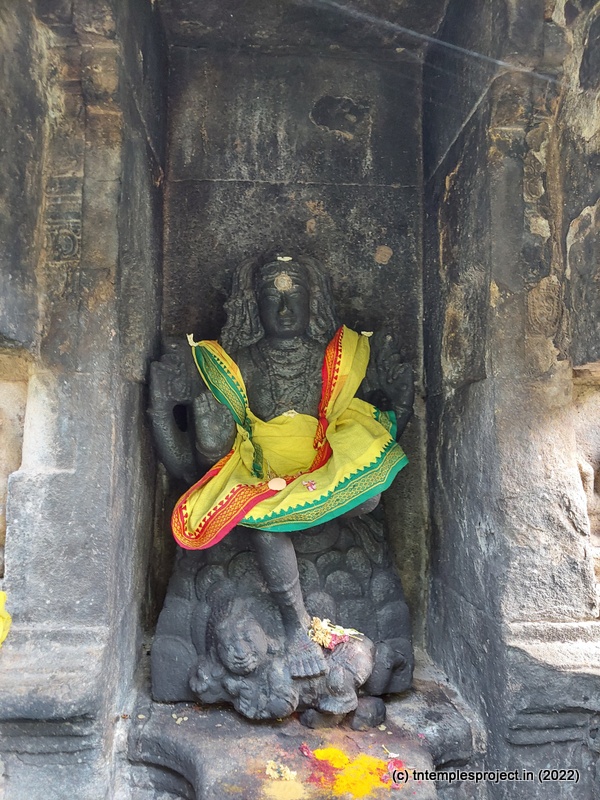
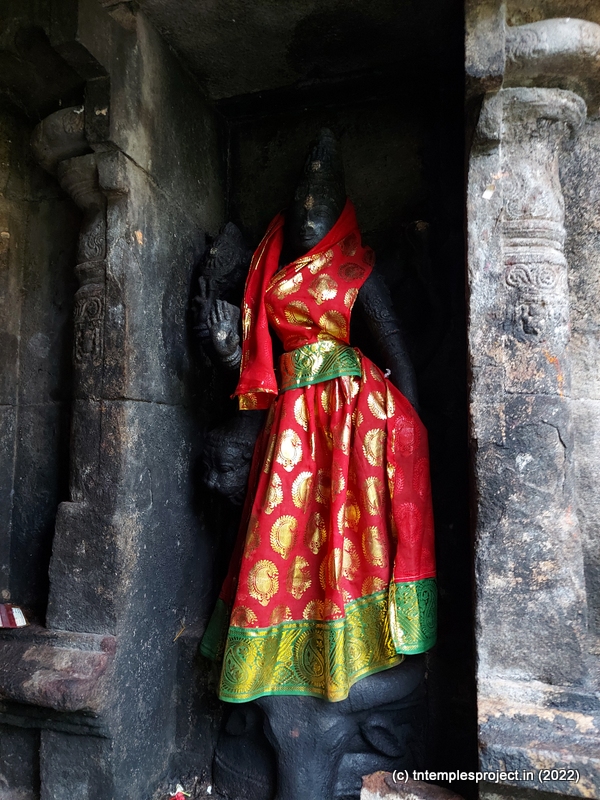
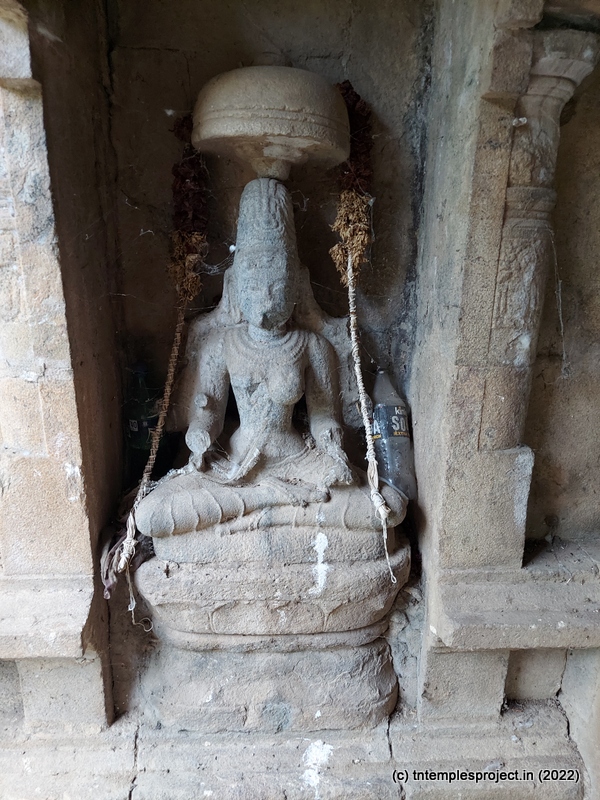
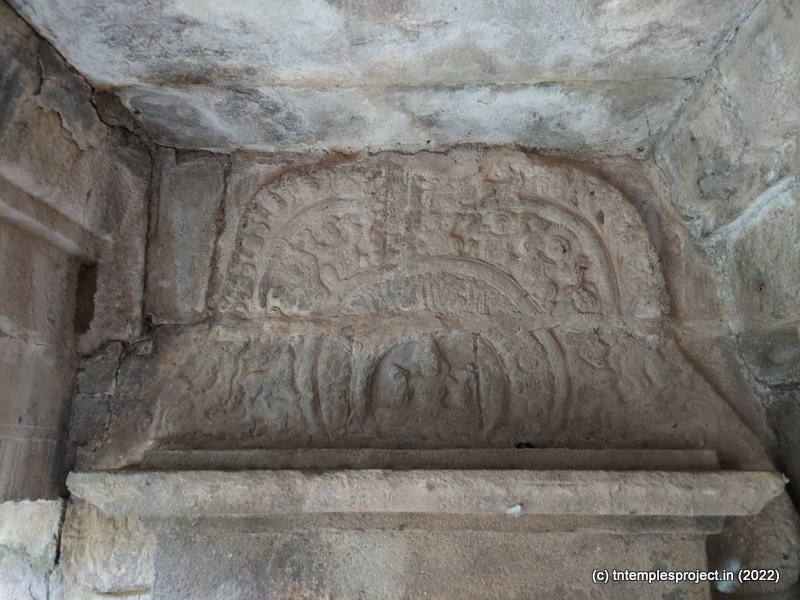
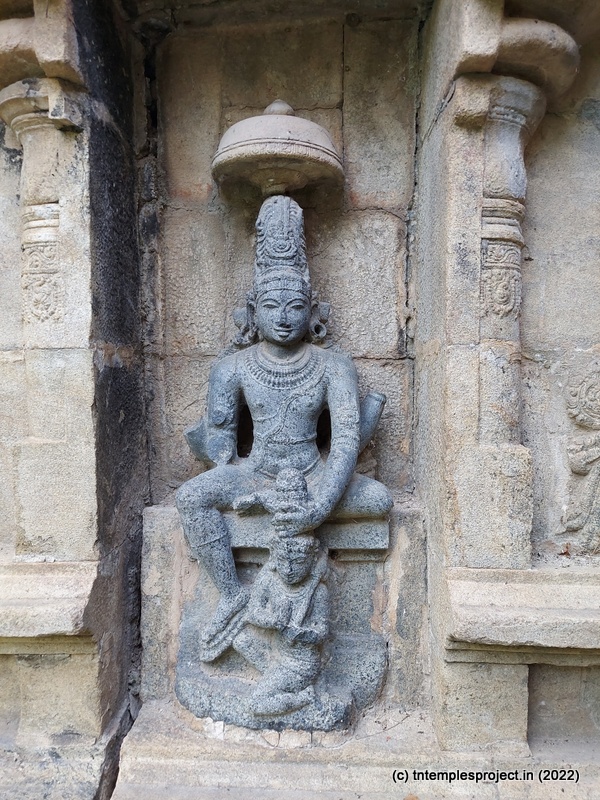
The outer walls of the maha mandapam – which essentially represents all of the temple today – is replete with numerous sculptures of deitites, boothaganas, animals, etc. The south koshtams include Vinayakar and Dakshinamurti on the south, Lingodhbhavar on the west, and Brahma and Durga on the northern side.
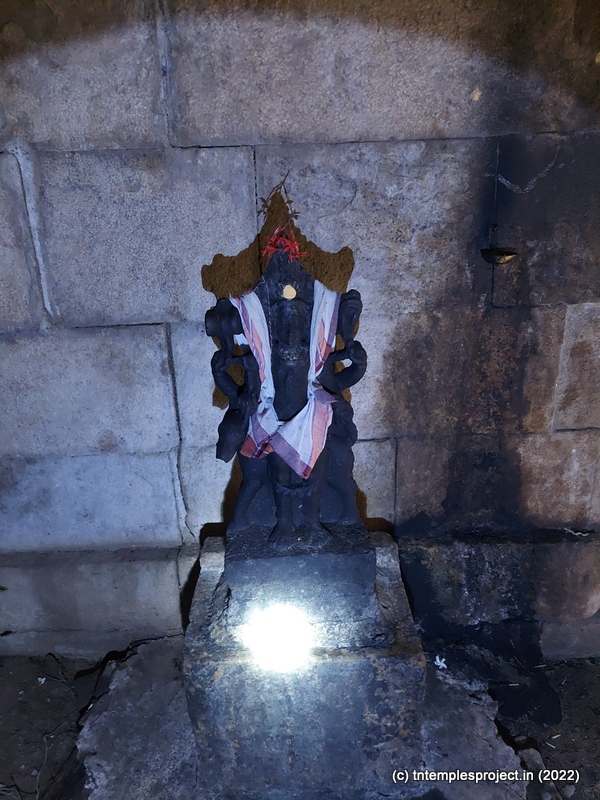
In the prakaram are separate shrines for Vinayakar, Murugan with his consorts Valli and Deivanai, and the Pallava-period Chandikeswarar alluded to earlier.
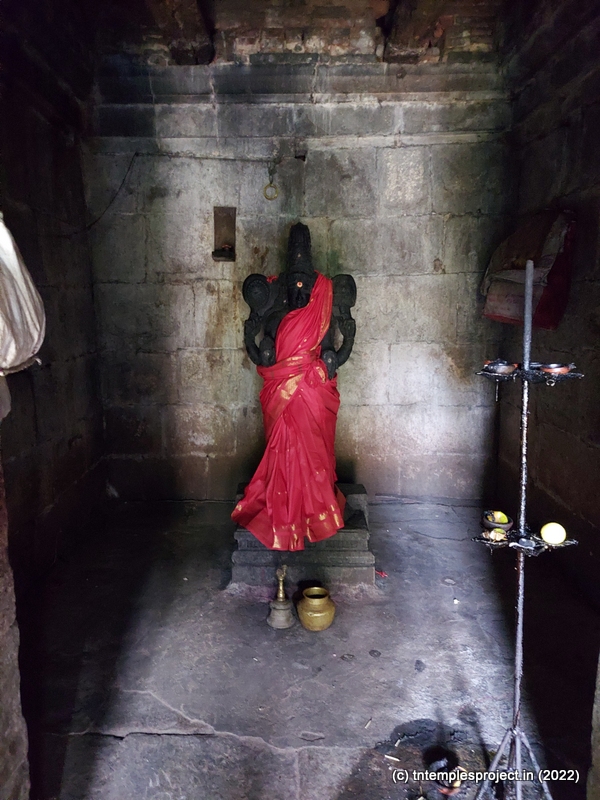
Despite the pathetic state of this temple, the interest of the locals and the temple priest in continuing the temple’s tradition, is evident in the pradosha puja done for Nandi, as well as the fact that most – if not all – of the vigrahams appear to be regularly cleaned and clothed.
Other information for your visit
Contact
Gallery






 TN Temples Project