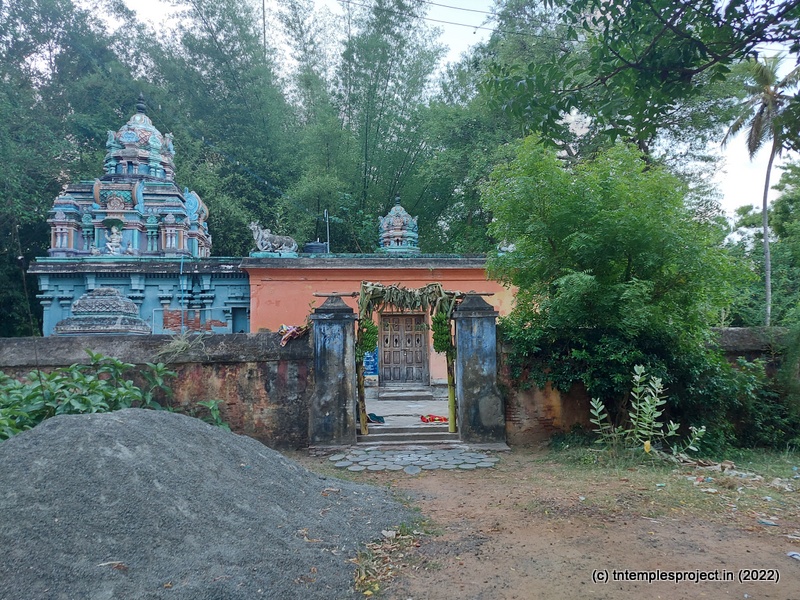
Basic information about the temple
| Moolavar: | Chandrasekharar | Ambal / Thayar: | Sivakami Amman |
| Deity: | Siva | Historical name: | |
| Vriksham: | Teertham: | ||
| Agamam: | Age (years): | Timing: | – to – & – to – | Parikaram: |
| Temple group: | – | ||
| Sung by: | Temple set: | ||
| Navagraham: | Nakshatram: | ||
| City / town: | Alavanthipuram | District: | Thanjavur |
| Maps from (click): | Current location | Kumbakonam (10 km) | Thanjavur (34 km) |
| Ariyalur (41 km) | Mayiladuthurai (47 km) |
Location
Sthala puranam and temple information
The etymology of Alavanthipuram is rather interesting. Ala refers to snakes (more generally, poisonous creatures); this is the same root as in the case of Madurai being called Alavaai. Vanthi refers to an herb that is said to have fantastic curative properties, providing relief from poisonous things and venomous creatures. This herb is believed to grow here especially due to the presence of water from the Kaveri river that flows nearby at Kabisthalam. This place is said to have been where such herbs once grew in plenty, and so the place came to be known as Alavanthipuram.
In the Ramayanam, it is said that a young Rama used to throw balls of clay at Manthara (Kooni) in order to make fun of her hunch. One retelling of the same incident says that Rama had actually made balls of clay mixed with the vanthi herb, and after worshipping it for one mandalam (48 days), set them on his arrows and shot them at Manthara’s back, in order to cure her hunch. He also kept two such clay balls aside, and offered them to Siva and Parvati at this temple, when He visited this place along with Sita.
Because of its association with curative powers, it is a strongly held local belief that no venomous creatures attack those who come to or live in Alavanthipuram. Again, this is based on a story in the Ramayanam, where Dasaratha had incurred a mrityu dosham for a short period, and so Sage Vasishtha brought Dasaratha, along with Rama, to perform penance at this place during that time, in order to ward off the dosham. In fact, this is said to be how Rama knew about the curative properties of the vanthi herb, in the first place! The benefits of their penance are said to continue to this day.
It is also said in the local sthala puranam that Alavanthipuram is where the poisons that emanated from the snake Kalinga, when Krishna (Kalinga Narthanar) danced on the snake’s hood, were doused.
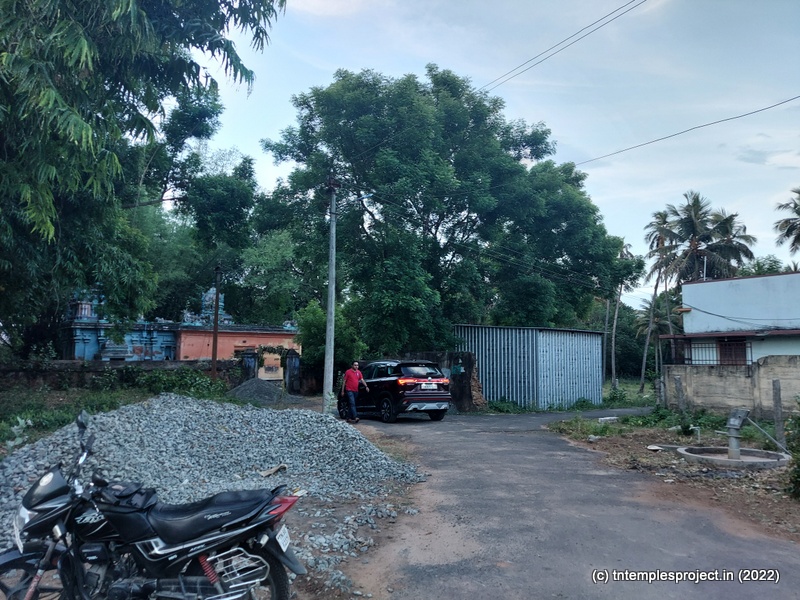
The temple is at the eastern end of the Agraharam in the village, while an interesting Lakshmi Narayana Perumal temple marks the western end of the street. Perumal is adorned with coconut oil and jasmine flowers, while Sani at this temple receives sesame oil and blue lotus flowers. This unique practice is believed to appease the two deities and provide relief from the malefic influence of the planets.
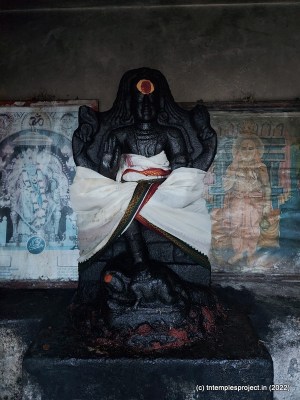
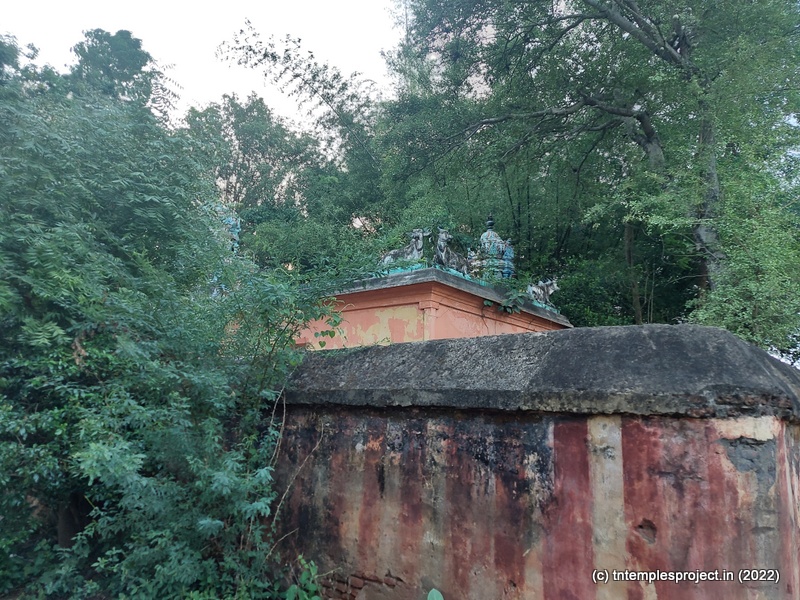
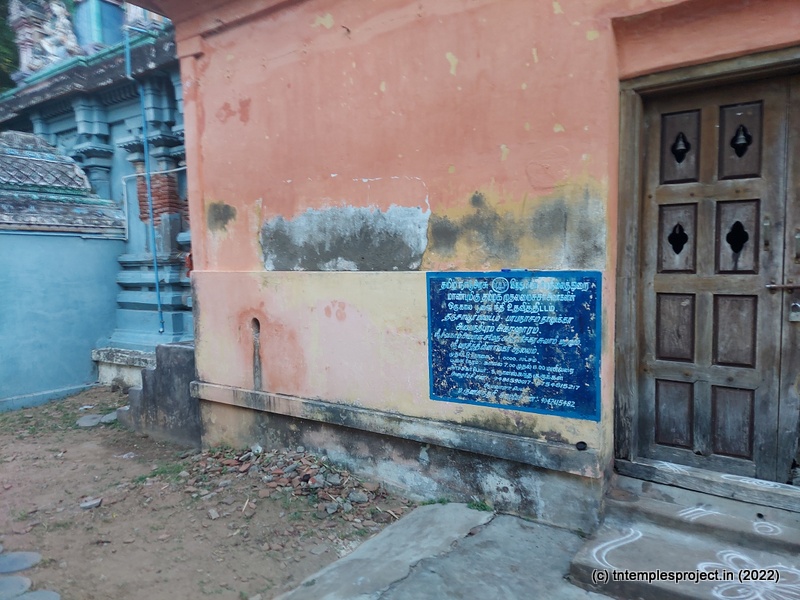
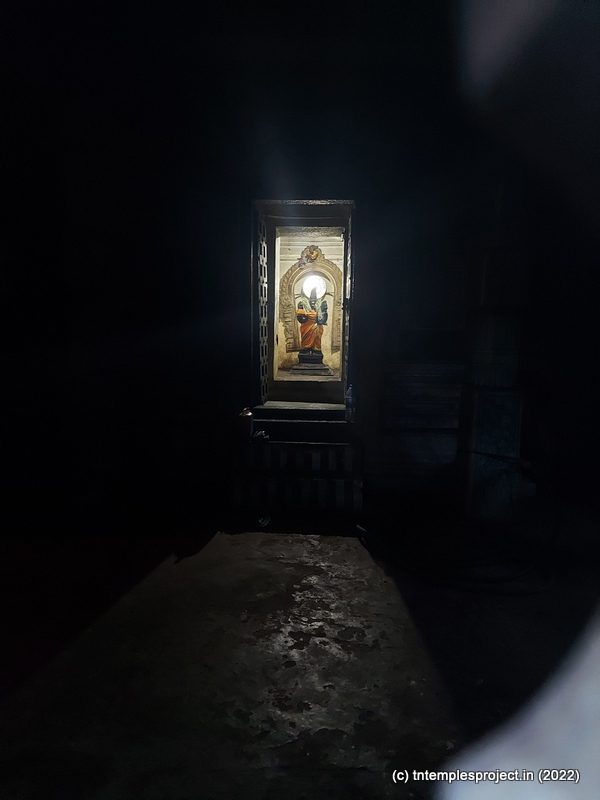
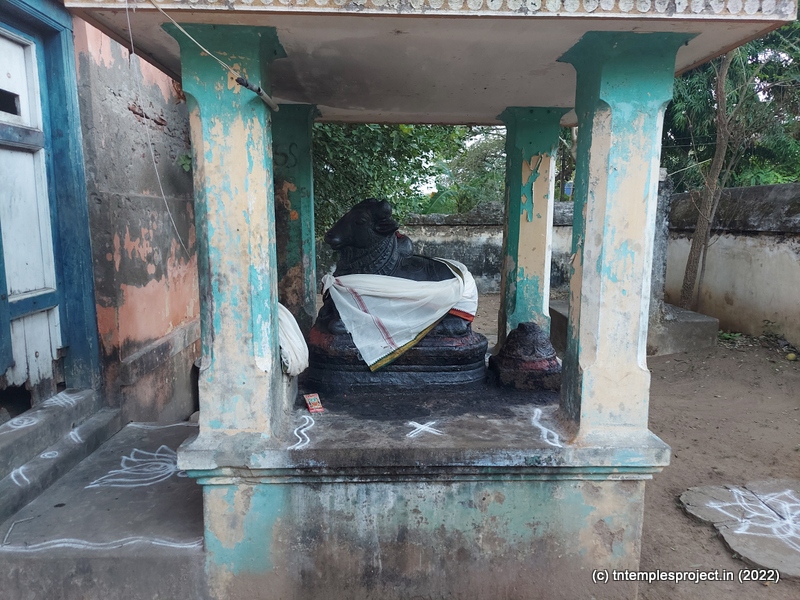
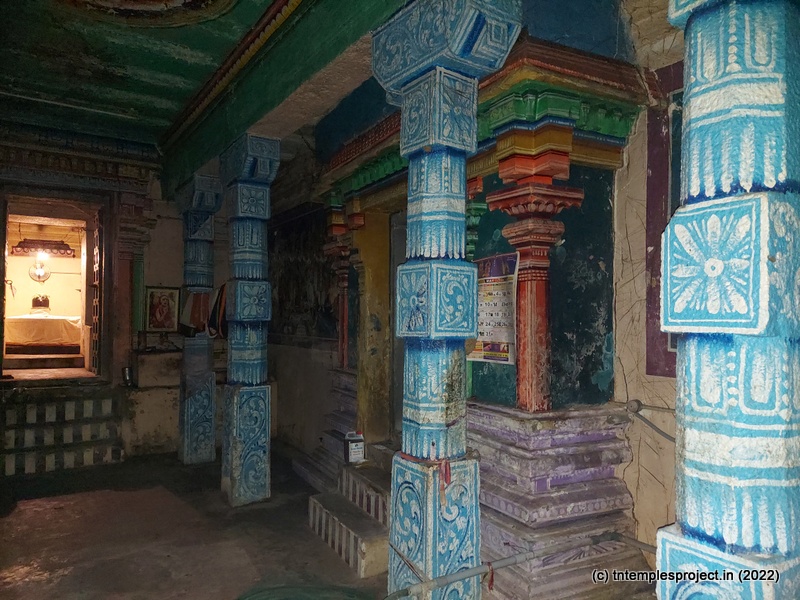
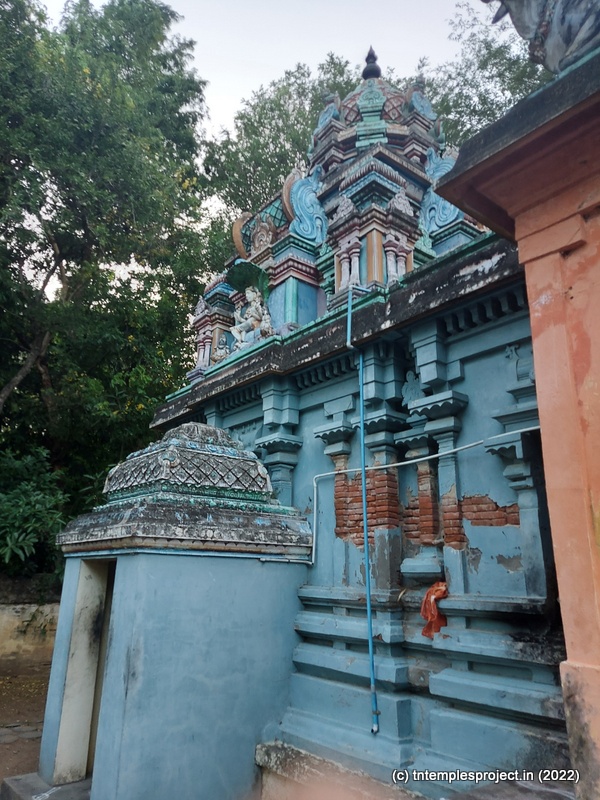
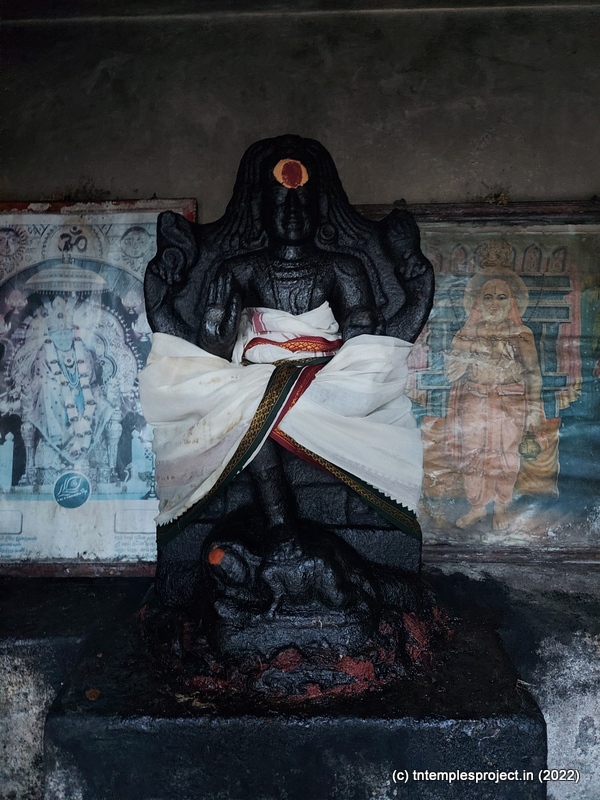
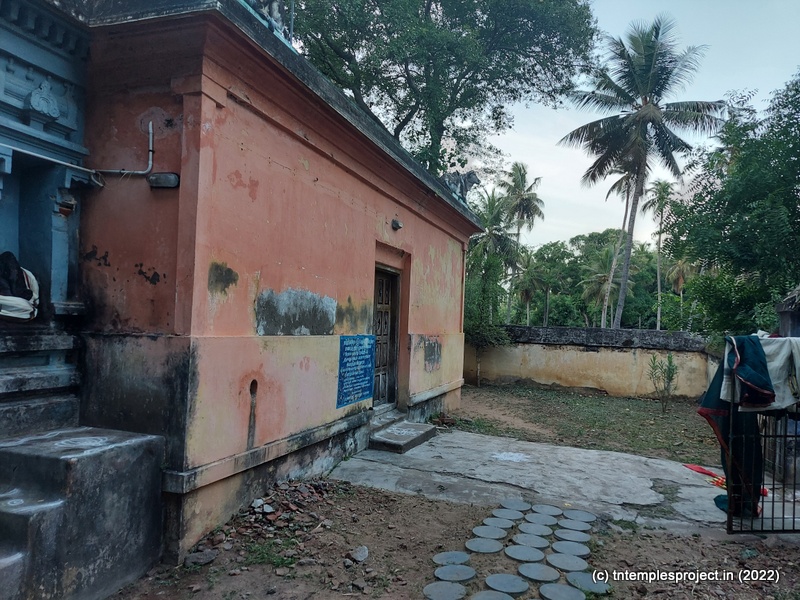
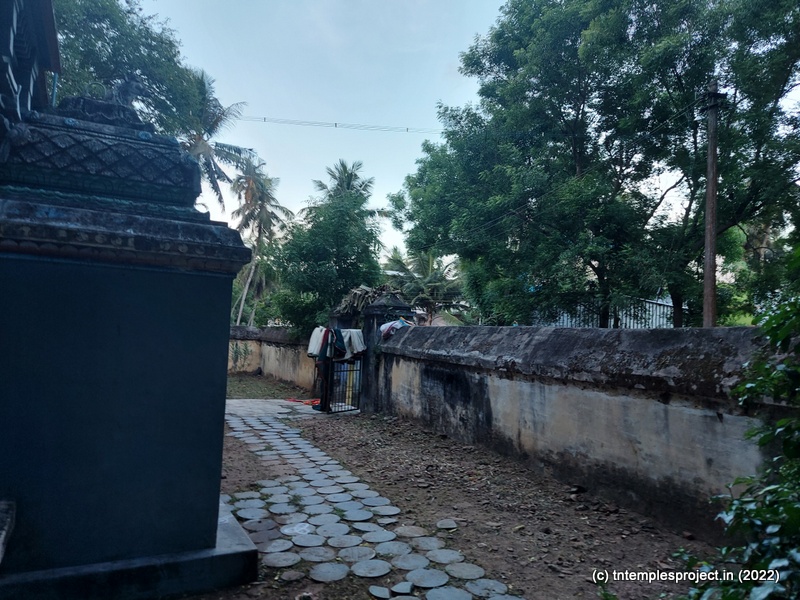
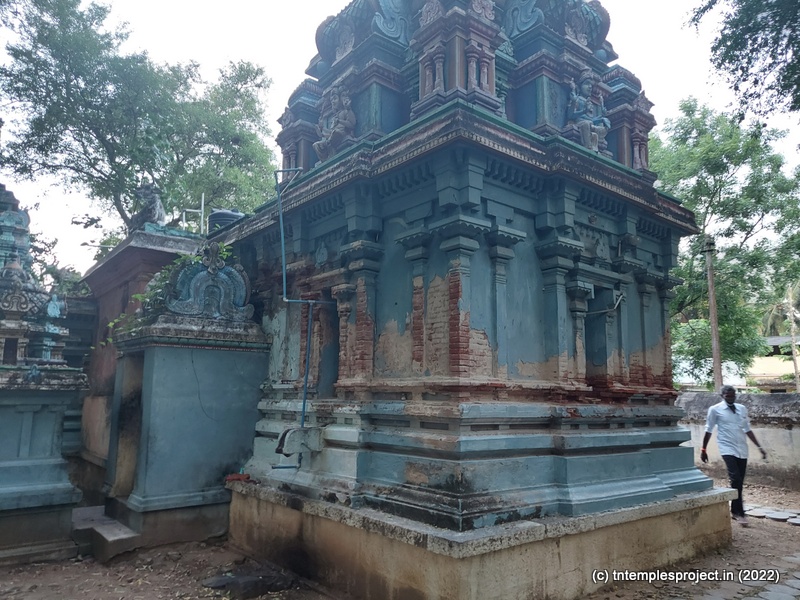
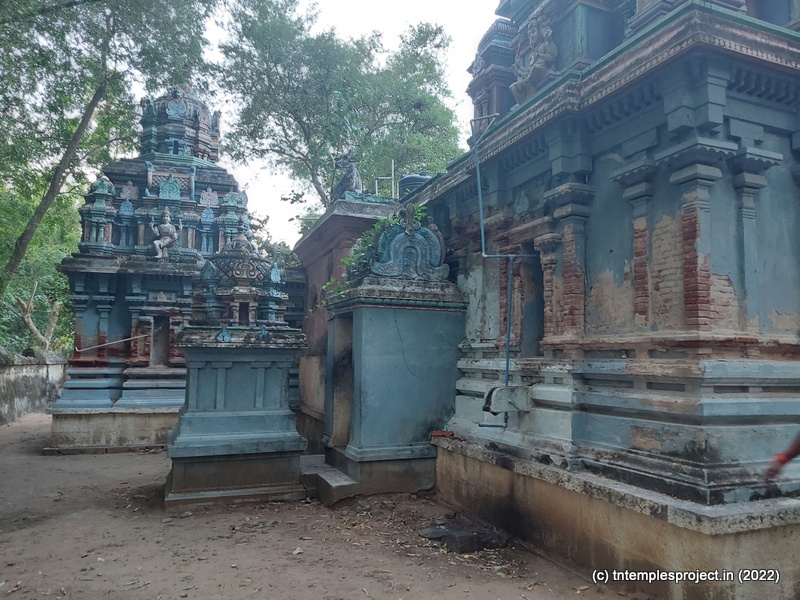
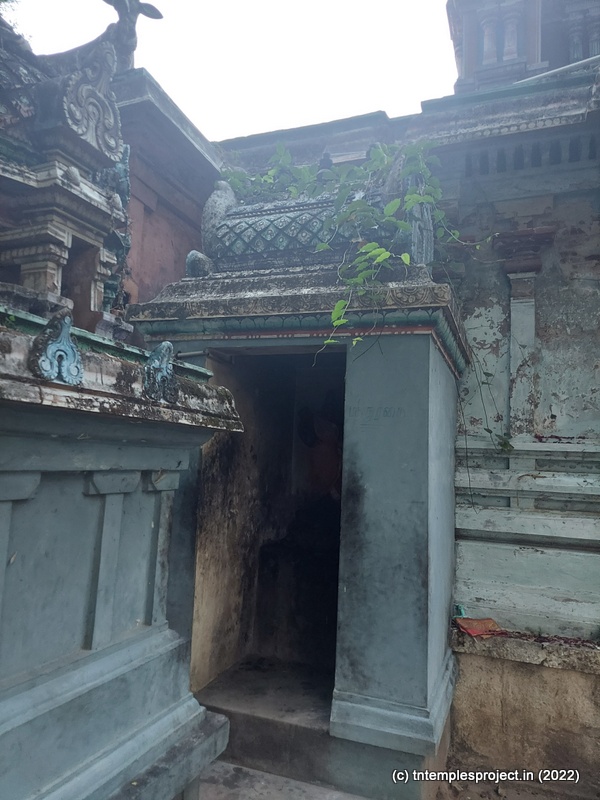
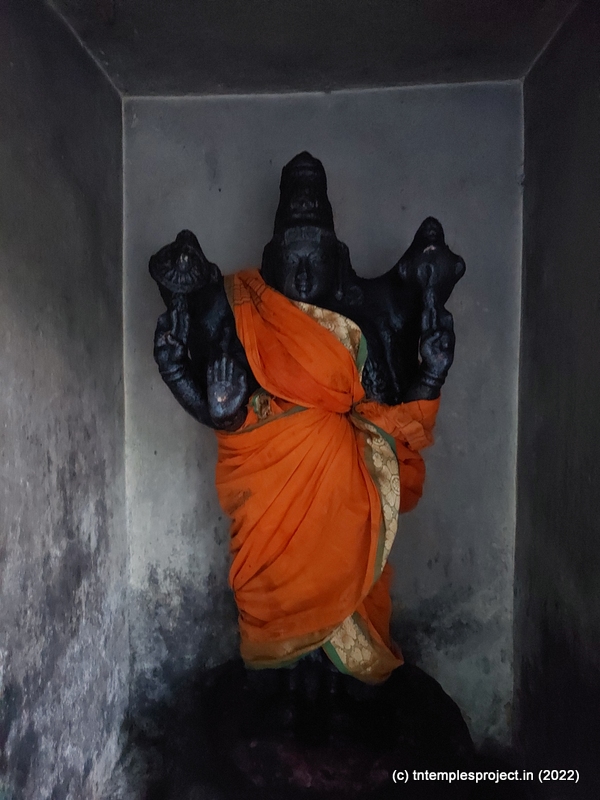
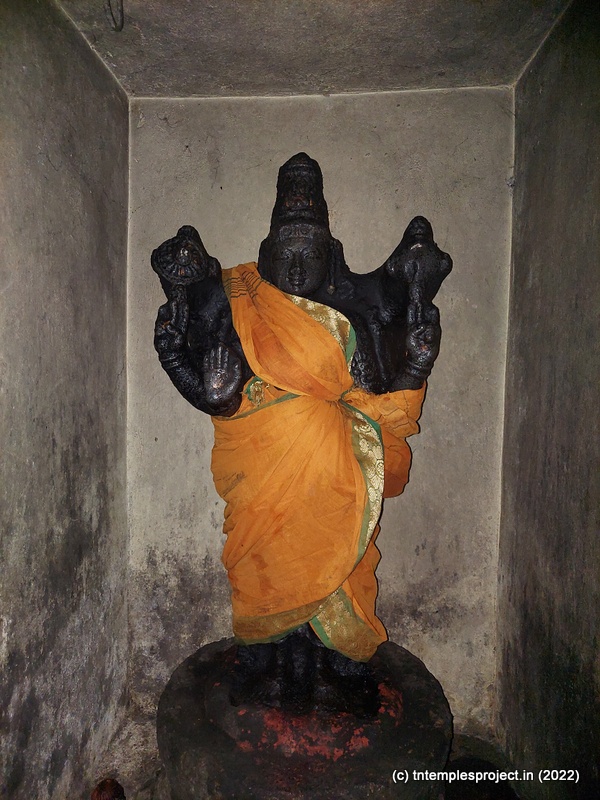
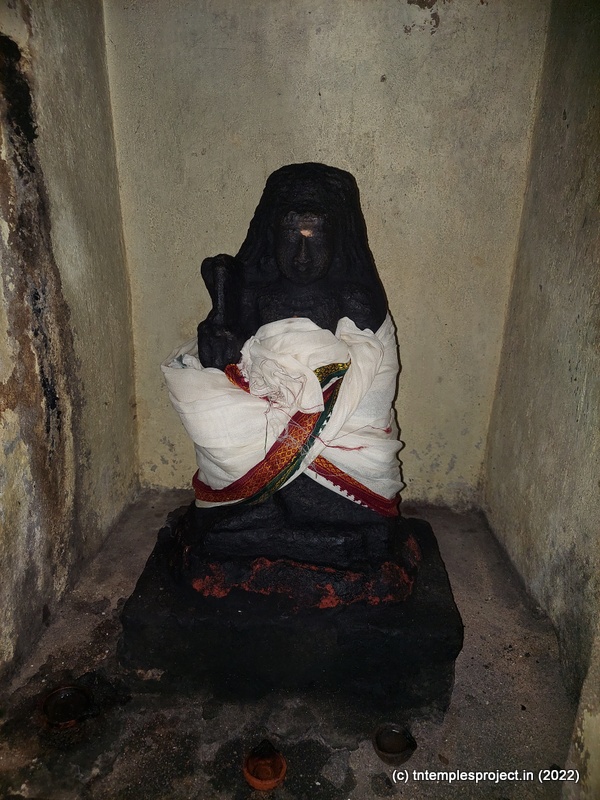
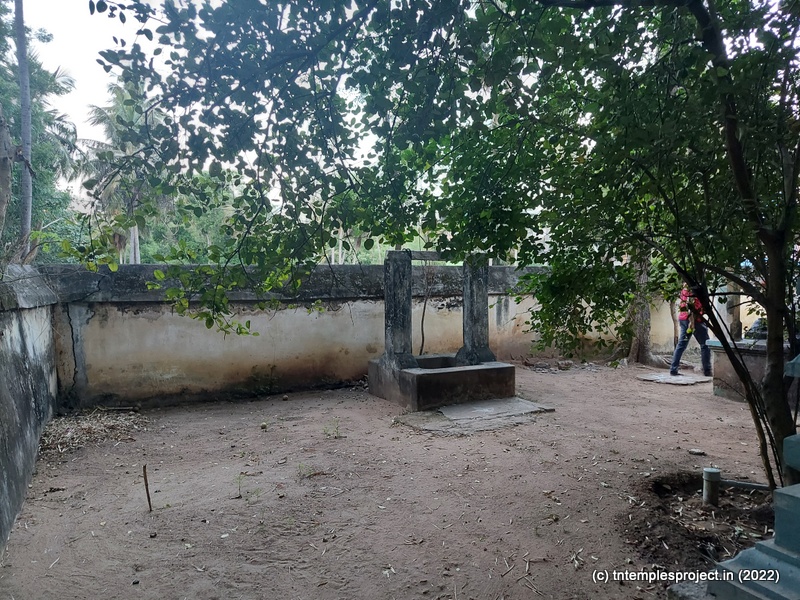
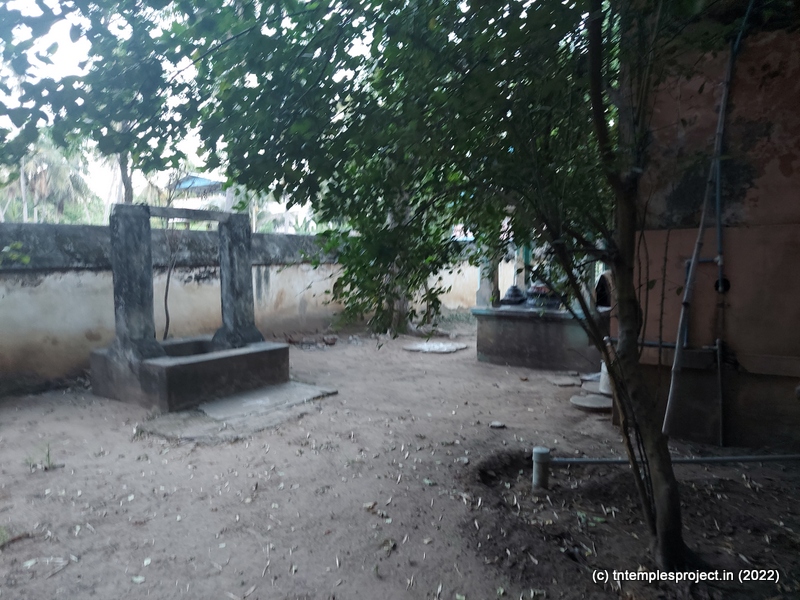
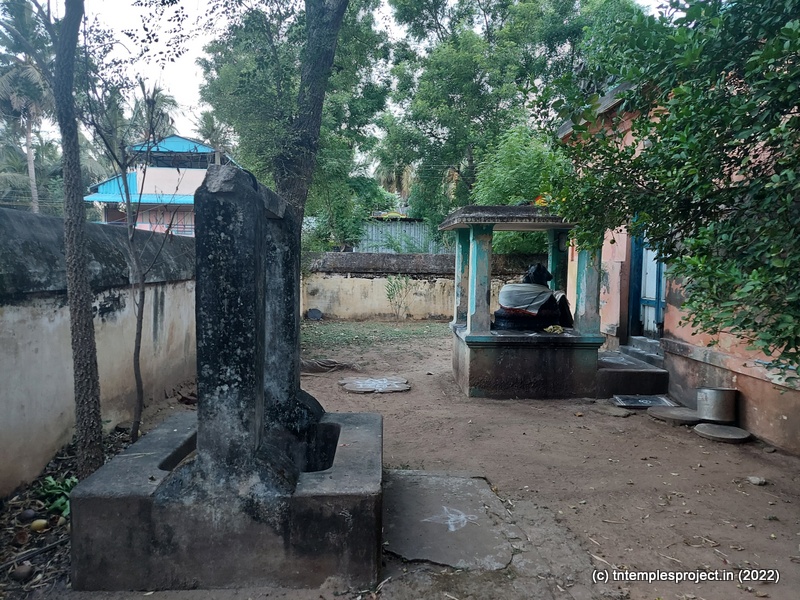
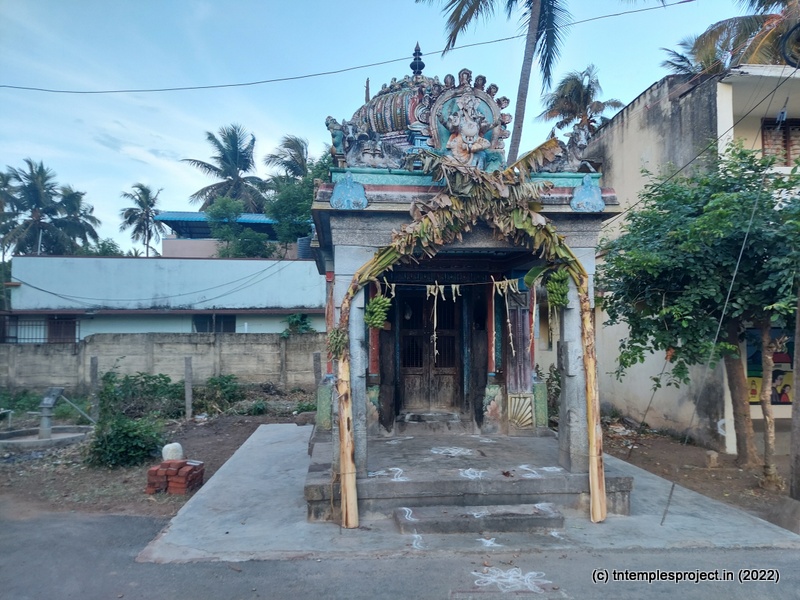
The temple faces east, with an entrance from the south. The main complex comprising the maha mandapam, ardha mandapam, garbhagriham and Amman shrine, is rather small. Facing the moolavar are Sani and Bhairavar, in the north-eastern portion of the maha mandapam. On the east is a Nandi mandapam with a beautiful Nandi. As one goes clockwise, in the prakaram are Dakshinamurti on the south, and Durga on the north. No other kostha murtis are present. There is a separate shrine for Chandikeswarar. On the north-eastern corner is a well that serves the temple. There are no shrines for the parivara deities such as Vinayakar, Murugan, etc, or even the Navagraham. (This was the layout of the temple when I visited in May 2022; it may have changed since, after renovation.)
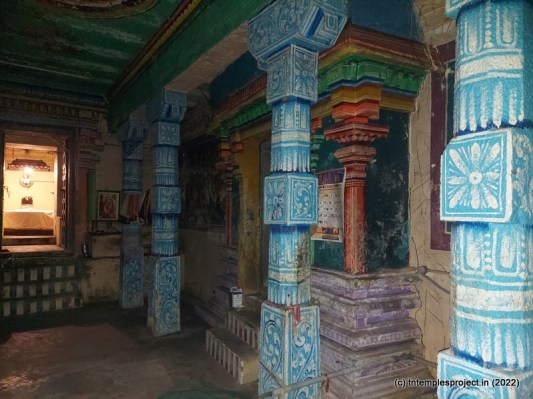
The original temple is from the later Chola period, with several subsequent renovations. It has been recently renovated by one Sri Sriram, a resident of the village. In fact, his house is where Kanchi Maha Periyavaa had stayed several decades ago, during a visit to this place, and observed the Chaturmasyam Vratham here.
Those suffering from Sarpa Dosham are recommended to visit this place for relief from their doshams. Also, Guru and Sani are believed to have appeared at this place facing each other, and so those who have such a position in their horoscopes are also advised to worship here. In addition to Thursdays (this being a Guru sthalam), worshipping here on the days of Visakha nakshatram and the third day after new moon (moondram pirai) are considered to be extremely beneficial to devotees. On the day of moondram pirai, the moolavar is worshipped with vilvam leaves, which are then handed out to devotees. It is regarded, that mixing these into a paste with water from the Kaveri river, and taken orally the following morning, is said to be a panacea for all illnesses.
Alavanthipuram, with its rich spiritual heritage, is a place where nature, divinity, and astrology converge. It remains a unique sanctuary where devotees find solace and seek solutions to their life’s challenges. The spiritual significance of Alavandipuram continues to inspire seekers on their spiritual journeys, offering them a glimpse of the divine in a tranquil and harmonious setting. Whether one seeks astrological remedies or spiritual awakening, Alavandipuram stands as a testament to the mystique and spirituality of the land.
Other information for your visit
Contact
Gallery
 TN Temples Project