Moolavar: Soundararaja Perumal
Ambal / Thayar: Soundaravalli Thayar
Location: Kadichambadi
District: Thanjavur
Timings: – to – & – to –
Age: 1000-2000 years old
Teertham: Brighu Teertham, Brahma Teertham
Vriksham:
Agamam:
Temple groups: , , ,
Parikaram:
Distances and maps:
Kumbakonam (8 km), Mayiladuthurai (38 km), Ariyalur (43 km), Thanjavur (44 km)
Directions from your current location (ensure GPS is turned on)
The hamlet of Kadichambadi is located south of the Kollidam river, and very close to Alamankurichi and Tirunallur on the way from Kumbakonam to Jayamkondam.
According to the sthala puranam here, Kadichambadi is one of the places where Lord Vishnu bestowed His appearance to Brahma. The Lord’s form was extremely beautiful and pleasing, and so He was named Soundararajan, the handsome one.
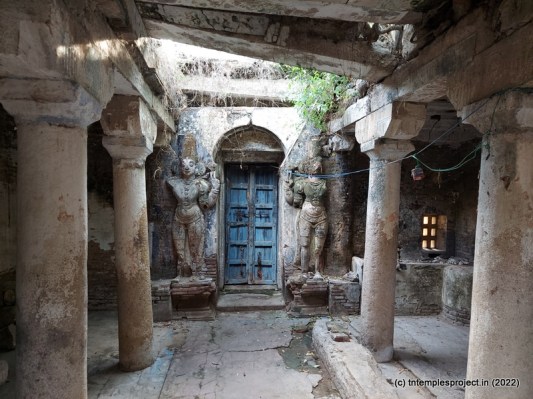
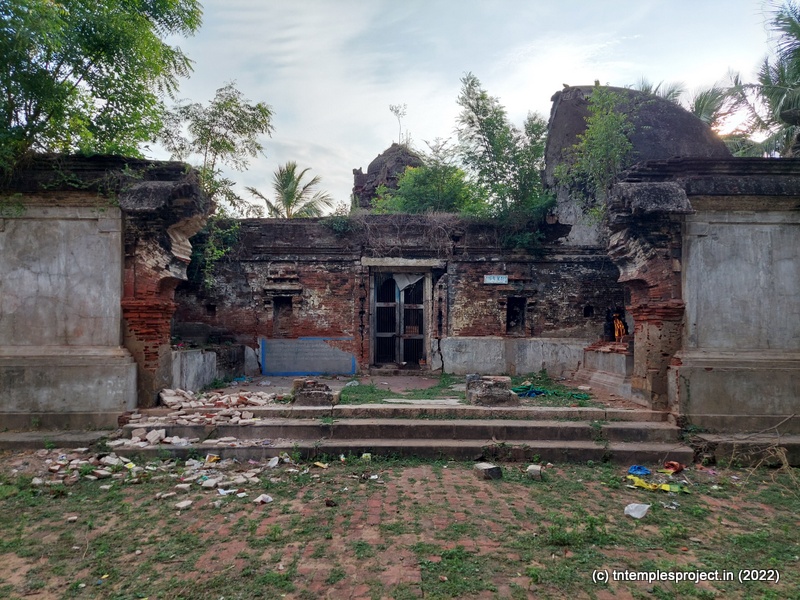
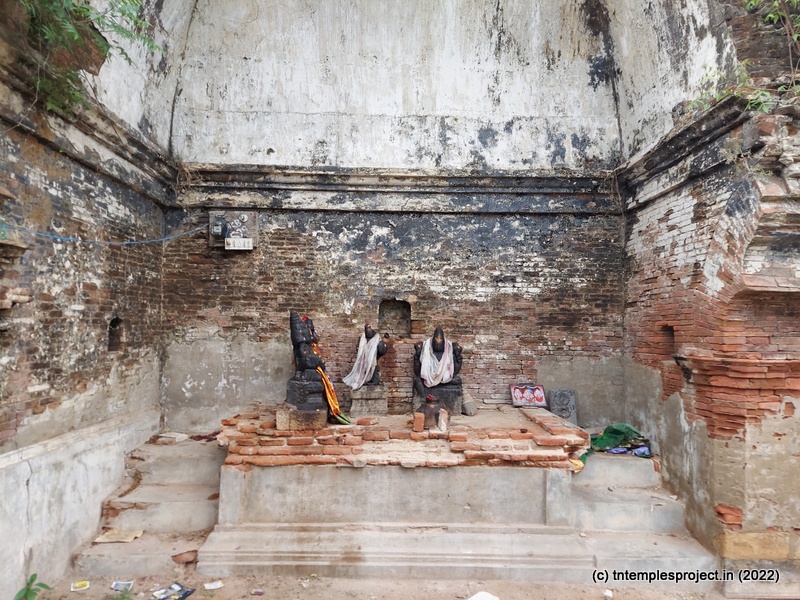
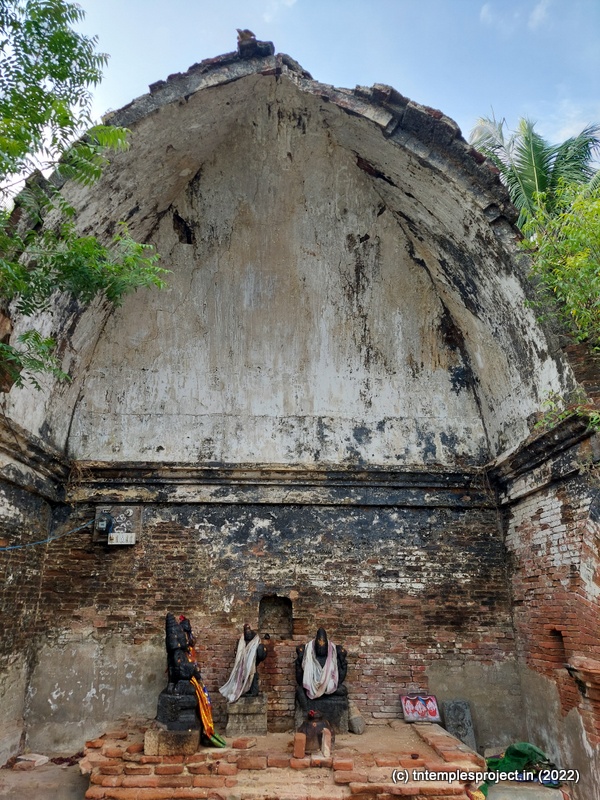
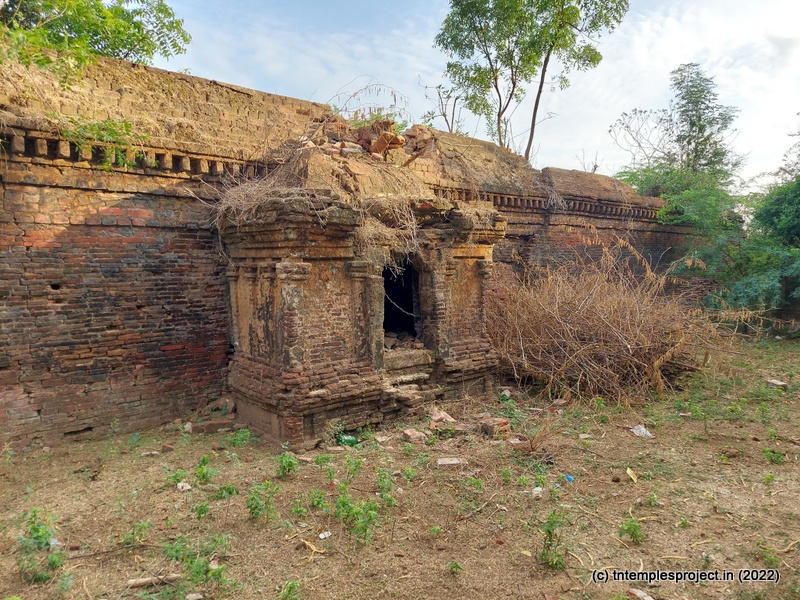
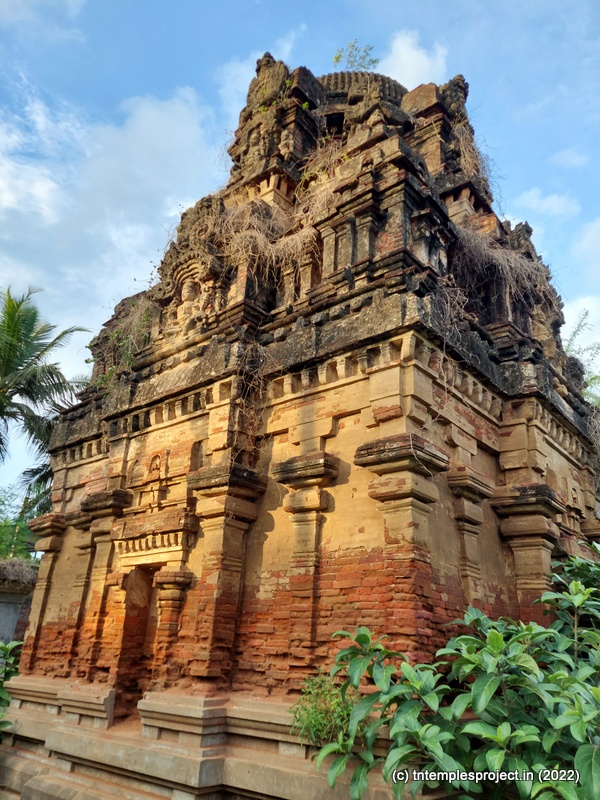
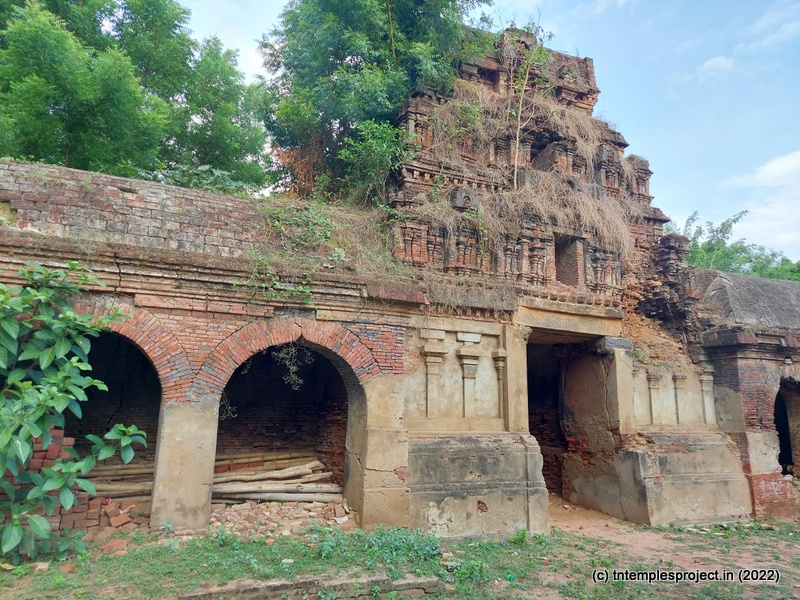
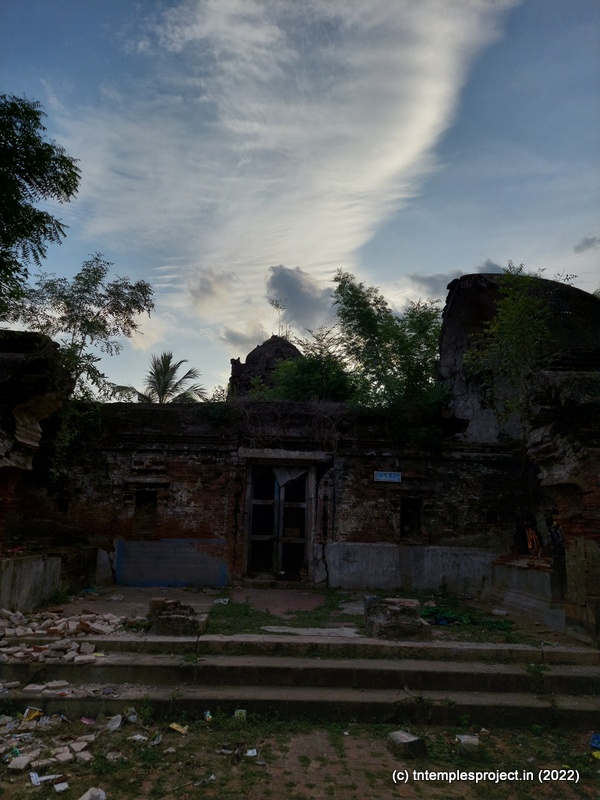
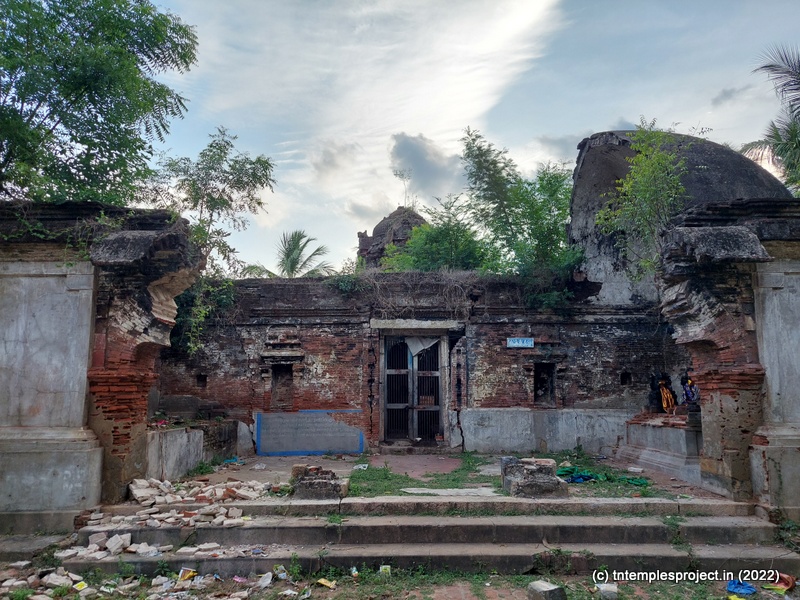
The temple is a shadow of its former self, having succumbed to decades of apathy and no maintenance. As a result, except for the worship of some of the vigrahams in one corner of the temple premises, the main temple itself is no longer in active worship.
The etymology of the village’s name – Kadichambadi – is quite fascinating. According to mythology, when a king ruled over this place, he would be woken up every morning by the sound of a bird. Kiricham refers to the variety of that bird, and Padi (which normally means an army camp) here refers to the singing of a song. So, the place got the name Kiricham-Padi, which over time, corrupted to Kadichambadi. However, the more realistic story is that Kadichambadi is a corruption of Kachi-Padi, Kachi referring to the Pallavas of Kanchi, and Padi is of course an army camp. This was perhaps a place where the Pallavas, during their time, had set up camp.
Sage Brighu is said to have worshipped here to be rid of a curse. During that time, he is believed to have created the temple tank, which is located to the west of the temple premises, and is known as Brighu Teertham. Because of Brahma’s association with this temple, the tank is also called Brahma Teertham. The nandavanam / garden abutting the teertham was once the only source of flowers to adorn the deities at the Sarngapani temple in Kumbakonam.
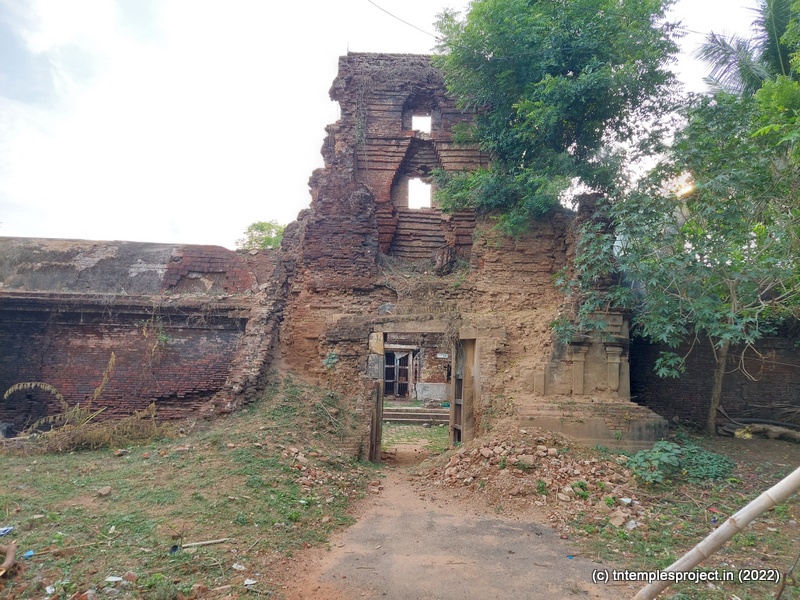
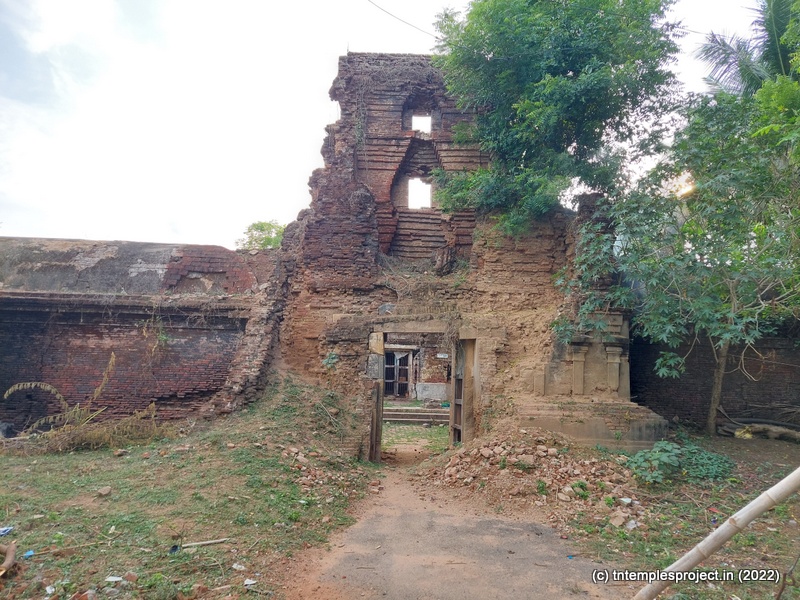
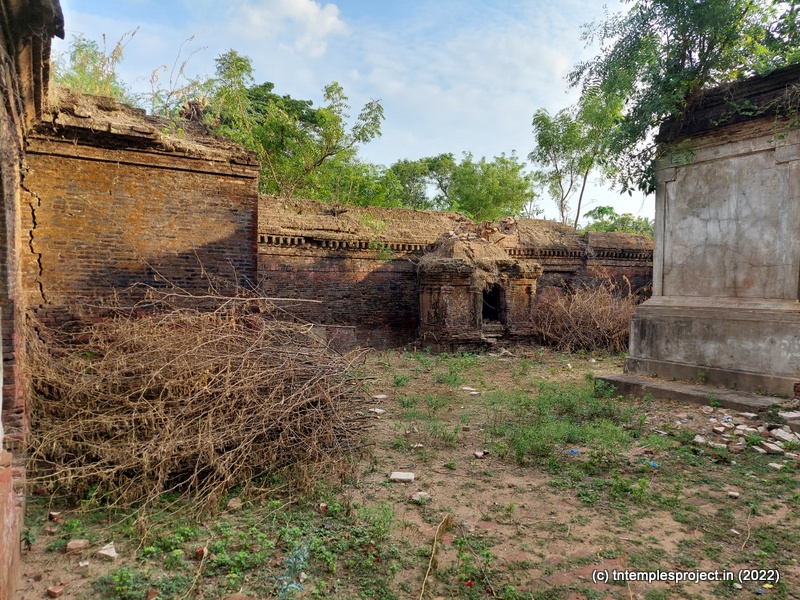
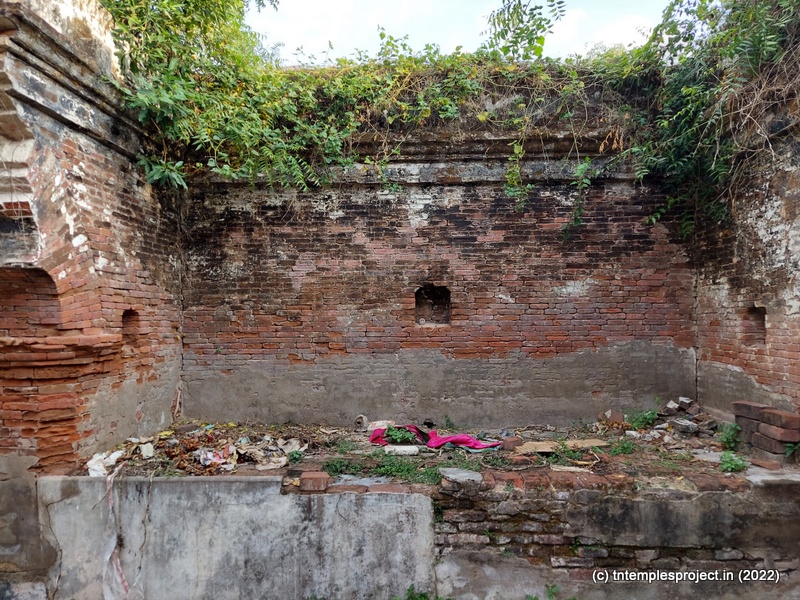
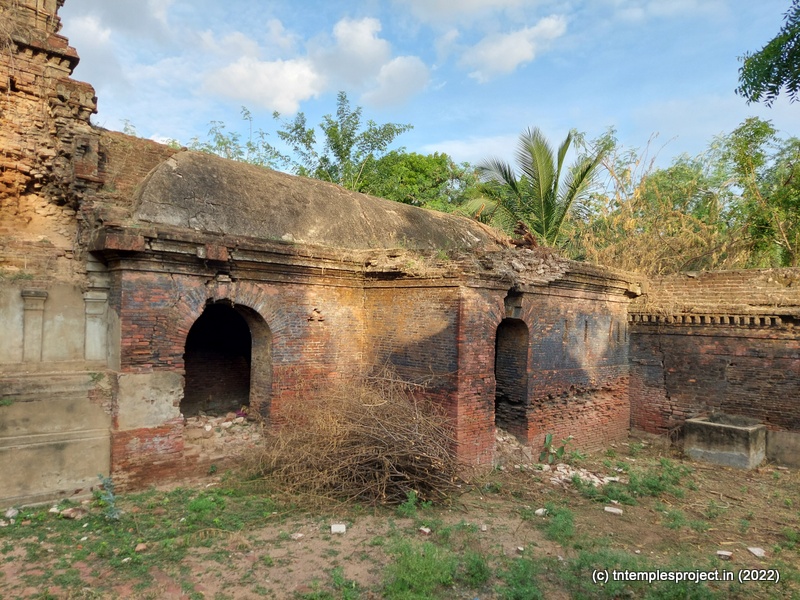
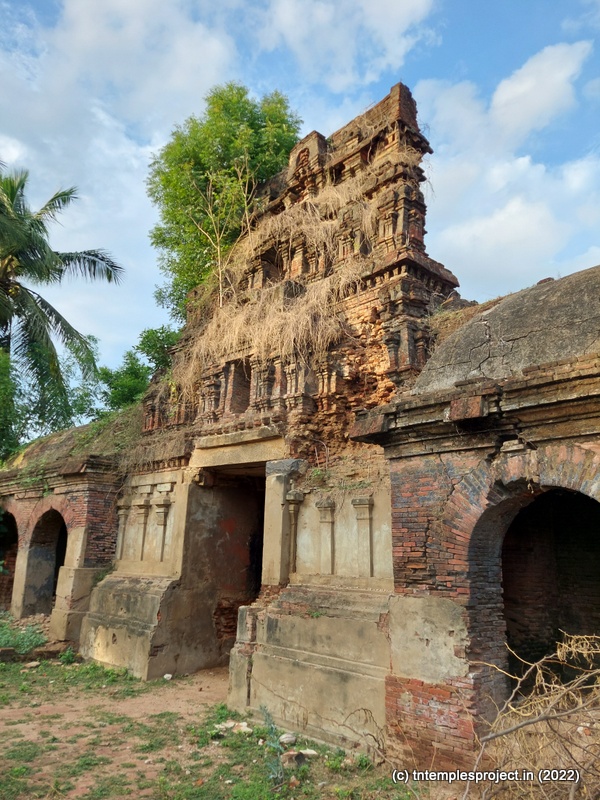
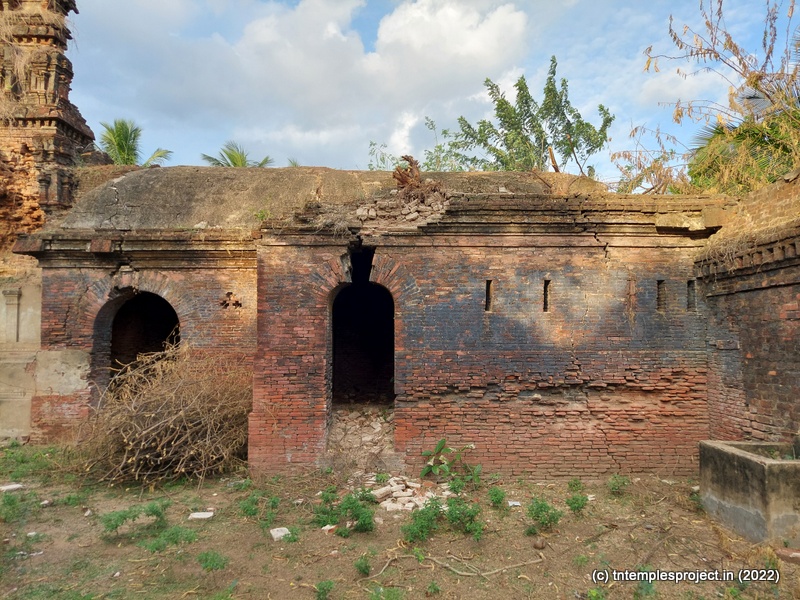
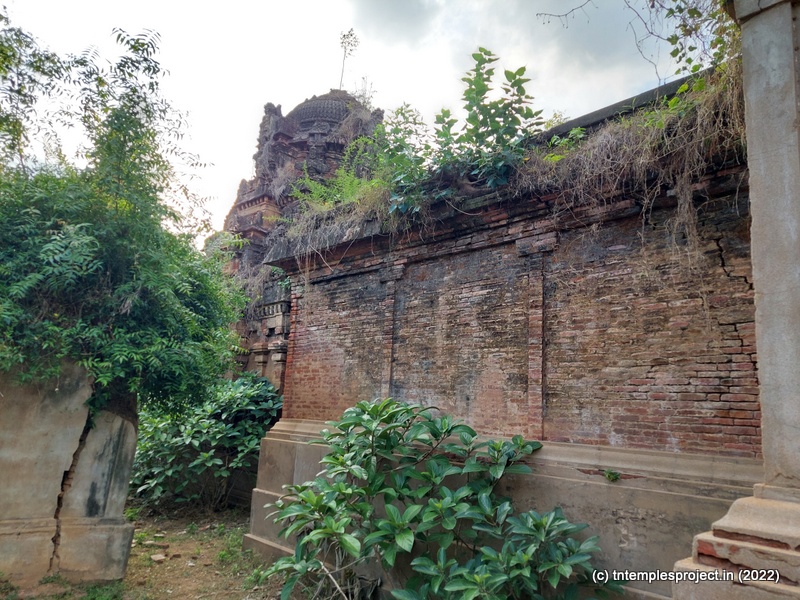
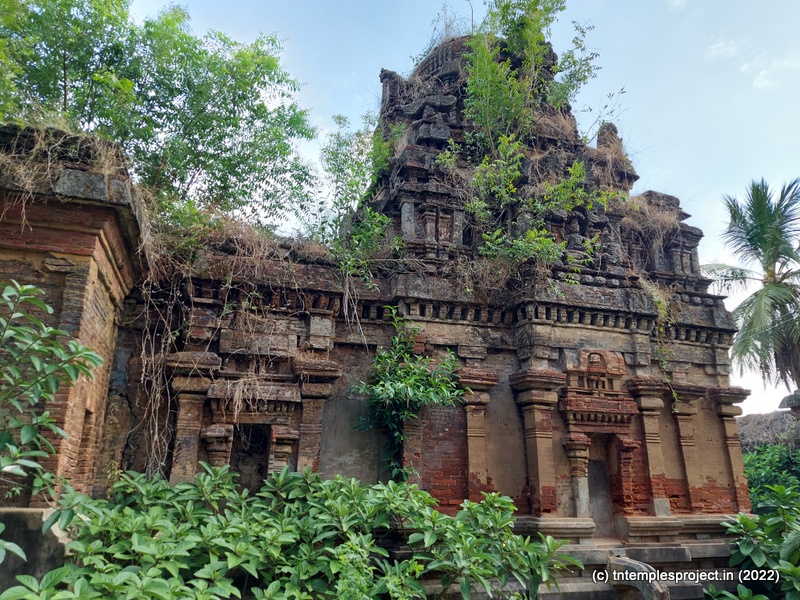
The entirety of what must have been the original temple complex, remains today. But the structures are barely standing, and there is a real risk that they may topple over and fall on devotees.
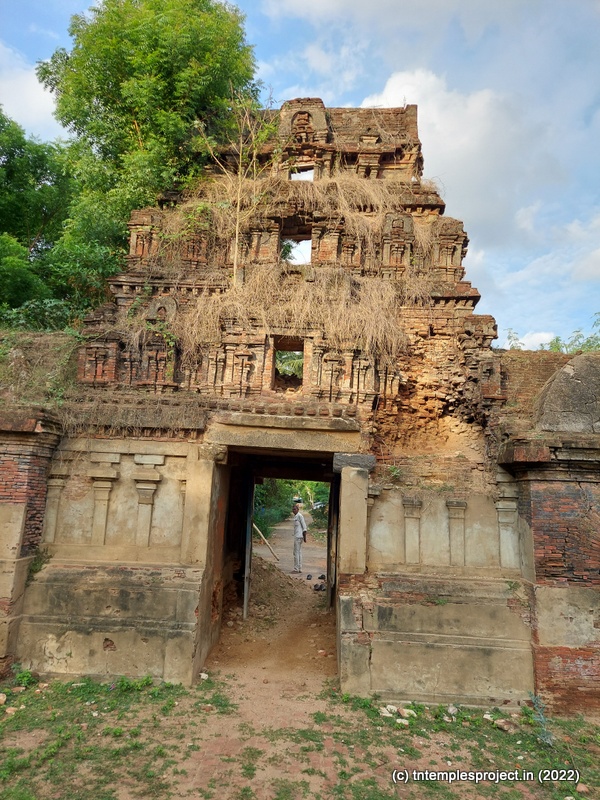
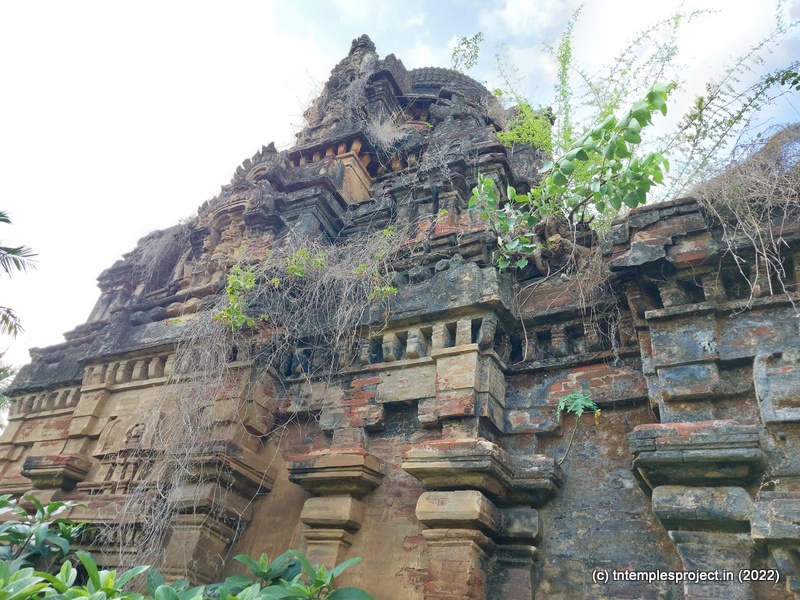
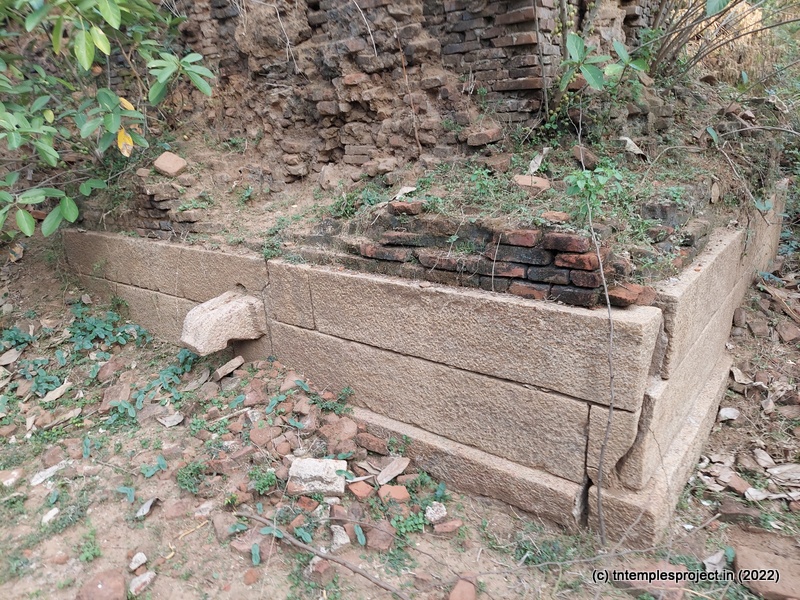
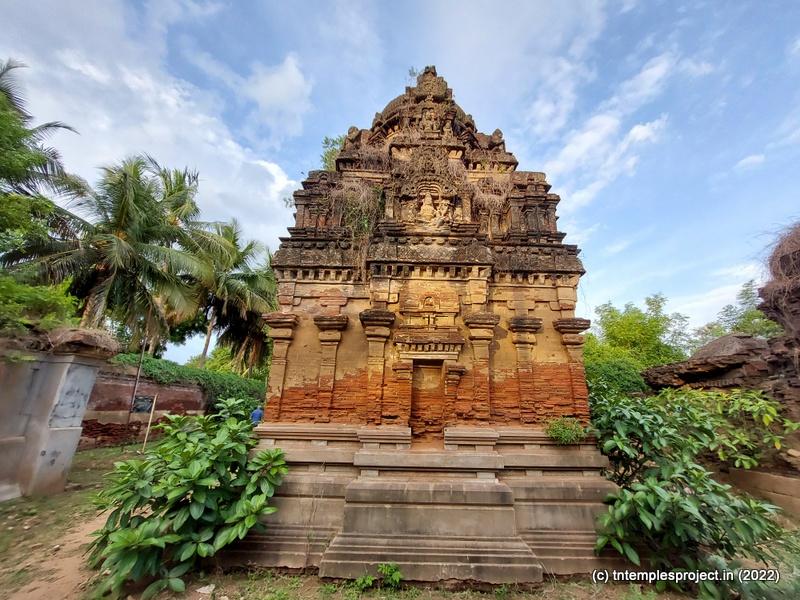
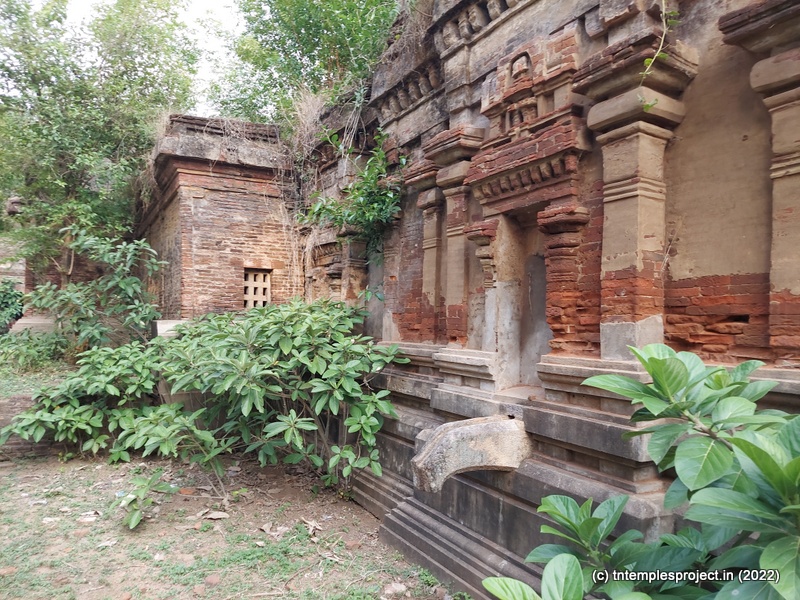
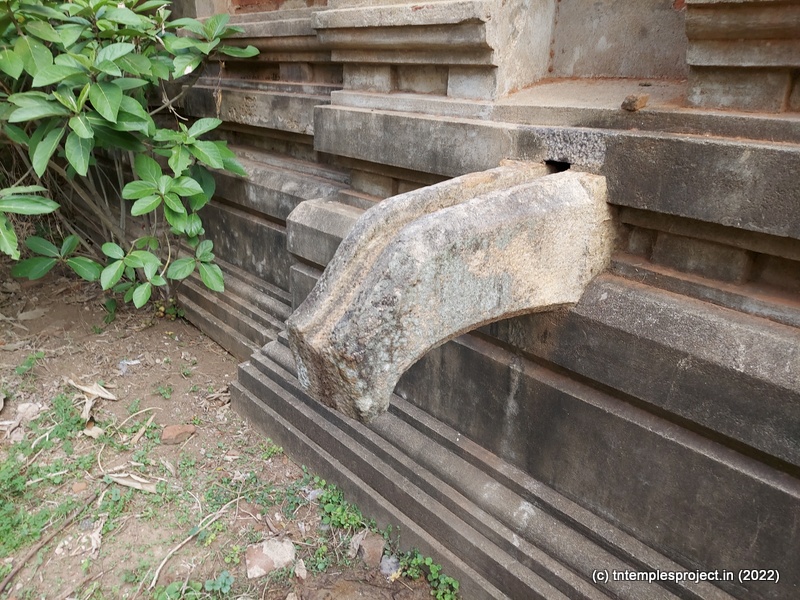
A three-tier raja gopuram leads us into the temple, and straight ahead are the remains of a mandapam that houses the garbhagriham. There are signs of a vavvaal-nethi mandapam, indicating Maratha involvement here at some point in history. It is highly dangerous to walk around the temple complex, but we did it nonetheless. The base level of the temple is made of granite and stone, while the upper layers are brick based.
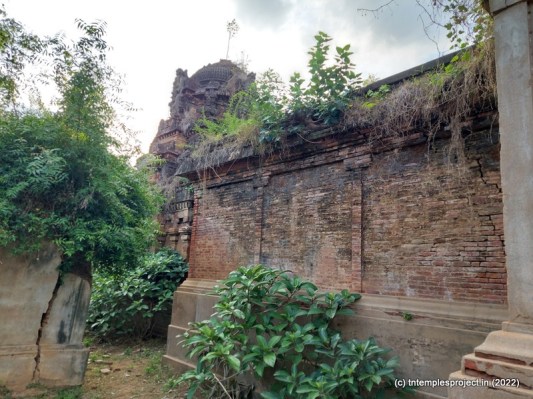
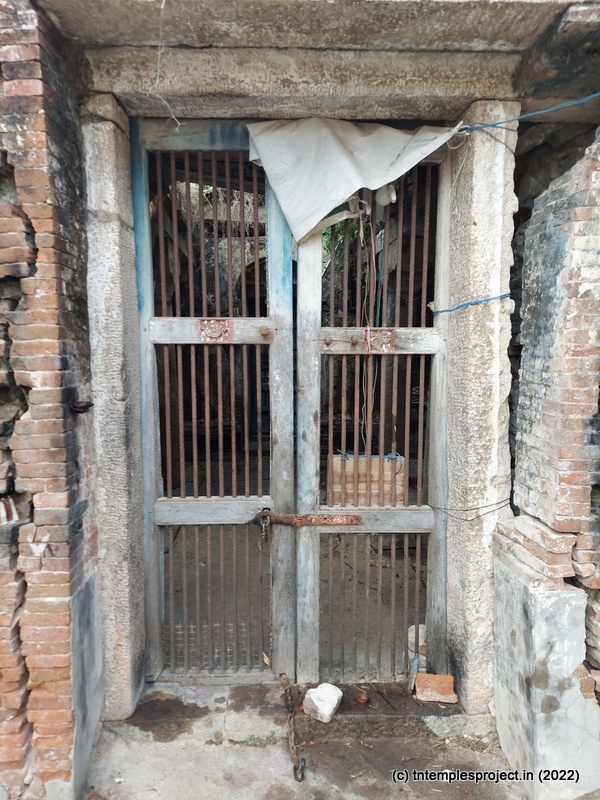
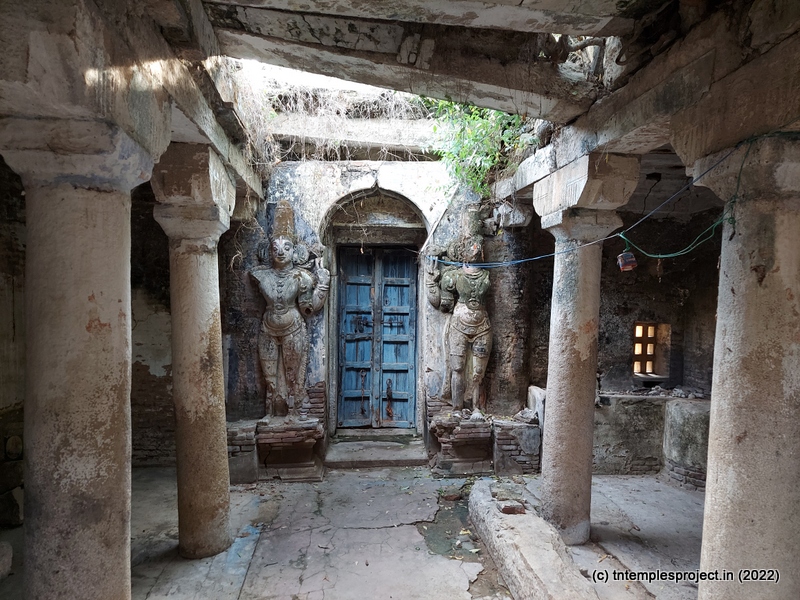
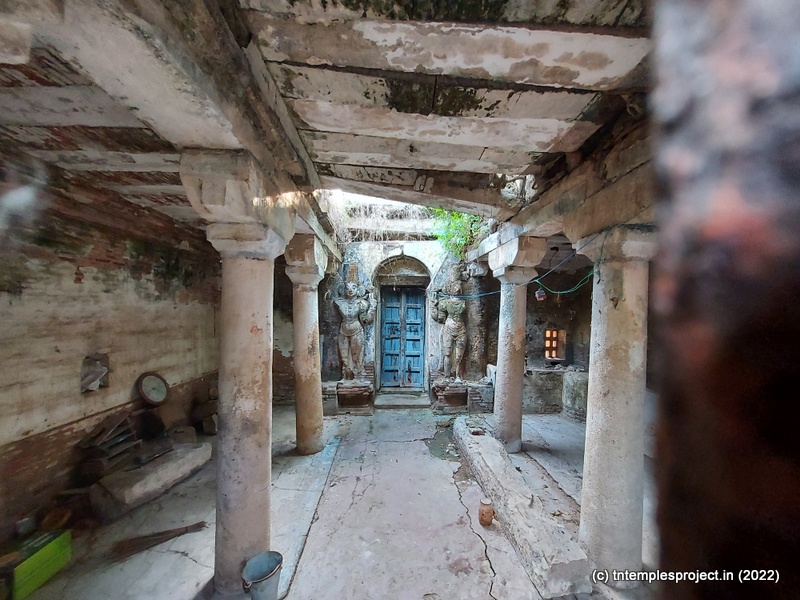
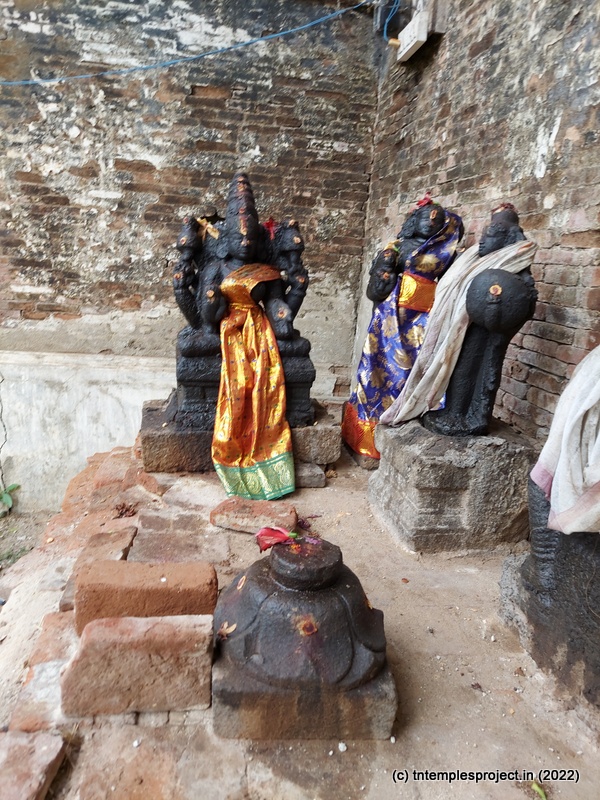
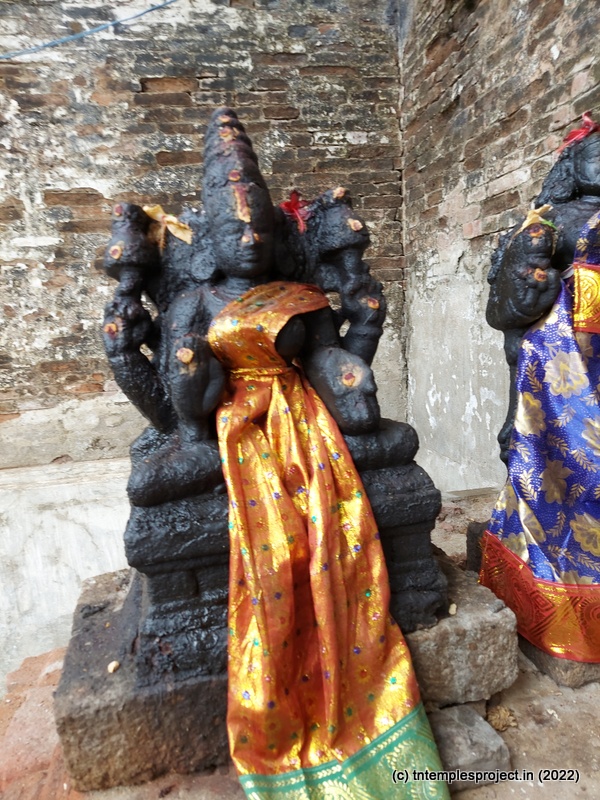
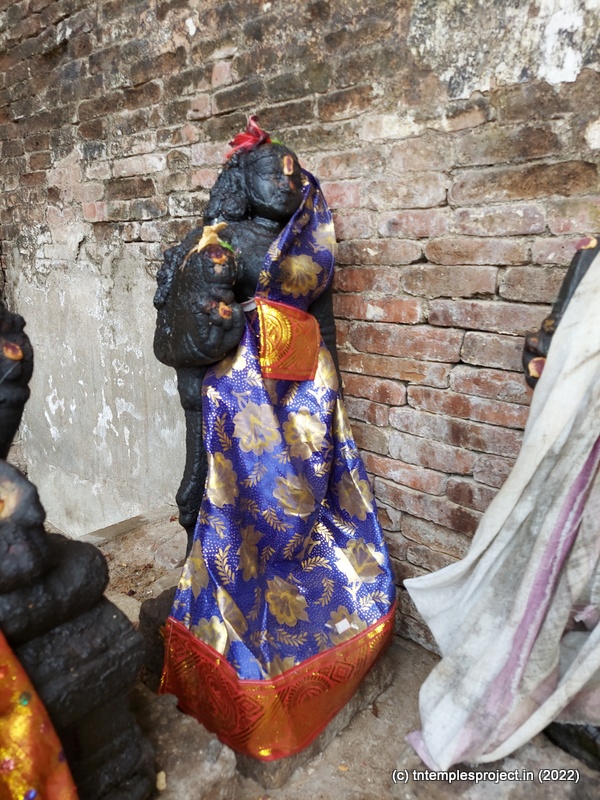
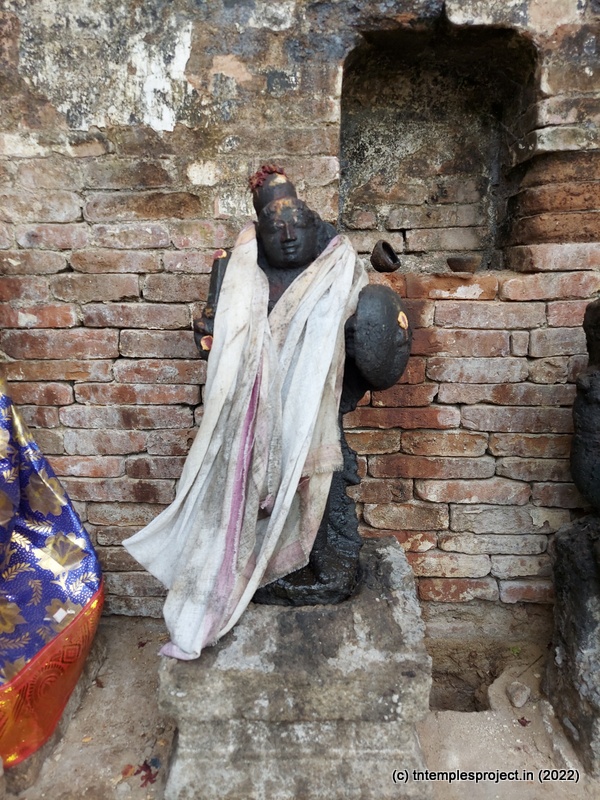
A grill gate in the (now open-to-air) mandapam is the entrance to the pillared ardha mandapam, inside which are two very finely crafted dwarapalakas guarding the garbhagriham. On the right is a half-covered mandapam whose original purpose is unclear. Today, it serves as the place where some of the vigrahams, including Lakshmi and Krishnan (and also what appears to be a Vishnu Durga vigraham from a Siva temple) are worshipped by the locals. On the northern part is a relatively newer shrine for Andal, but that is also no longer in use.
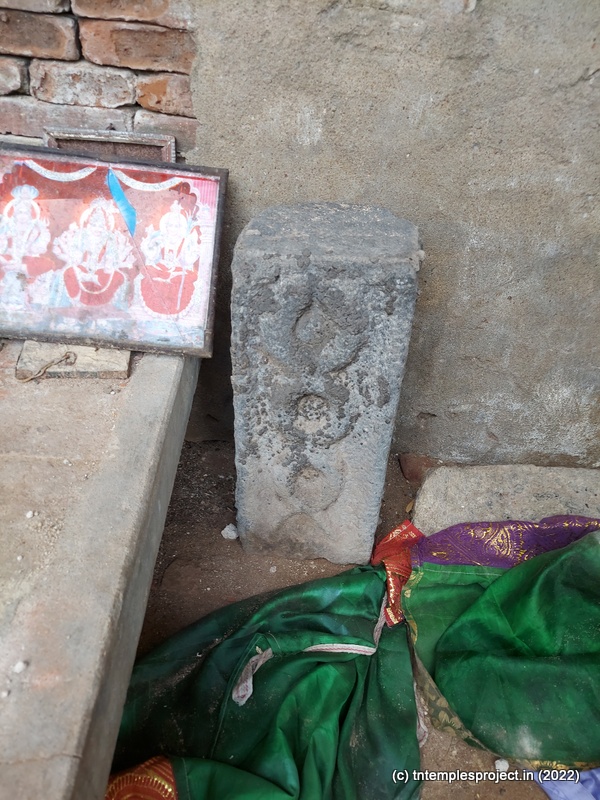
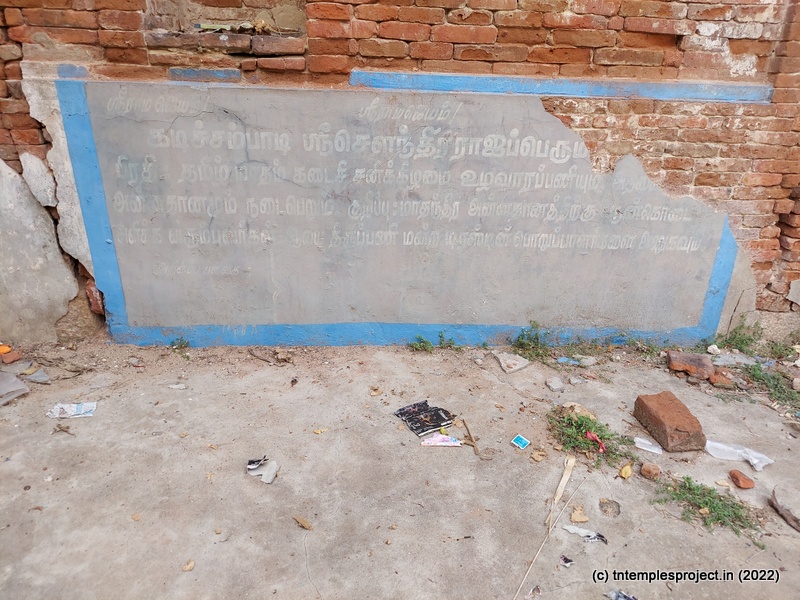
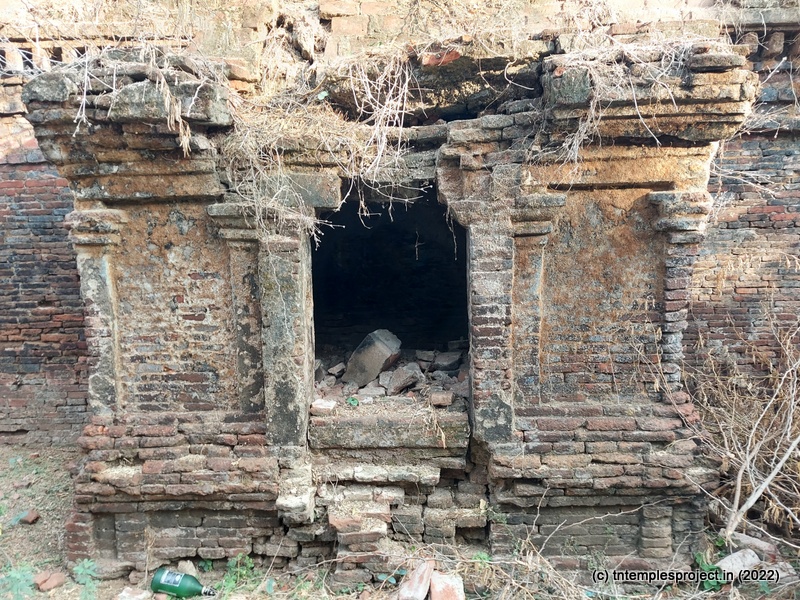
Even though made of brick, the outer walls / koshtams of the mandapam and garbhagriham are beautifully crafted – a tribute to the skill and workmanship of the artisans of yore. Also, located near the Thayar shrine is a half-visible inscription referring to a grant of 28,800 square feet of land to Ara Azhagar – the Perumal of this temple – by a king. There are no further details.
Given the temple’s pitiable state, urgent intervention is needed to restore the temple in order to preserve its history.
 TN Temples Project