
Basic information about the temple
| Moolavar: | Vikrama Chozheeswarar | Ambal / Thayar: | Abhirami |
| Deity: | Siva | Historical name: | |
| Vriksham: | Teertham: | ||
| Agamam: | Age (years): | Timing: | – to – & – to – | Parikaram: |
| Temple group: | – | ||
| Sung by: | Temple set: | ||
| Navagraham: | Nakshatram: | ||
| City / town: | Thippirajapuram | District: | Thanjavur |
| Maps from (click): | Current location | Kumbakonam (6 km) | Tiruvarur (35 km) |
| Mayiladuthurai (40 km) | Thanjavur (40 km) |
Location
Sthala puranam and temple information
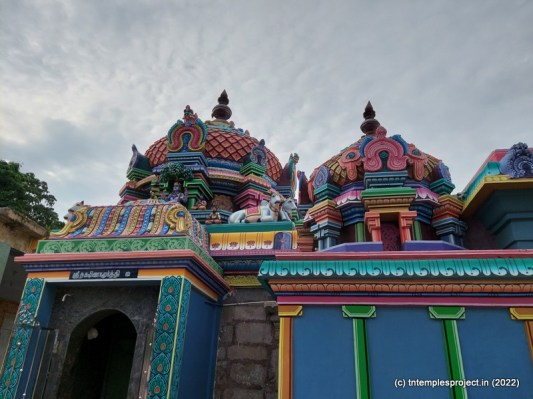
There are several temples where the main deity / moolavar is named Soleeswarar or Chozheeswarar. There are several such temples, in Tamil Nadu as well as in parts of Karnataka and Andhra Pradesh. This represents the areas under Chola rule, and as the name of the deity suggests, these temples were built by various Chola kings over the centuries.
This particular temple in Thippirajapuram, about 9 km south of Kumbakonam, is located on the southern banks of the TR Patnam river (Tirumalai Rajan Pattinam or just Tirumalai Rajan river). Going by the name of the deity, the temple clearly belongs to the 12th century CE, ie the time of Vikrama Chola.
The sthala puranam of this temple is based in recorded history from the time of Vikrama Chola. One day, the king was traveling on his horse for a hunt, when he trampled on a brahmin by accident, killing the brahmin. The king was told that brahmahathi dosham would attach to him, and as penance for his act, he built this temple for Lord Siva.
In the time of the Thanjavur Nayaks, a minister named Thippi Deva Rayar (or Thippayya) donated this village to brahmins, making it a brahmadeyam. Due to this reason, the village was named after the minister, as Thippayya Raya Puram, which over time has corrupted to Thippirajapuram. (This Thippi Deva Rayar is also the cause for the various sculptures in the raja gopuram of the Sarngapani temple in Kumbakonam.)
The Thippirajapuram Agraharam is as picturesque as it is steeped in history and tradition. There is a Veda Patashala here, which also serves as a Kanchi mutt outpost. Many of the houses in the Agraharam are almost a century old, if not older.
The village itself is the birthplace of several Tamil scholars and vedic pundits, including Narayanaswami Panditar who was adept at yagas such as Vajapeyam, Somayagam and Garuda Sayanam; and Vaidyanatha Sastri, who wrote several books on Sanskrit grammar and also composed several songs and hymns on the Siva and Vishnu deities in this village. At the end of the street adjacent to where this temple is located, is also a temple for Lord Vishnu as Venugopala Perumal. (Thippayya also undertook the renovation of the Perumal temple.) In recent periods, Seetharama Ganapadigal set up a veda patashala in the village.
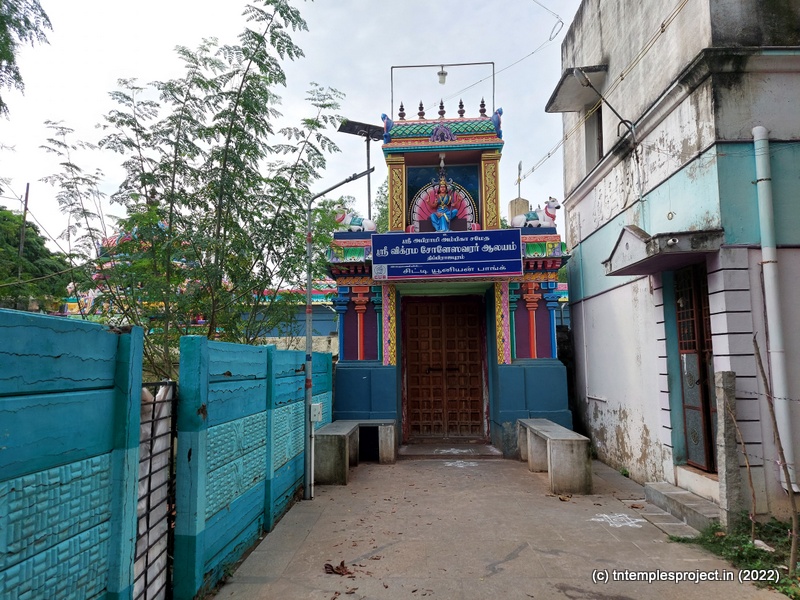
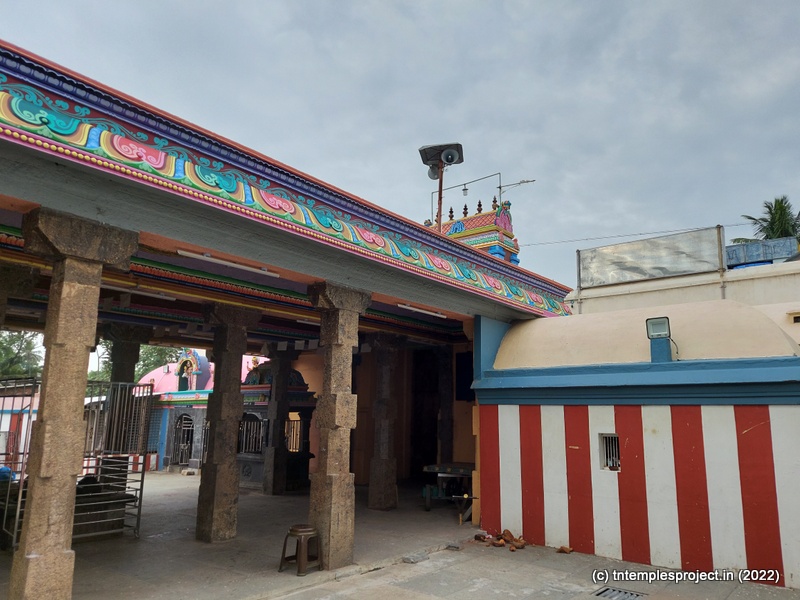
While the main east-facing entrance abuts the Kumbakonam-Mannargudi main road, that is usually closed. Instead, there is a small passage on the southern side, through which the temple is accessible.
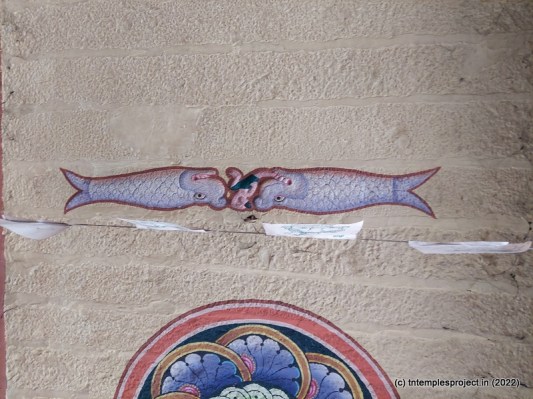
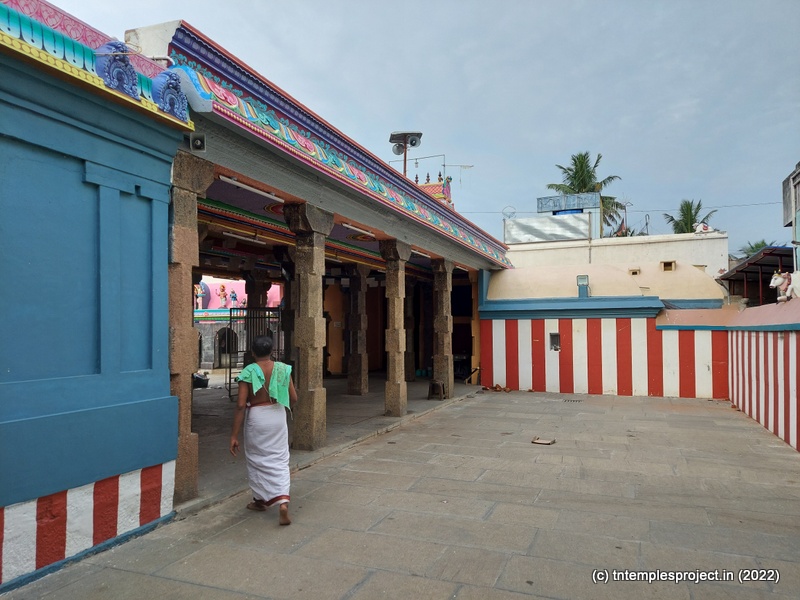
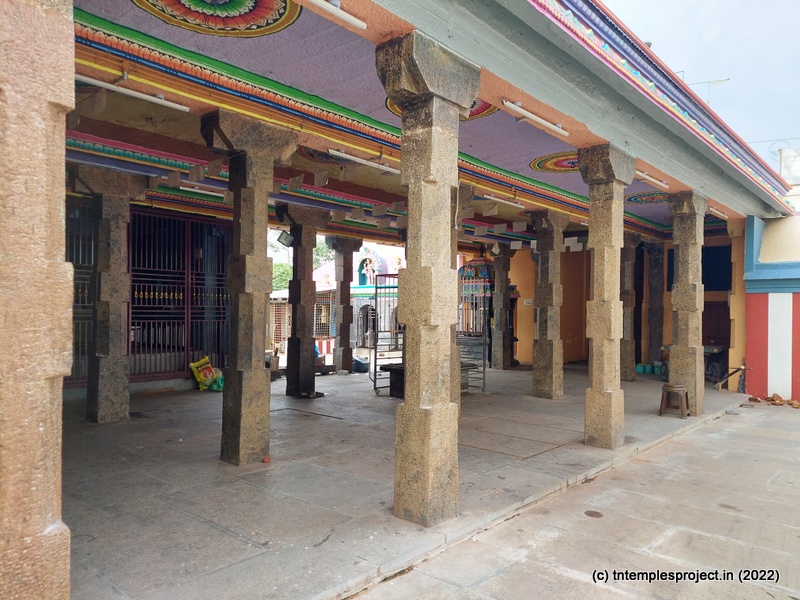
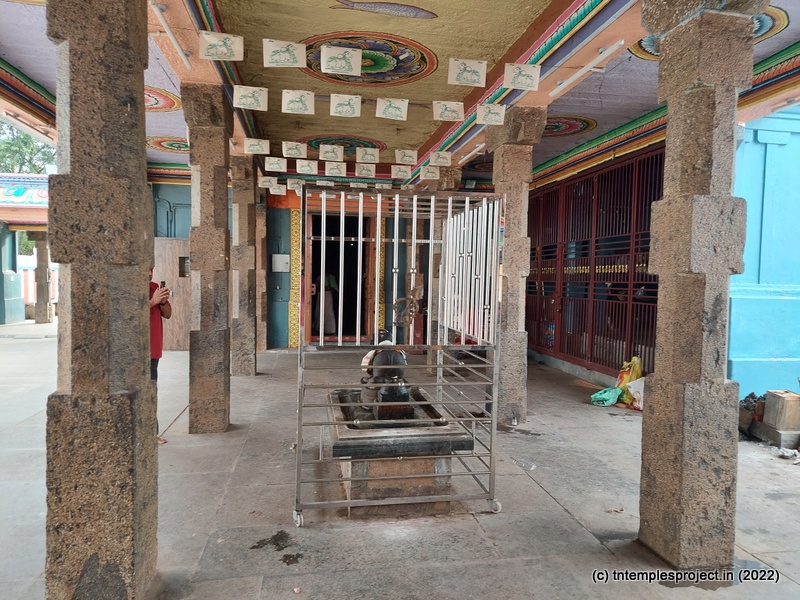
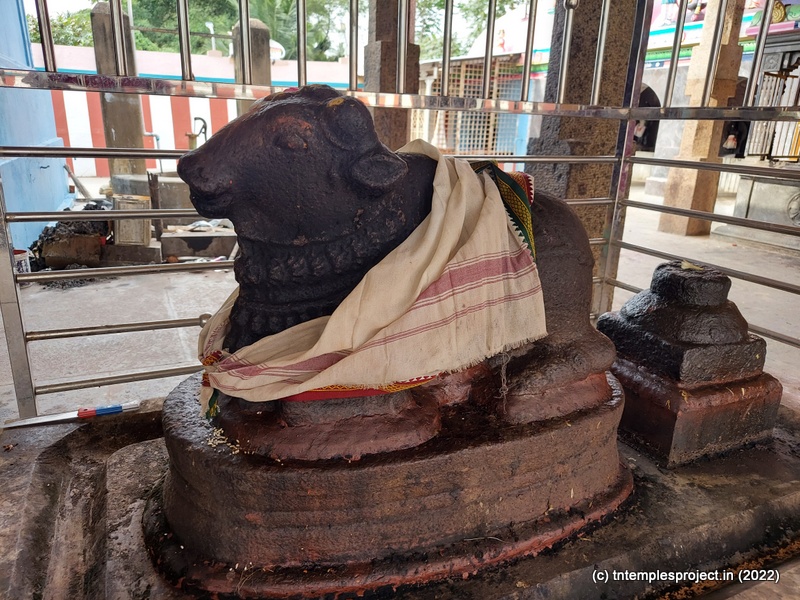
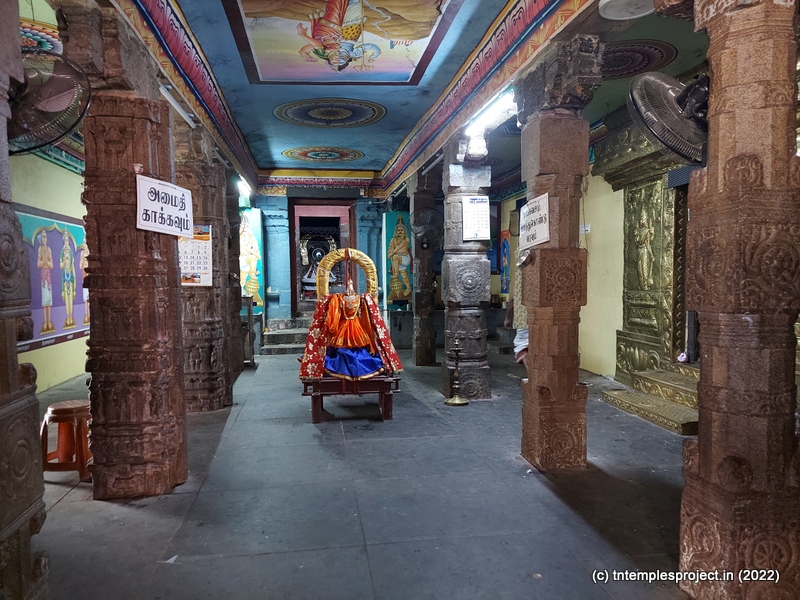
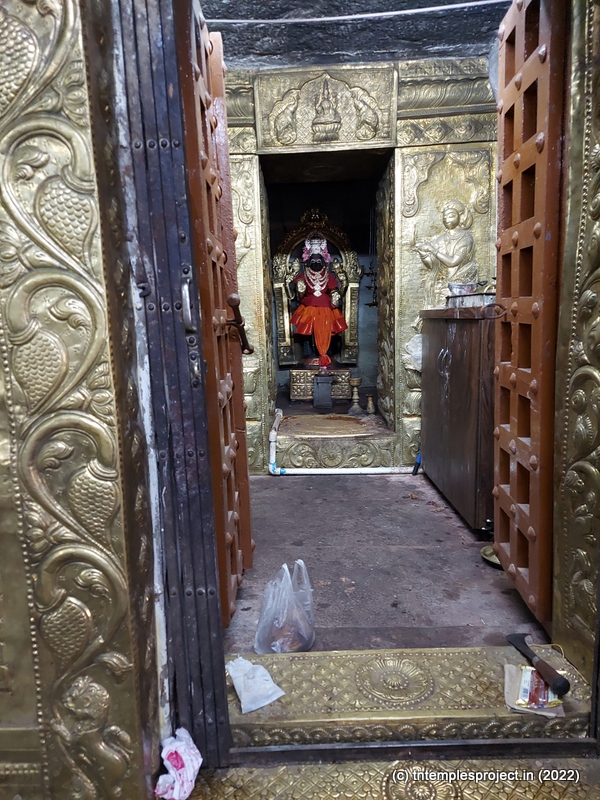
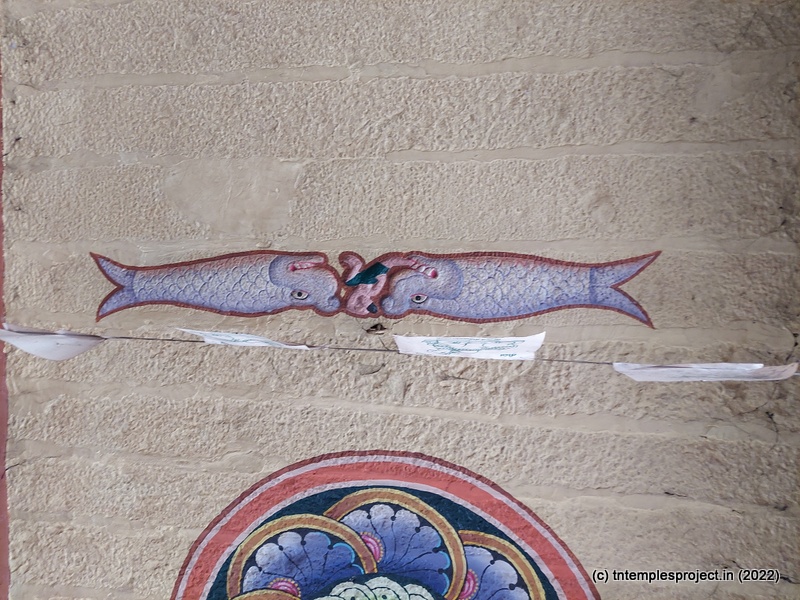
From the eastern entrance is a long, covered passage like a mandapam, which has a bali peetham and pradosha Nandi, and leads to the maha mandapam. Inside the long maha mandapam, on the right is the Amman shrine and straight ahead is the garbhagriham. Interestingly, on the ceiling is an image of what appears to be two fish of some sort facing each other, suggesting there may have bene some Pandya involvement in renovating this temple. One of the sculptures here is also of Vikrama Chola worshipping Lord Siva.
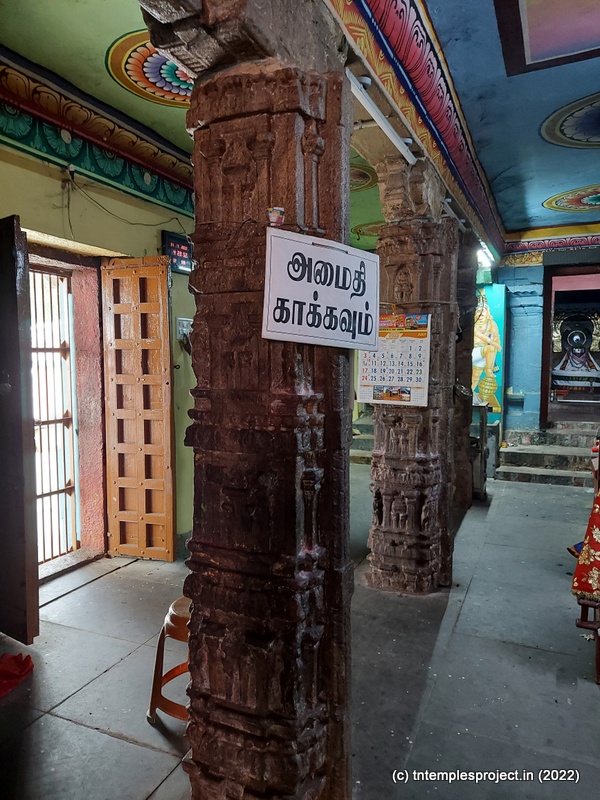
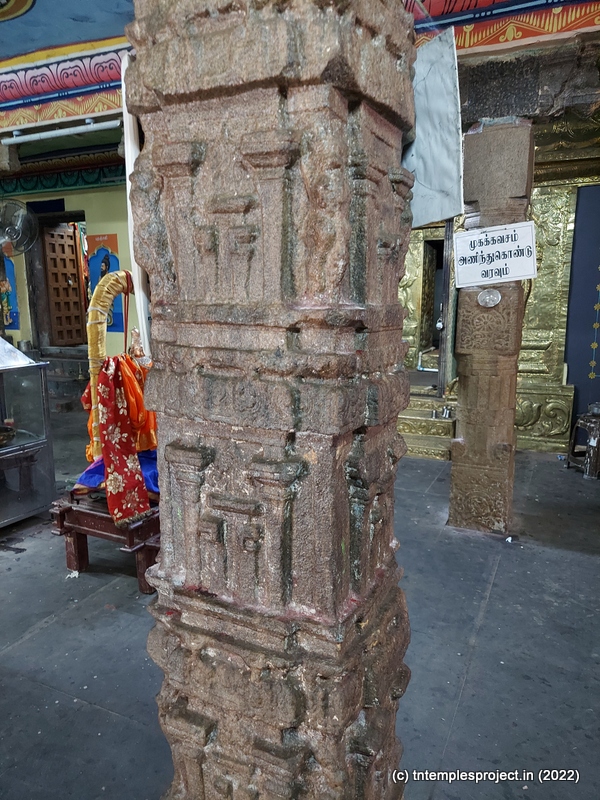
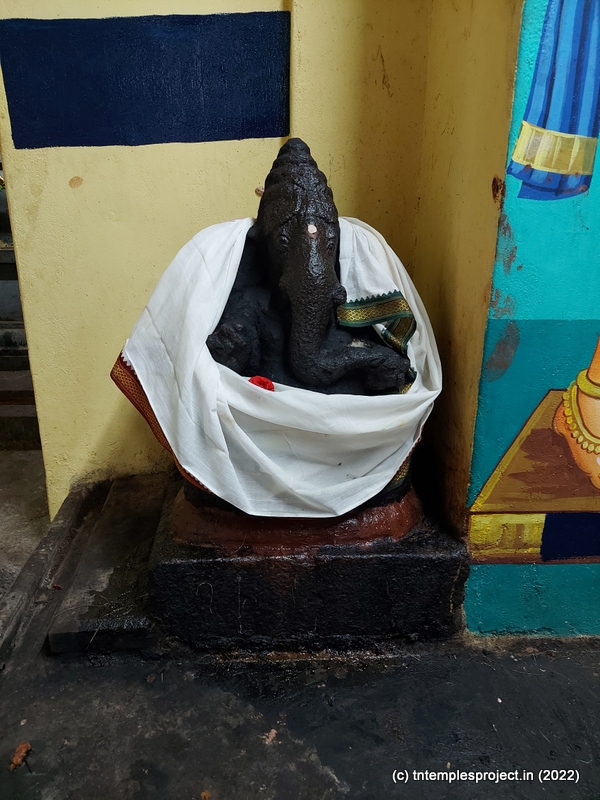
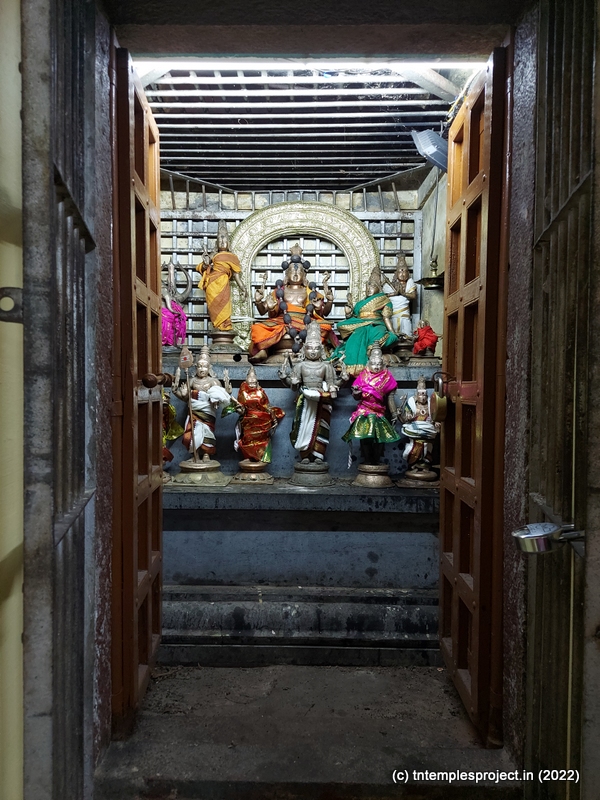
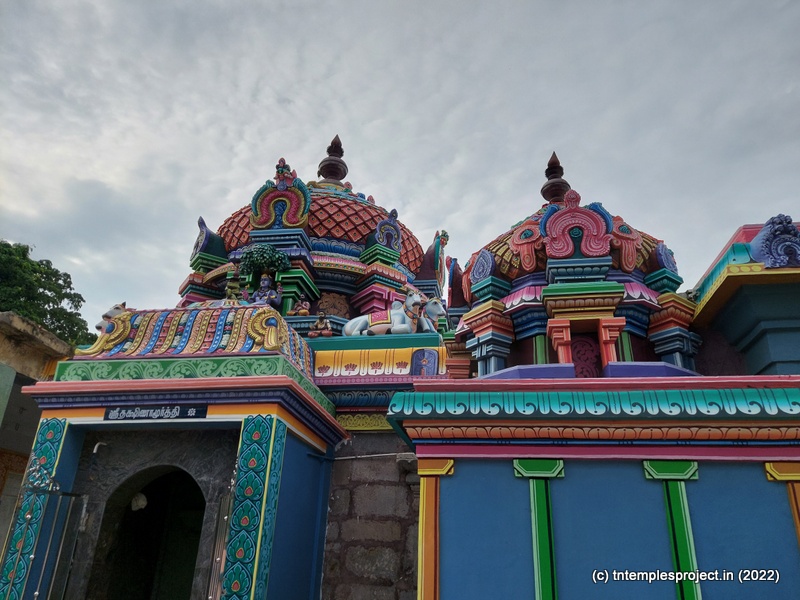
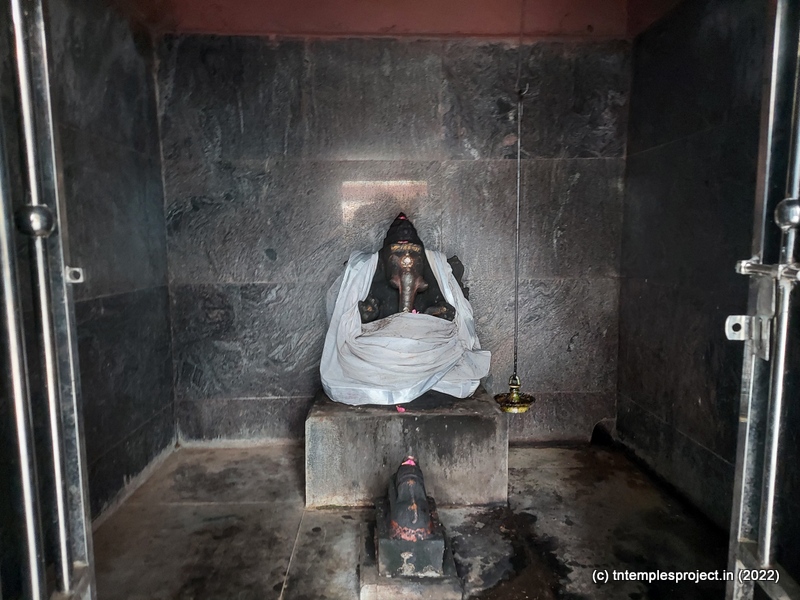
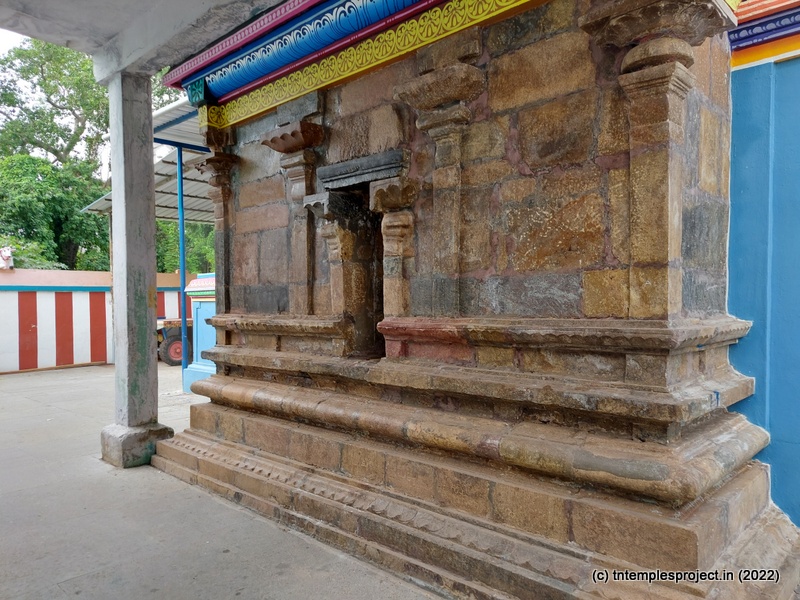
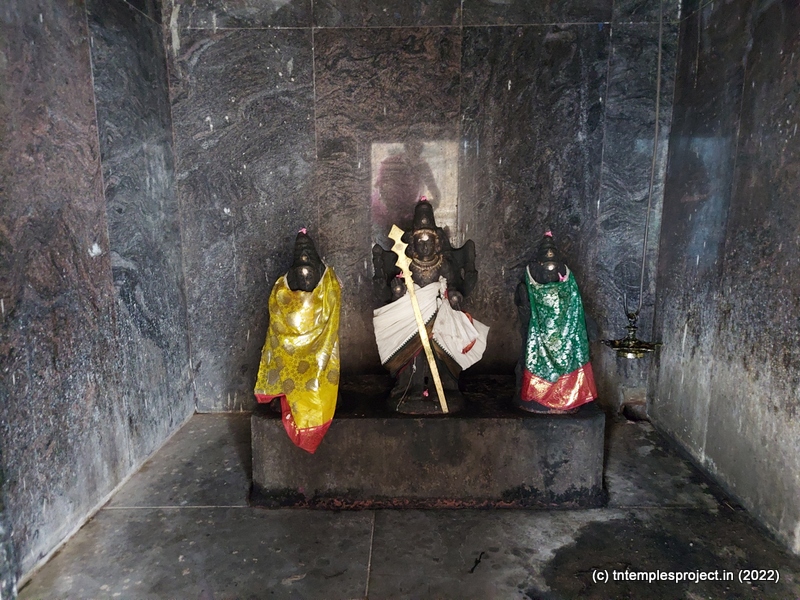
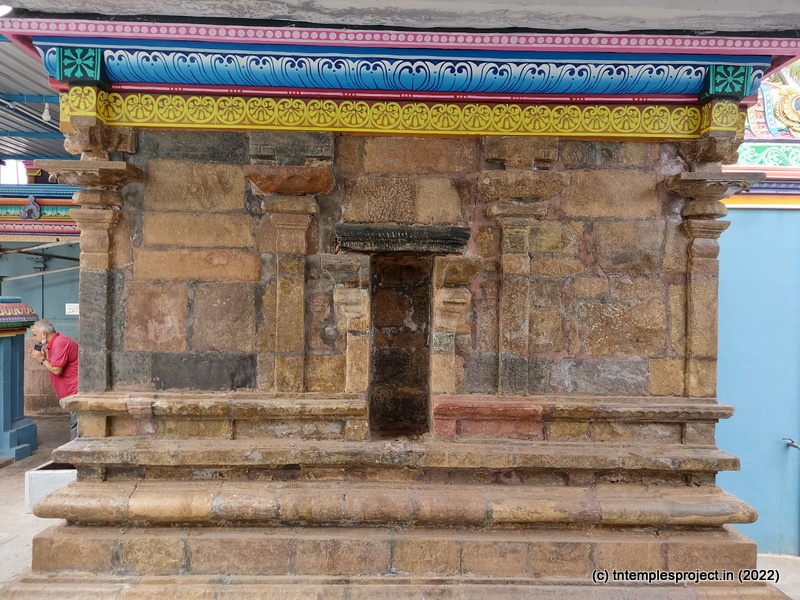
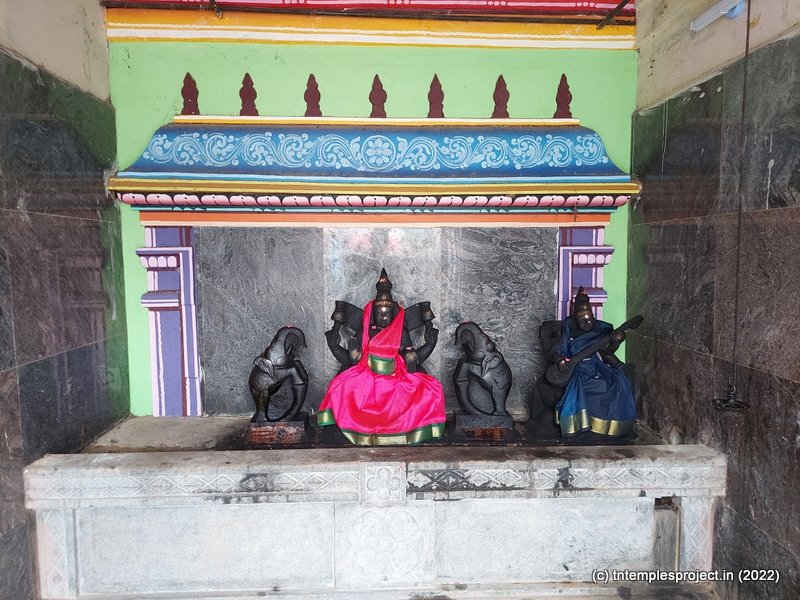
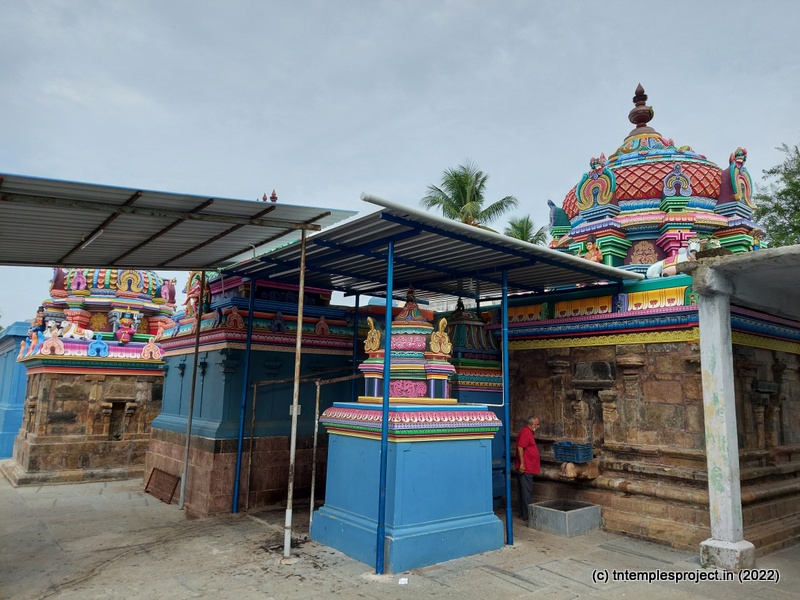
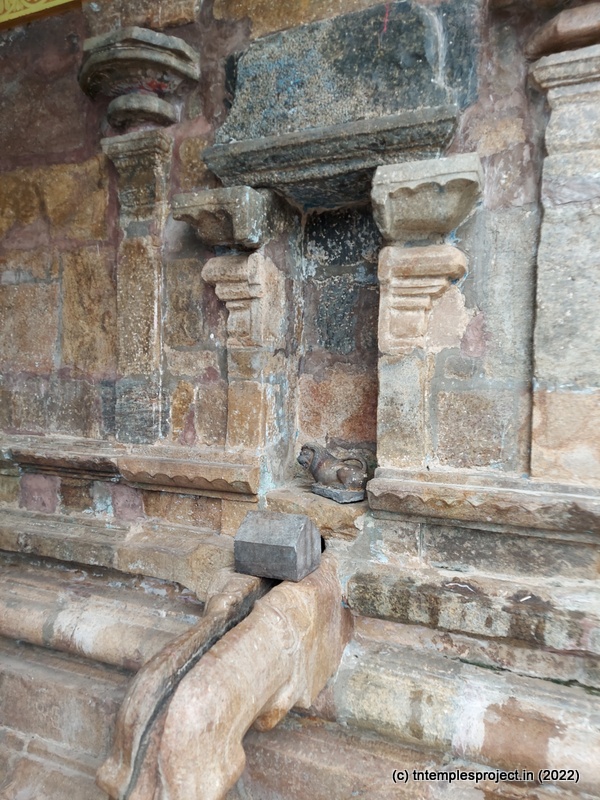
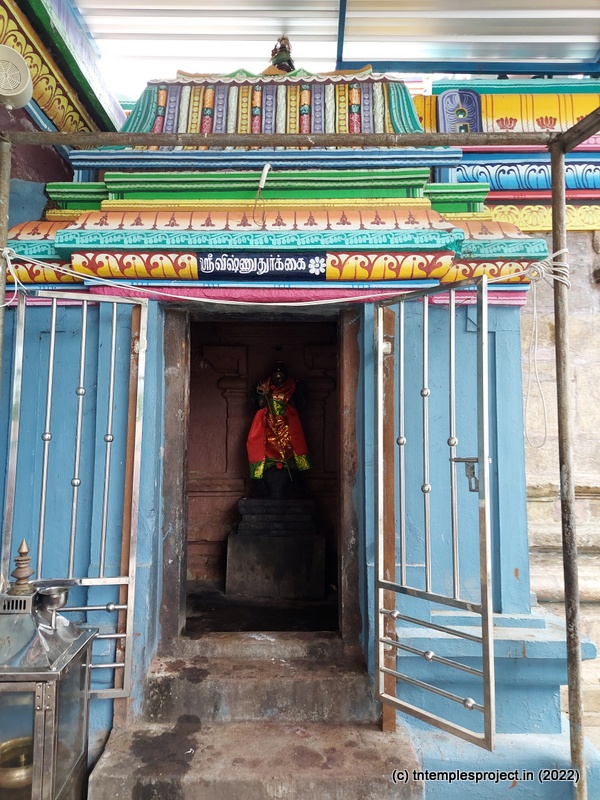
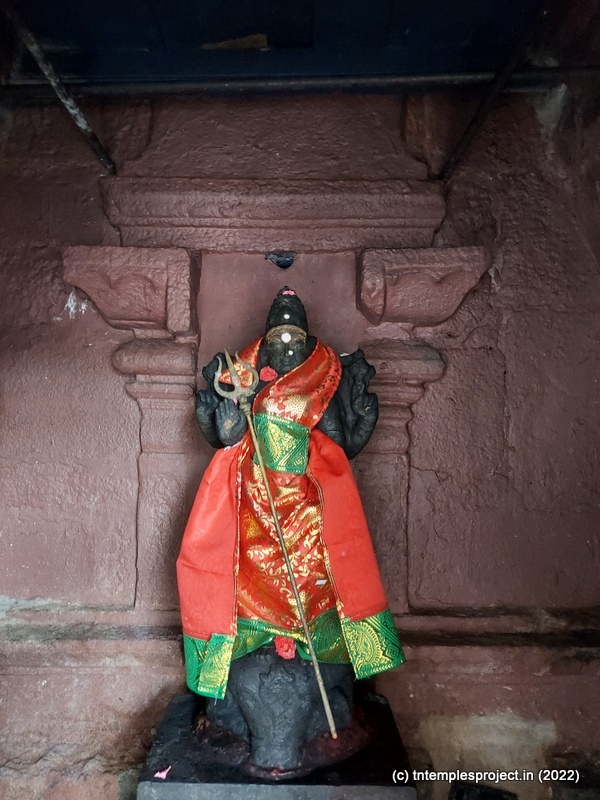
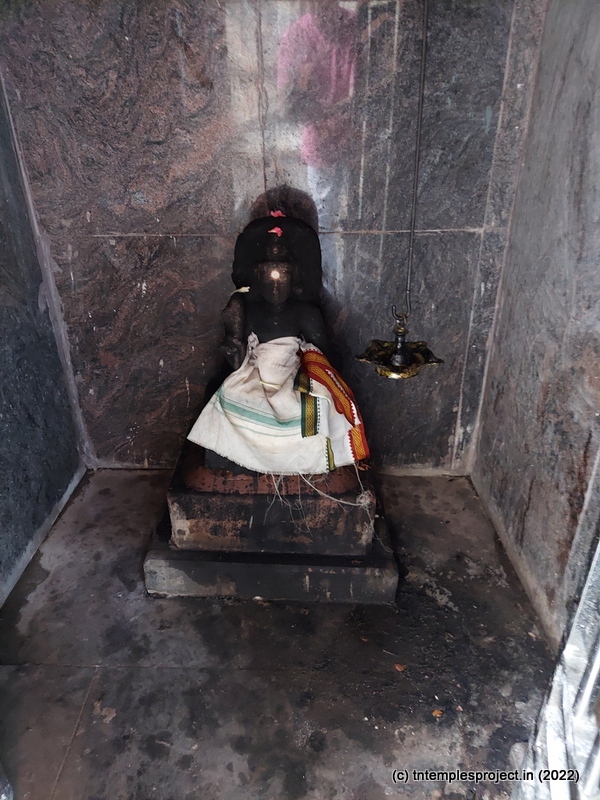
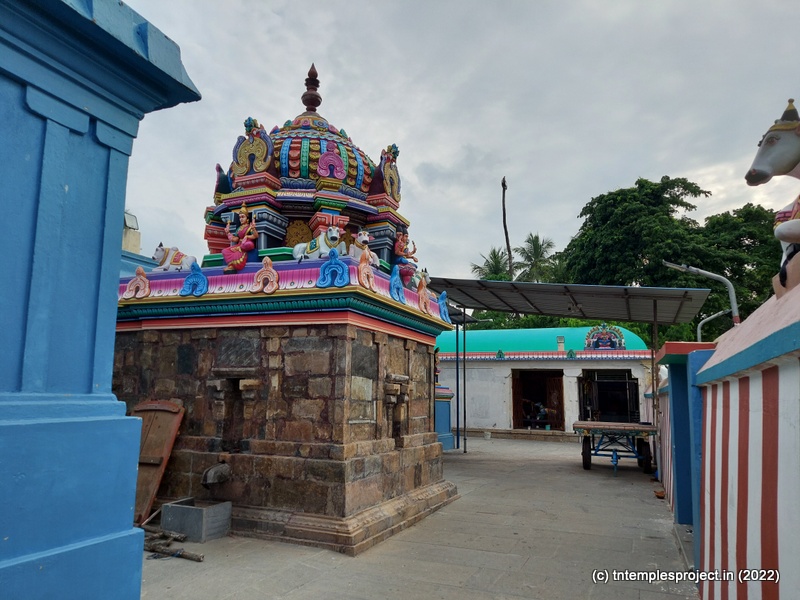
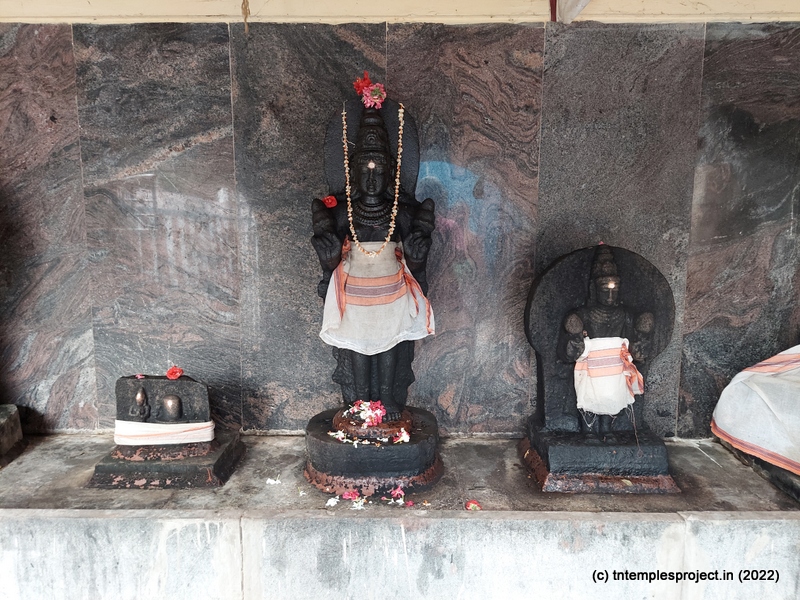
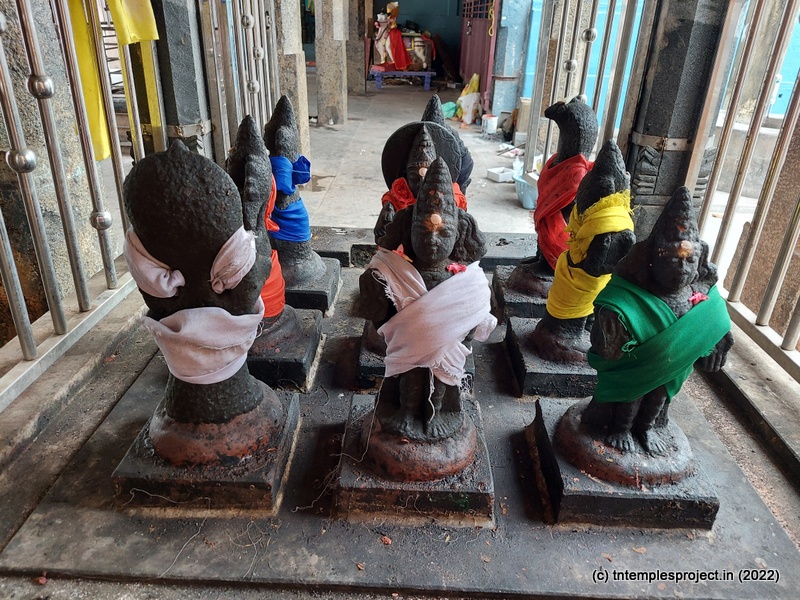
As we come around the prakaram, there are bas relief sculptures on several pillars in the temple. The koshtams are, however, empty except for Dakshinamurti. In the prakaram are Vinayakar, Murugan with his consorts Valli and Deivanai, a shrine for Gajalakshmi and Saraswati, a separate shrine abutting the garbhagriham wall, for Vishnu Durga, and a Chandikeswarar. The architecture is old, but lacks detailing that is usually abundant in Chola temples. On the eastern side are Bhairavar, Nagarajar, Hariharaputran, Suryan and Chandran. In the northeast corner is a navagraham shrine.
The temple priest lives in the house abutting the south-side passage to the temple.
Other information for your visit
Contact
Gallery
 TN Temples Project