Basic information about the temple
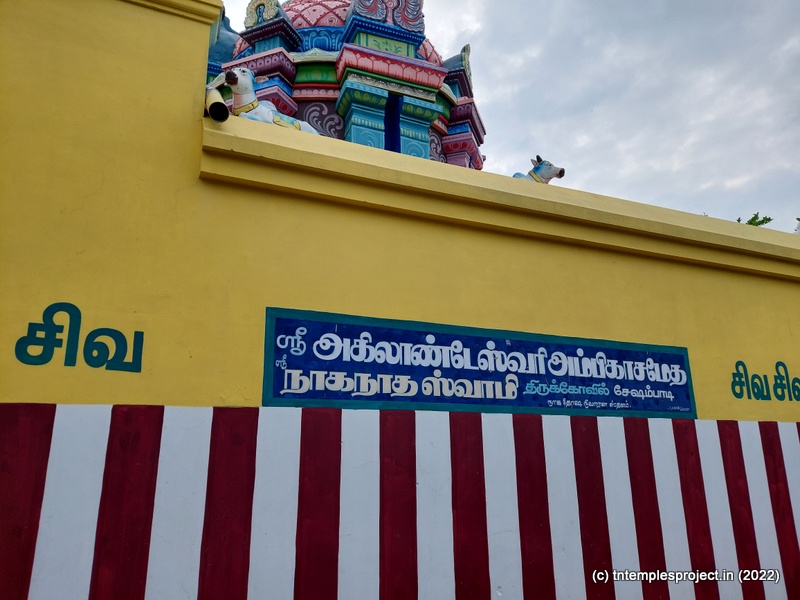
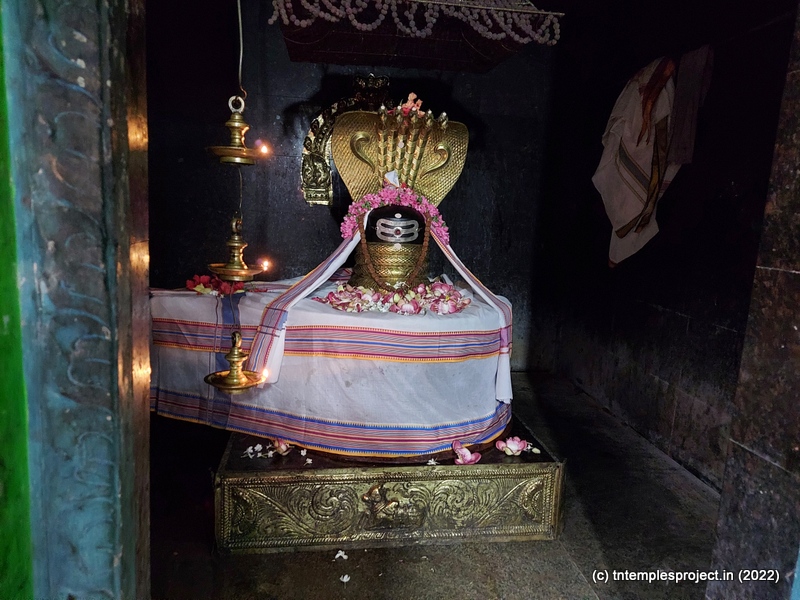
| Moolavar: | Naganathar | Ambal / Thayar: | Akhilandeswari |
| Deity: | Siva | Historical name: | |
| Vriksham: | Teertham: | ||
| Agamam: | Age (years): | Timing: | – to – & – to – | Parikaram: |
| Temple group: | – | ||
| Sung by: | Temple set: | ||
| Navagraham: | Nakshatram: | ||
| City / town: | Seshambadi | District: | Thanjavur |
| Maps from (click): | Current location | Kumbakonam (6 km) | Tiruvarur (36 km) |
| Thanjavur (40 km) | Mayiladuthurai (41 km) |
Location
Sthala puranam and temple information
Seshambadi is located just half a kilometre west of Thippirajapuram, which is in turn about 8 km south of Kumbakonam.
The Seshambadi Naganathar temple is renowned as one of the prime pitru-mukti sthalams, ie, pilgrimage sites for ancestral liberation. The place is also revered as Dakshina Tiruvallur, or southern Tiruvallur.
Adiseshan is regarded as the foremost of the Nagas. According to the sthala puranam there, Adiseshan had lost his strength due to some reason. He approached his lord, Vishnu, who directed him to worship Lord Siva, the one who has a snake wrapped around his neck, and the one who drank the famed poison arising from the churning of the ocean. Accordingly, Adiseshan worshipped here and regained his physical strength.
Due to the above sthala puranam, the village got its name – Seshan-padi, or place of Adiseshan. Over time, the moolavar here came to be called Naganathar.
Naturally, because of its association with Adiseshan, this temple is a naga dosham nivritti sthalam for those seeking relief from sarpa dosham.
It is believed that after worshipping Naganathar, chanting the Navanaga mantram – which is the Gayatri mantra dedicated to the Nagas – will invoke the blessings of all Nagas. The specific mantra is:
अनन्तं वासुकिं शेषंपद्मनाभं च कम्बलं (Om Anantham Vasukim Seshan Padmanabham Cha Kambalam)
शन्खपालं ध्रूतराष्ट्रं च तक्षकं कालियं तथा (Shankapalam Dritarashtram Takshakam Kaliyam Tatha)
एतानि नव नामानि नागानाम च महात्मनं (Etani Nava Navaami Naganancha Mahatmana)
सायमकाले पठेन्नीत्यं प्रातक्काले विशेषतः (Sayam Patenityam Prathahkaale Visheshita)
तस्य विषभयं नास्ति सर्वत्र विजयी भवेत (Tasya Vishabhayam Naasti Sarvatra Vijayaa Bhaveth)
Meaning
- The first verse lists the names of several prominent divine serpents: Ananta, Vasuki, Shesha, Padmanabha, Kambala, Shankhapala, Dhritarashtra, Takshaka, and Kaliya.
- The second verse advises the devotees to recite these nine names of the great serpent deities regularly, especially during the evening (sunset) and morning (sunrise) times.
- The last verse conveys that for those who recite these names, there is no fear of poison, and they will become victorious everywhere.
It is believed that chanting this prayer thrice every morning and evening can relieve naga dosha and bring benefits. It is particularly recommended to chant this on Saturdays to remove all serpent related afflictions.
For many years now, free tarpanam services (the periodic offerings for departed ancestors) have been conducted here during the Mahalaya Paksha days in the Tamil month of Purattasi (September-October). The temple, the sacred Tirumalarajan river, and both the Siva and Vishnu temples are significant in this area.
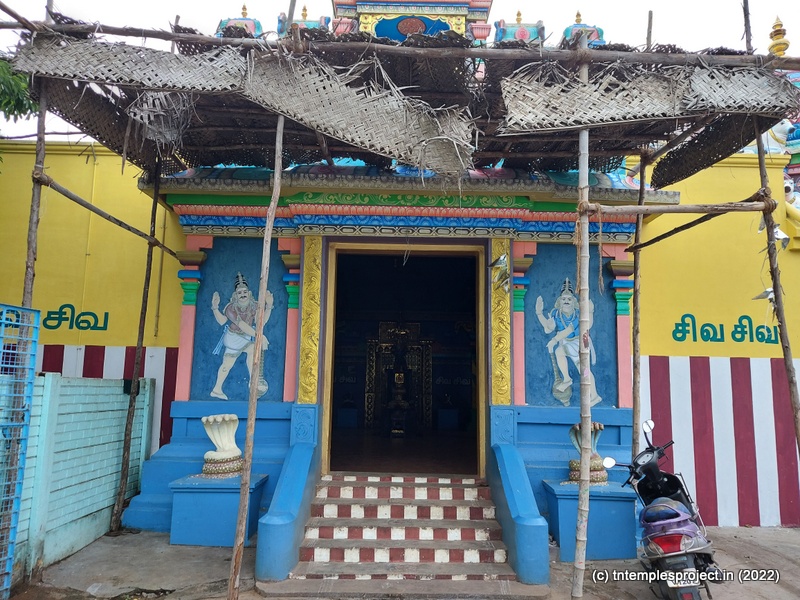
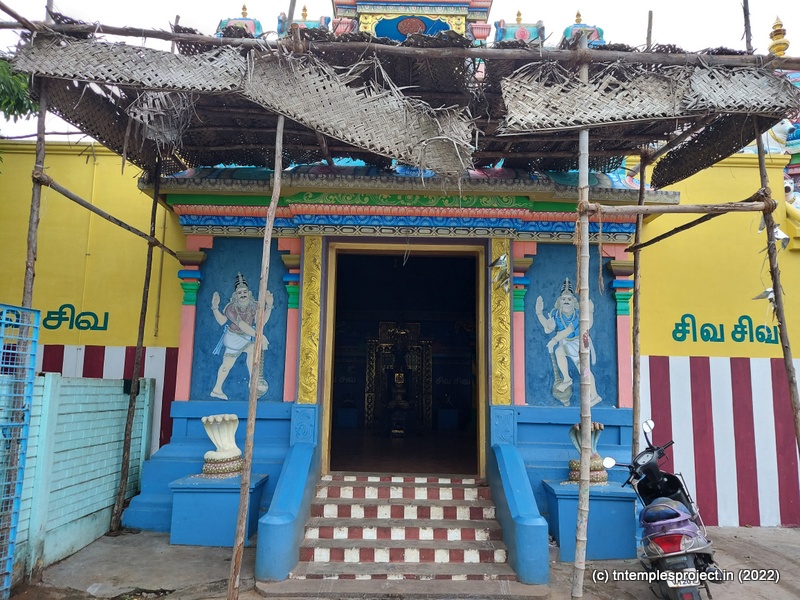
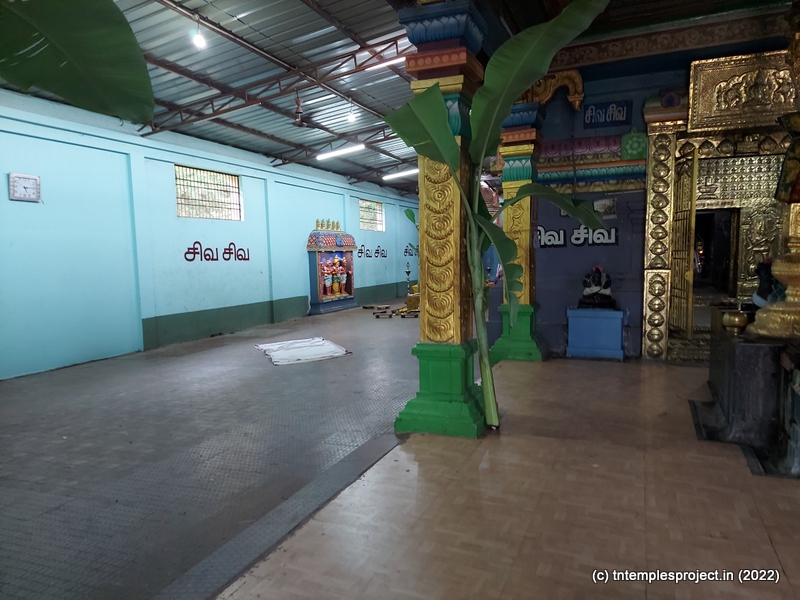
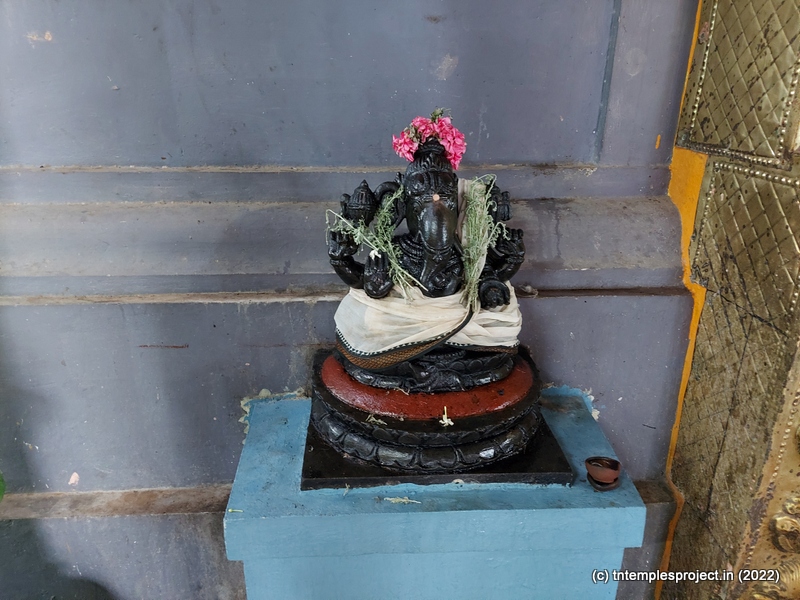
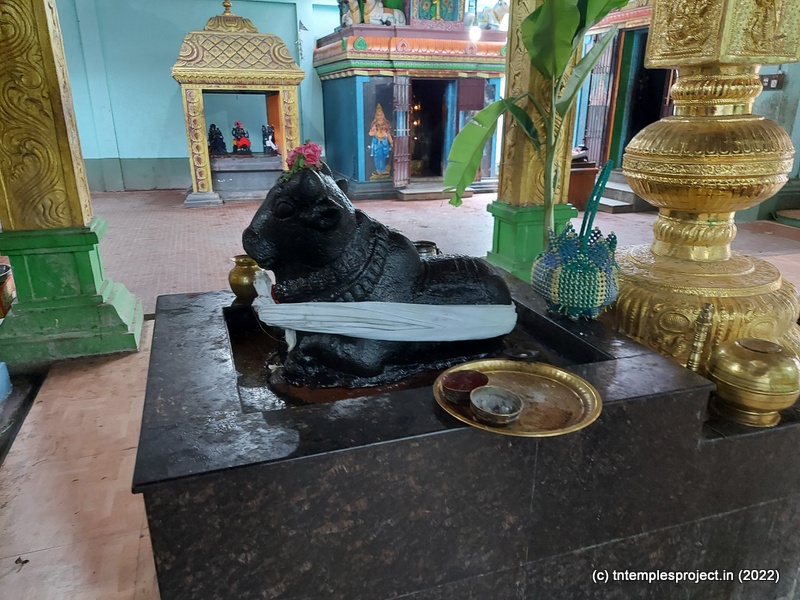
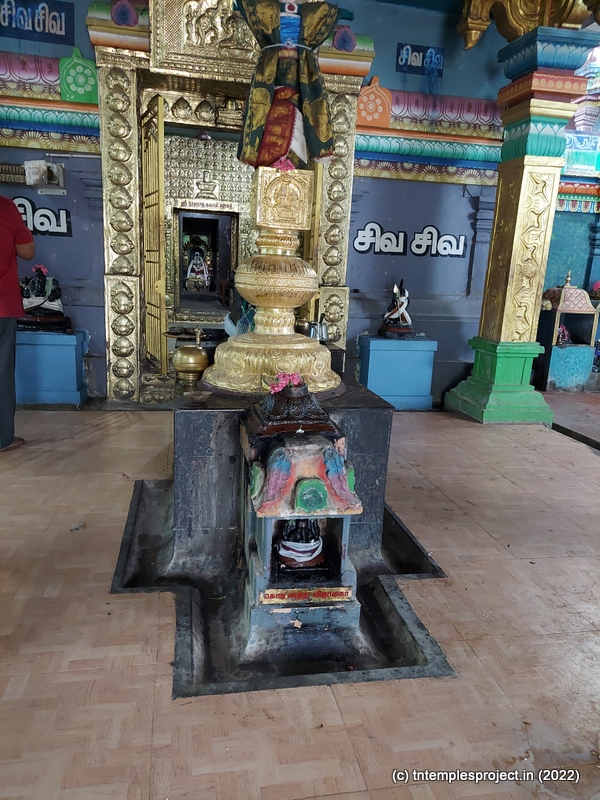
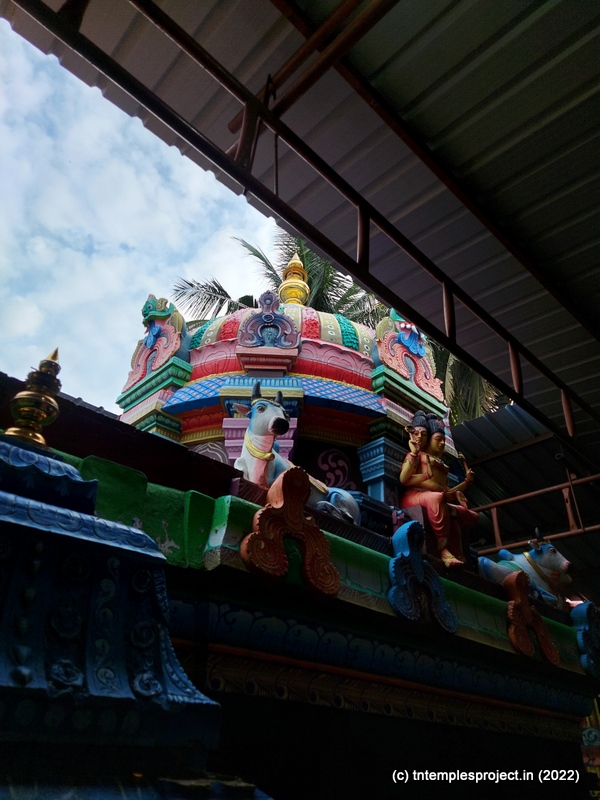
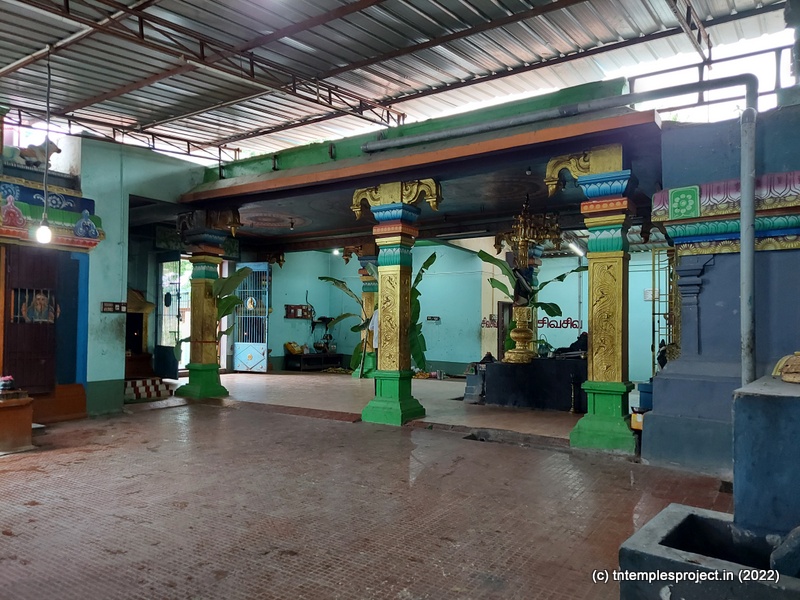
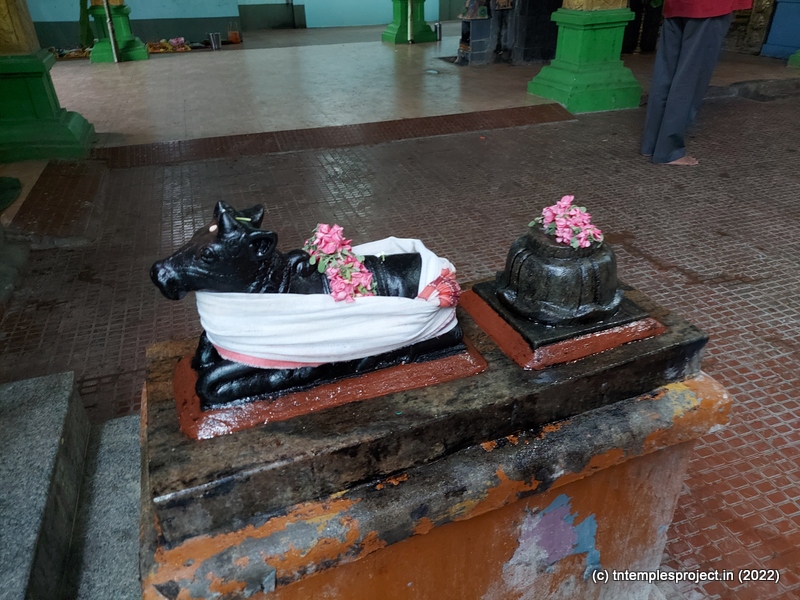
The temple has recently undergone a renovation kumbhabhishekam in the recent years and sports a fresh look. This east-facing temple is located at the corner of the L-shaped street. A few steps from the street level takes us into the temple. A corridor straight ahead leads to the bali peetham, dhwajasthambam and a very old looking Nandi (which itself speaks to the age of this temple), beyond which is the maha mandapam. Interestingly, the entrance to the maha mandapam is flanked by Vinayakar on both sides.
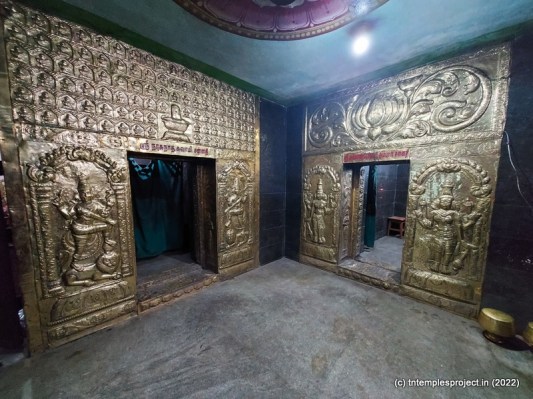
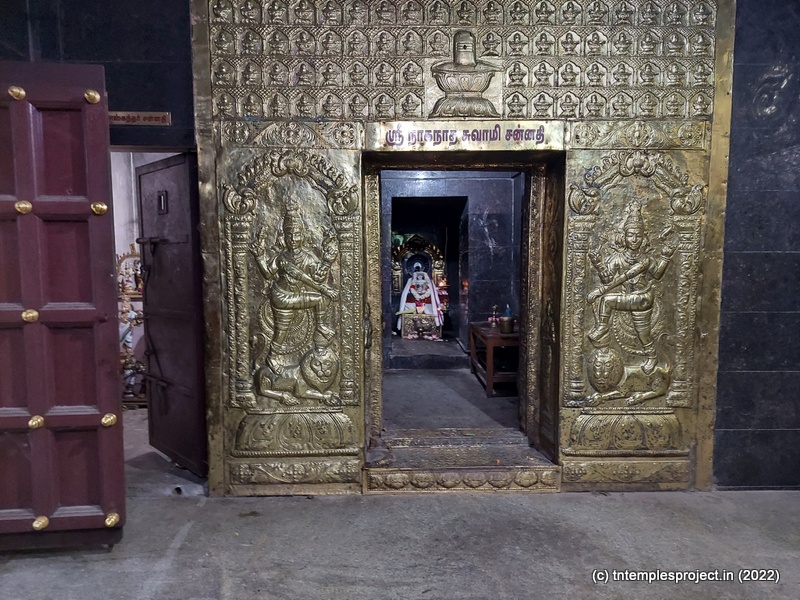
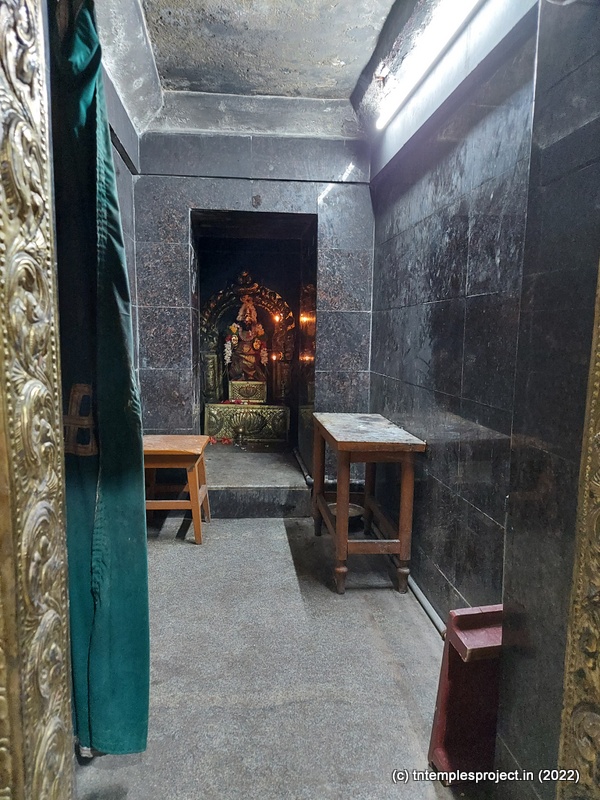
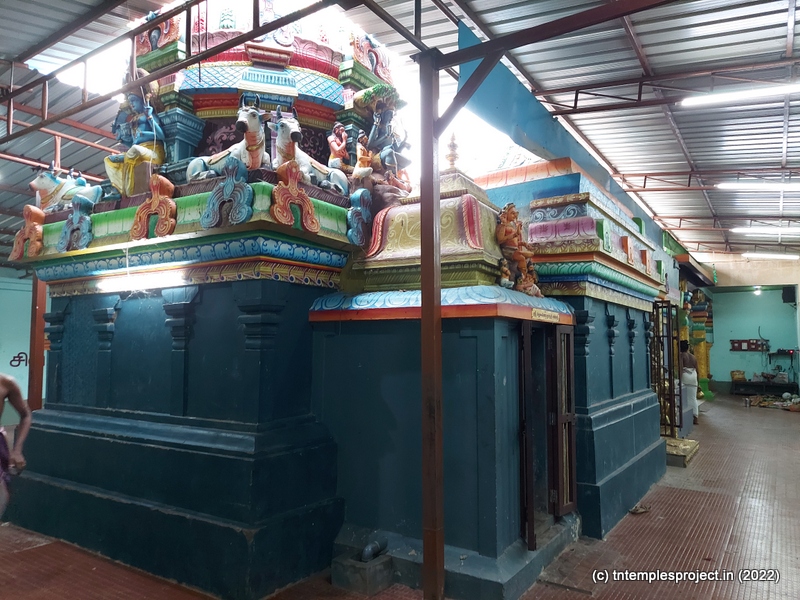
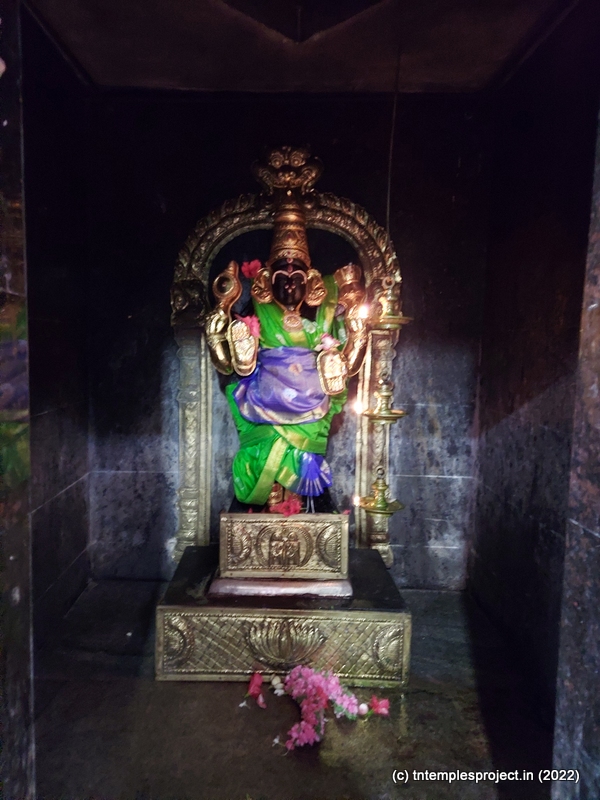
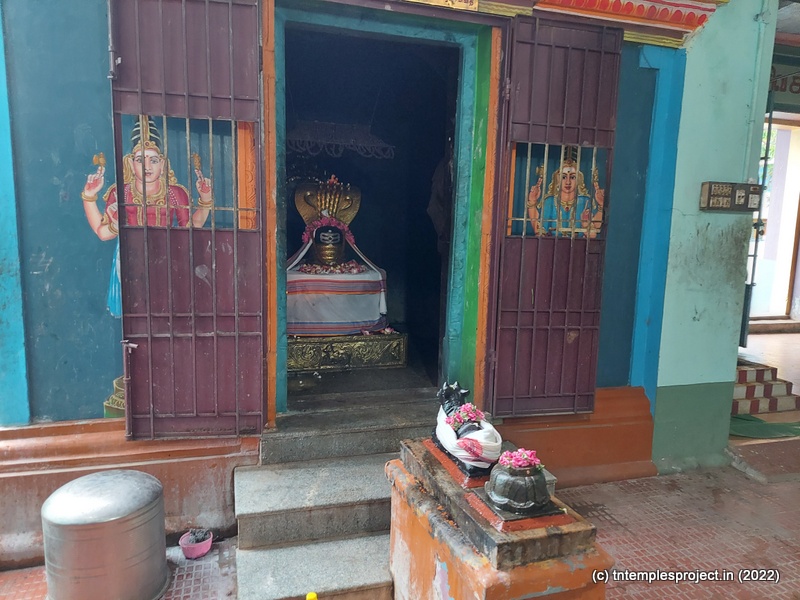
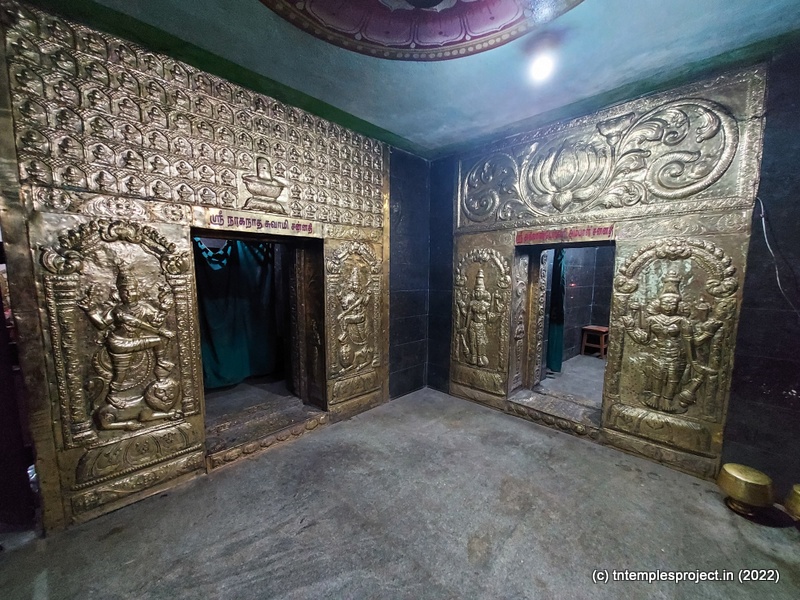
The entrance to the garbhagriham is plated in brass, with etchings of several lingams and also the dwarapalakas on each side. A similar frontage is replicated for the south facing Amman shrine which is also inside the maha mandapam.
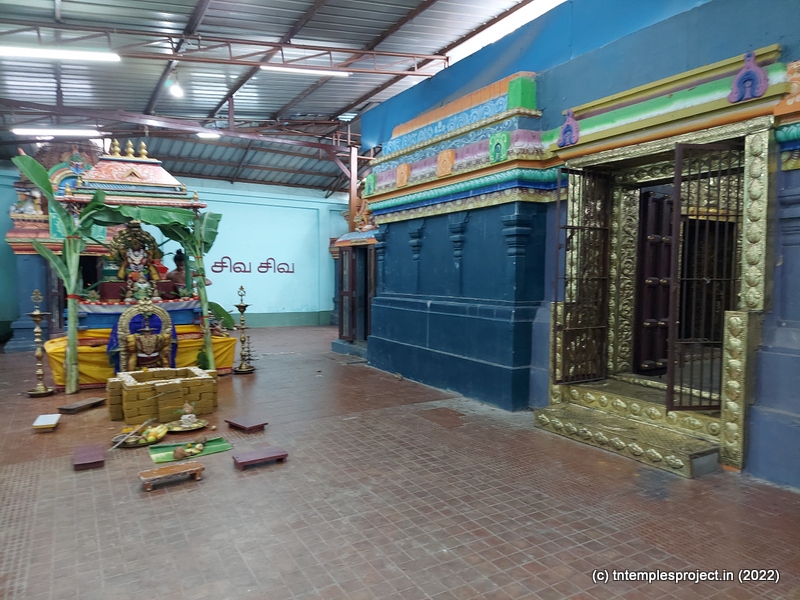
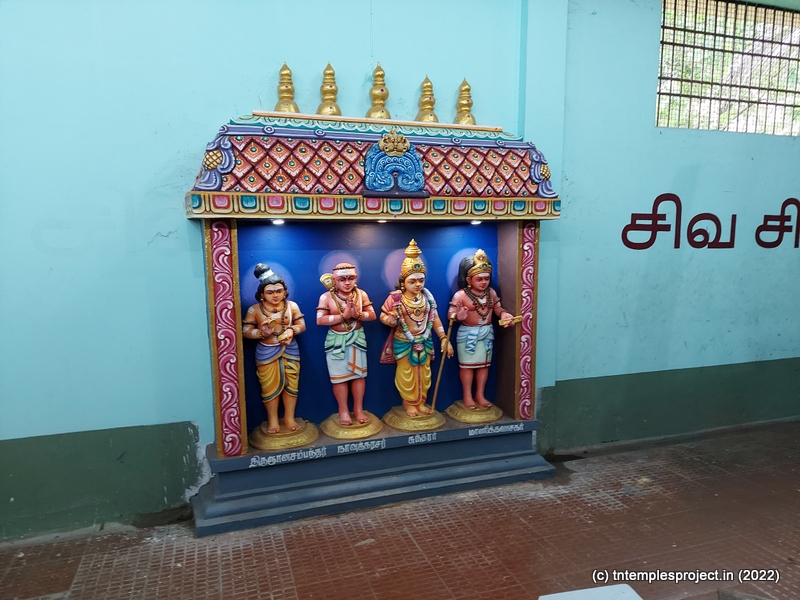
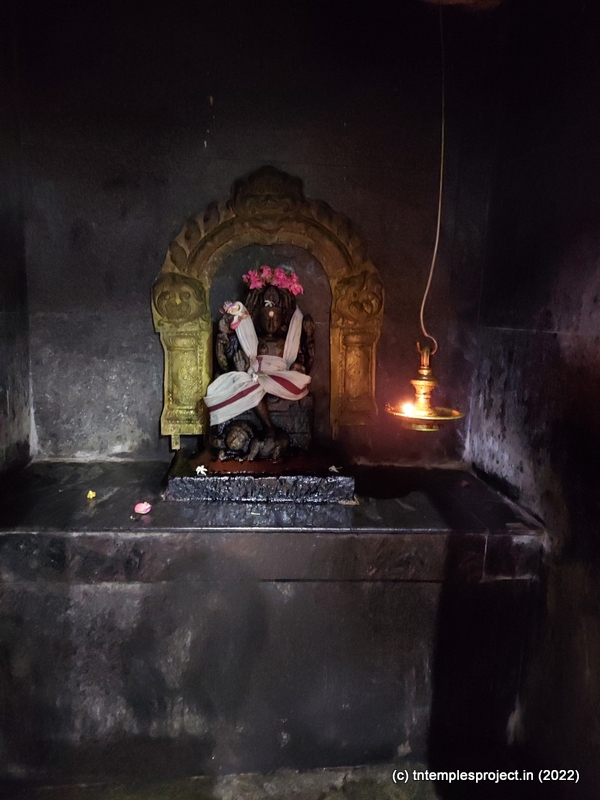
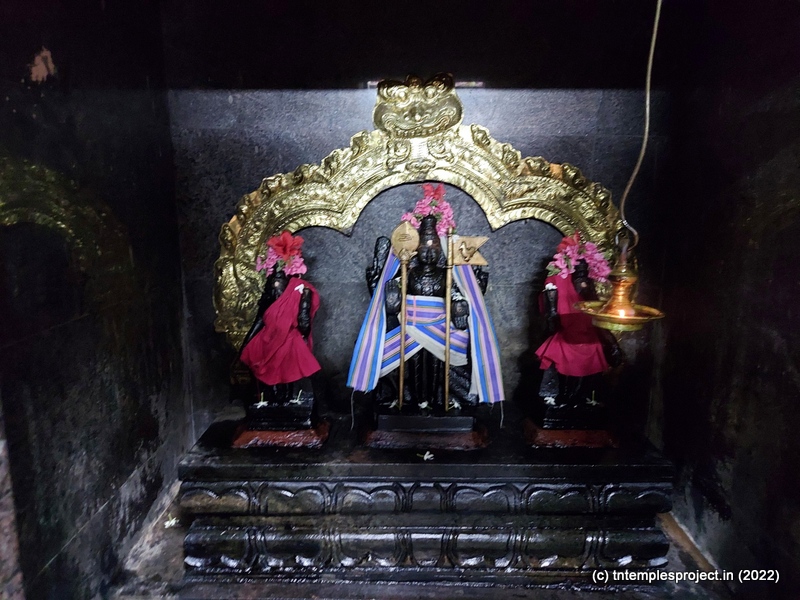
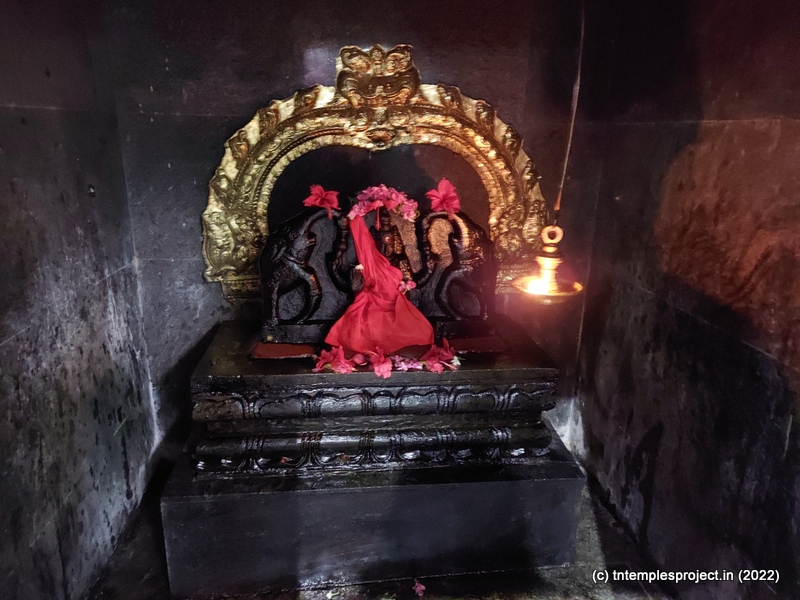
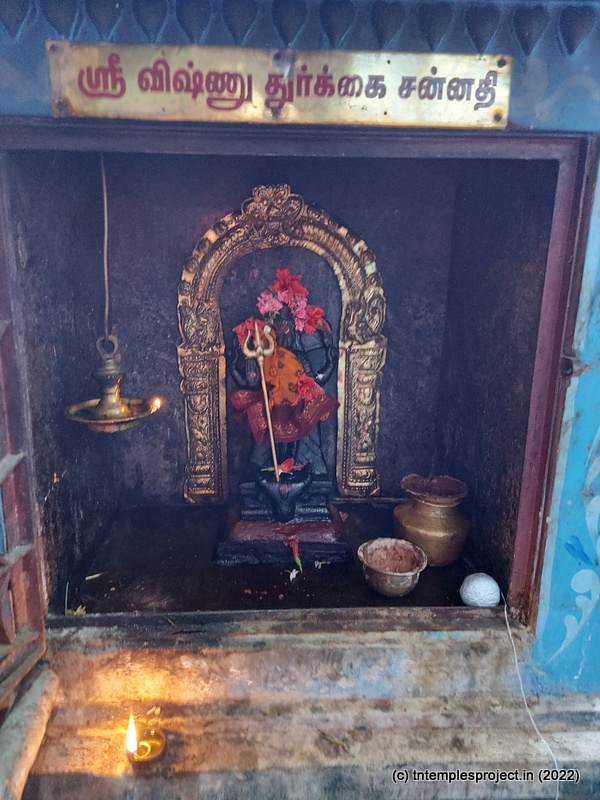
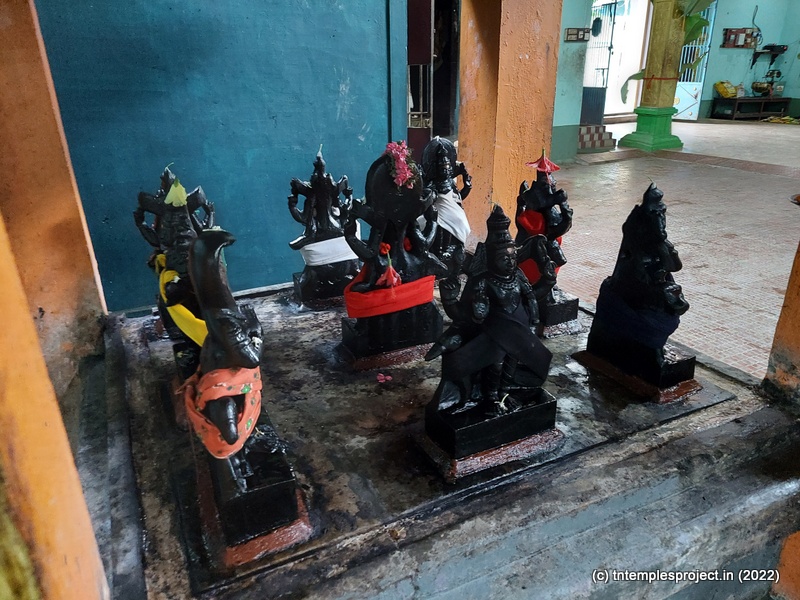
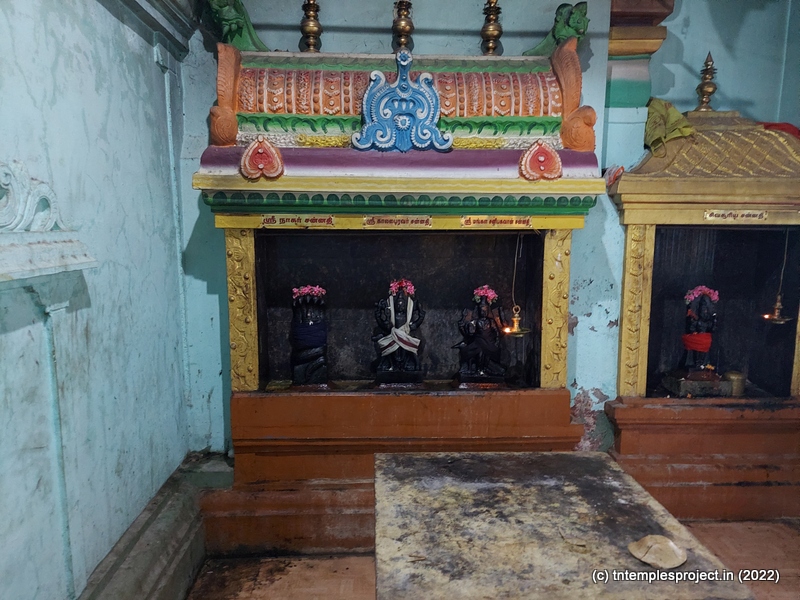
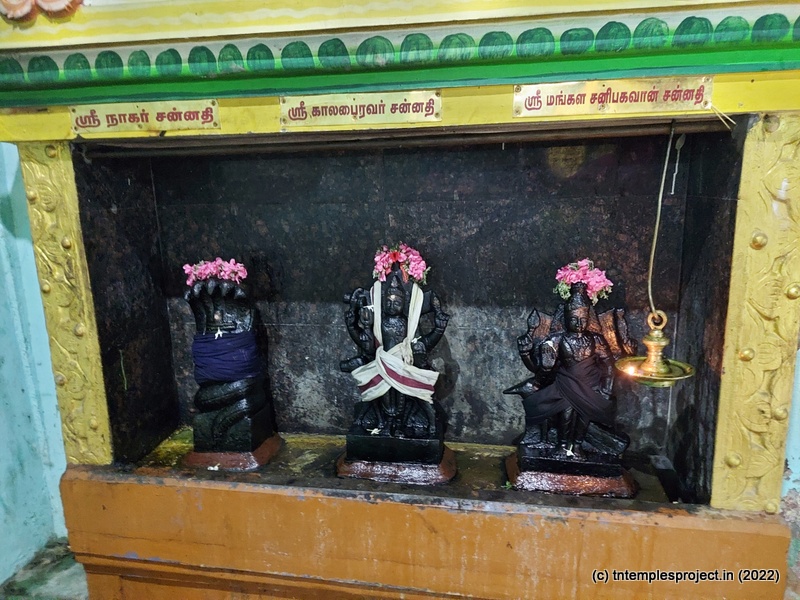
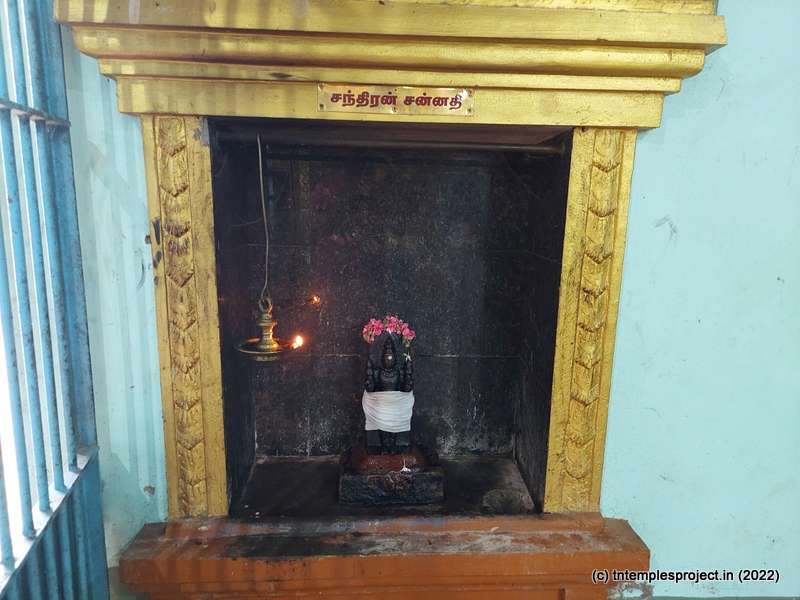
As we come back into the outer prakaram, there are sculptures of the Tevaram nalvar on the southern side. In the koshtam are only Dakshinamurti in the south and Vishnu Durgai in the north. In the prakaram are Vinayakar, Murugan with his consorts Valli and Deivanai, Gajalakshmi and Chandikeswarar, as well as a separate navagraham shrine. This temple also has the distinction of having two separate Amman shrines, so there is a separate shrine for Amman as Mangalambigai, also facing south. Finally, facing west is a separate shrine for Lord Siva as Sivanandeswarar (the temple is also alternatively referred to as the Sivanandeswarar temple, for this reason). There are separate niches for Nagar, Kala Bhairavar, Mangala Sani, and Siva Suryan. The temple’s Teertham, the Naga Teertham, is located opposite the temple’s entrance.
Other information for your visit
Though the temple conducts two poojas daily, in the morning and evening, it remains open for limited hours due to low visitor turnout.
Contact
Gallery
 TN Temples Project